
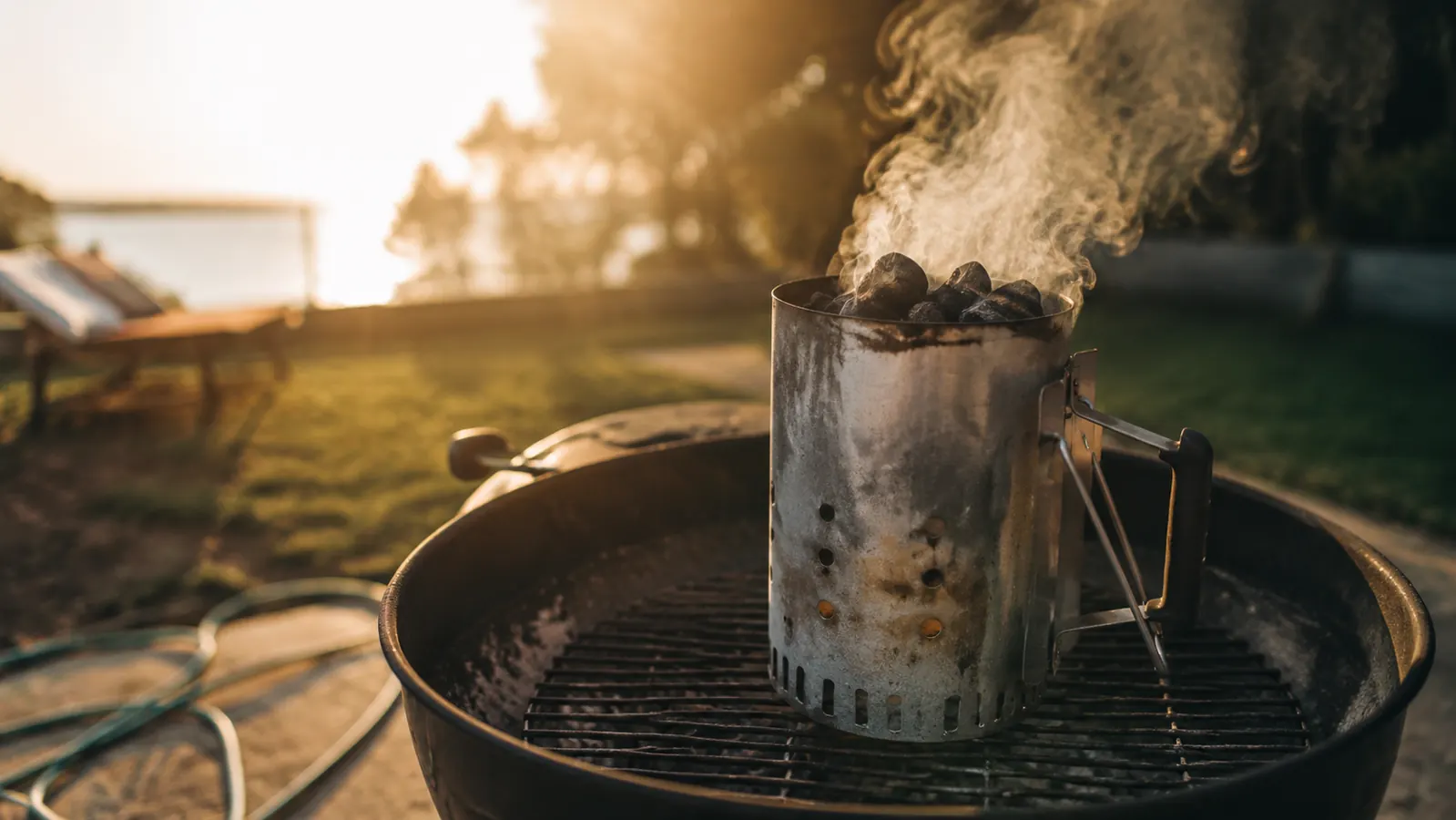
I spent the first month of owning this Weber Rapidfire chimney starter telling anyone who would listen that it was the best purchase in my whole barbecue kit. Then the season settled in and the tool started talking back. The handle screws loosened somewhere around burn one hundred and forty, the outer steel began flaking off in thin curls like a peeling sunburn, and on a humid Tuesday evening I stood over the kettle wondering whether I was honestly reviewing a tool or just defending a purchase I had already made. Two hundred and eleven fills later, between April and the end of July, here is the report I wanted someone to set in front of me on the day the box arrived, because every glowing first-season review read exactly like the same press release.
So let me be straight at the top about what this review is not. It is not another standing ovation for the most recommended charcoal accessory on the internet, because you already know the recommendation and you already believe a version of it. What I want to hand you is the part that the listings and the product photos always skip. How a chimney behaves at the two hundredth fill and not at the twentieth. Which pieces wear out and which ones never do. The three mistakes I made early that each cost me a stalled evening. And the night I decided to keep it anyway, after the steel started showing its age. That night is the honest center of this review, and it is the only part worth ten minutes of your reading.
The Quick Verdict
The Weber Rapidfire is exactly as fast and clean as tens of thousands of owners claim, and it is also exactly the consumable the glossy listings do not mention. Full coals in the mid-teens of minutes, a pour you stop fearing after a week, and a handle that stays cool through every burn. It is single-wall steel that is dangerous to the touch almost everywhere except that handle, it holds more charcoal than a standard kettle needs, and it will scale, flake, and want replacing after a couple of hard seasons at today's price. Treat it as the cheap, quick workhorse it is and it will never let you down. Treat it as an heirloom and it will disappoint you on purpose.
Amazon Check Today's Price →The end of lighter fluid and the chemical first bite, starting tonight
If the steaks still taste like the patio, the problem is never the rub, it is how the coals are lit. Fifteen clean minutes from a match to a poured load of gray coals, and a pour you will trust by week two.
Amazon Check Today's Price on Amazon →How I've Used It
The test setup ran a 22.5-inch kettle that has been in our yard for years, with a handful of sessions on a friend's ceramic kamado when her fire would not catch. From April through late July I logged 211 fills, and weekends routinely carried two loads back to back. I kept the running tally on a piece of tape stuck to the shed door for the same reason I keep uptime charts at work, because a memory is a feeling and I wanted the actual number. Two hundred and eleven is not a boast, it is the ledger, and it is the number every part of this review defaults to.
I fed the chimney lump charcoal about half the time and standard briquettes the rest, because it is one of the few starters I own that treats both fairly. Lump lit fast and poured cleaner. Briquettes took a few extra minutes and burned longer, and every load landed even. Both came out gray and fully lit at the end. The variable that swamped them both was not the fuel type, it was humidity. Our shed sits a short walk from the water, so the air in it stays damp most of the summer, and charcoal that rests there overnight picks up enough moisture to stretch every single load by a few minutes no matter what steel column you light it in. It took me a punishing week to accept that the wet fuel was the whole problem and not the starter, and that week taught me more about this tool than any stretch of good weather did.
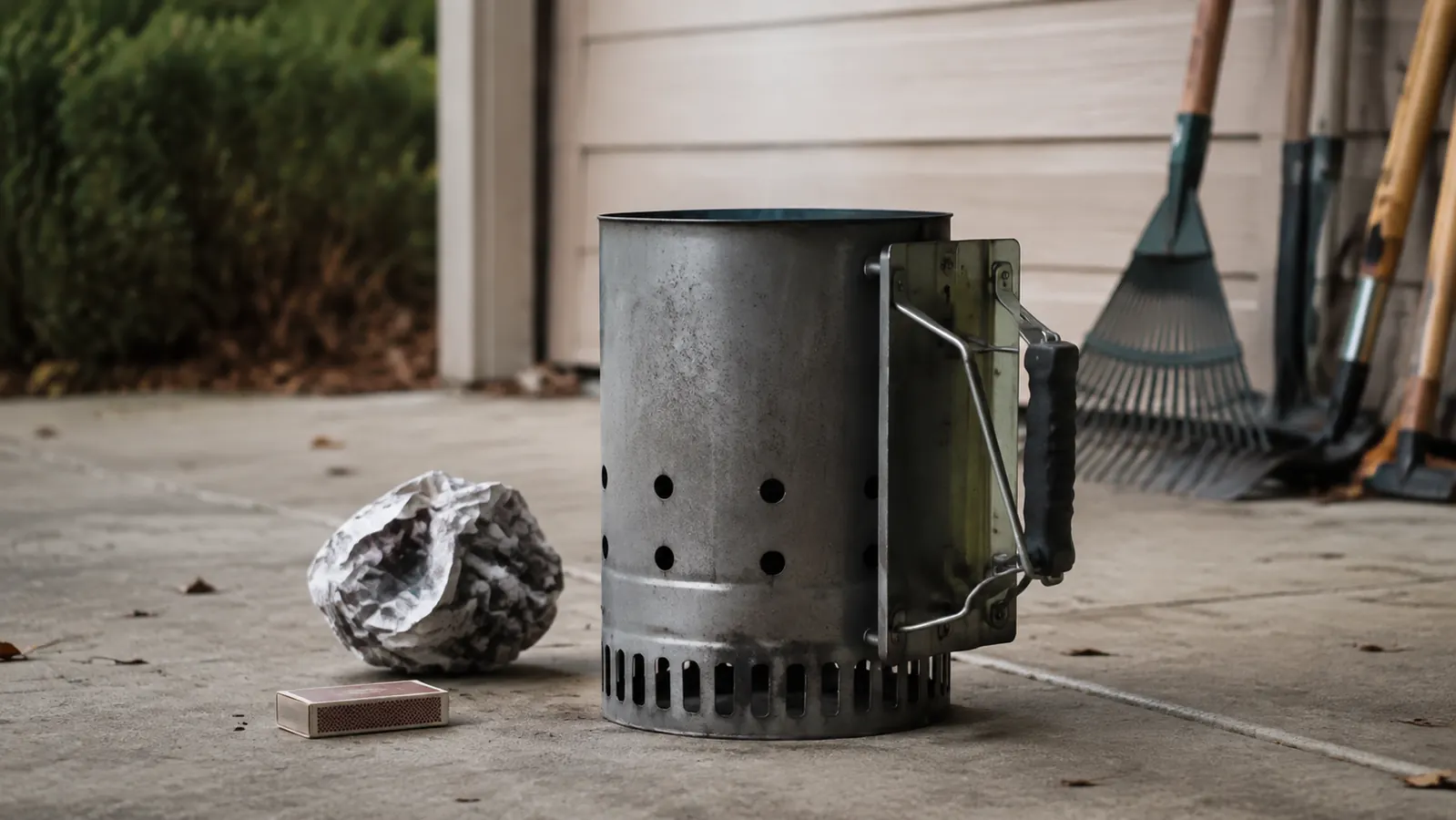
Once the routine locked in, the whole tool became invisible to me, and that is the honest success condition of a fire starter. Ball two sheets of newspaper into the base, fill the top, one match through the bottom vents, and go inside to cut onions. By the time the onions are cut the top coals have gone gray and the ones visible through the vents have gone orange. Weeks at a stretch went by where I did not think about the starter once, and that is the clearest sign that the tool is doing exactly what it should. The only evenings it demanded attention were the handful that went wrong, and those evenings were the ones that gave me the honest sections you are about to read.
The Speed Claim, and the Capacity Nobody Tells You About
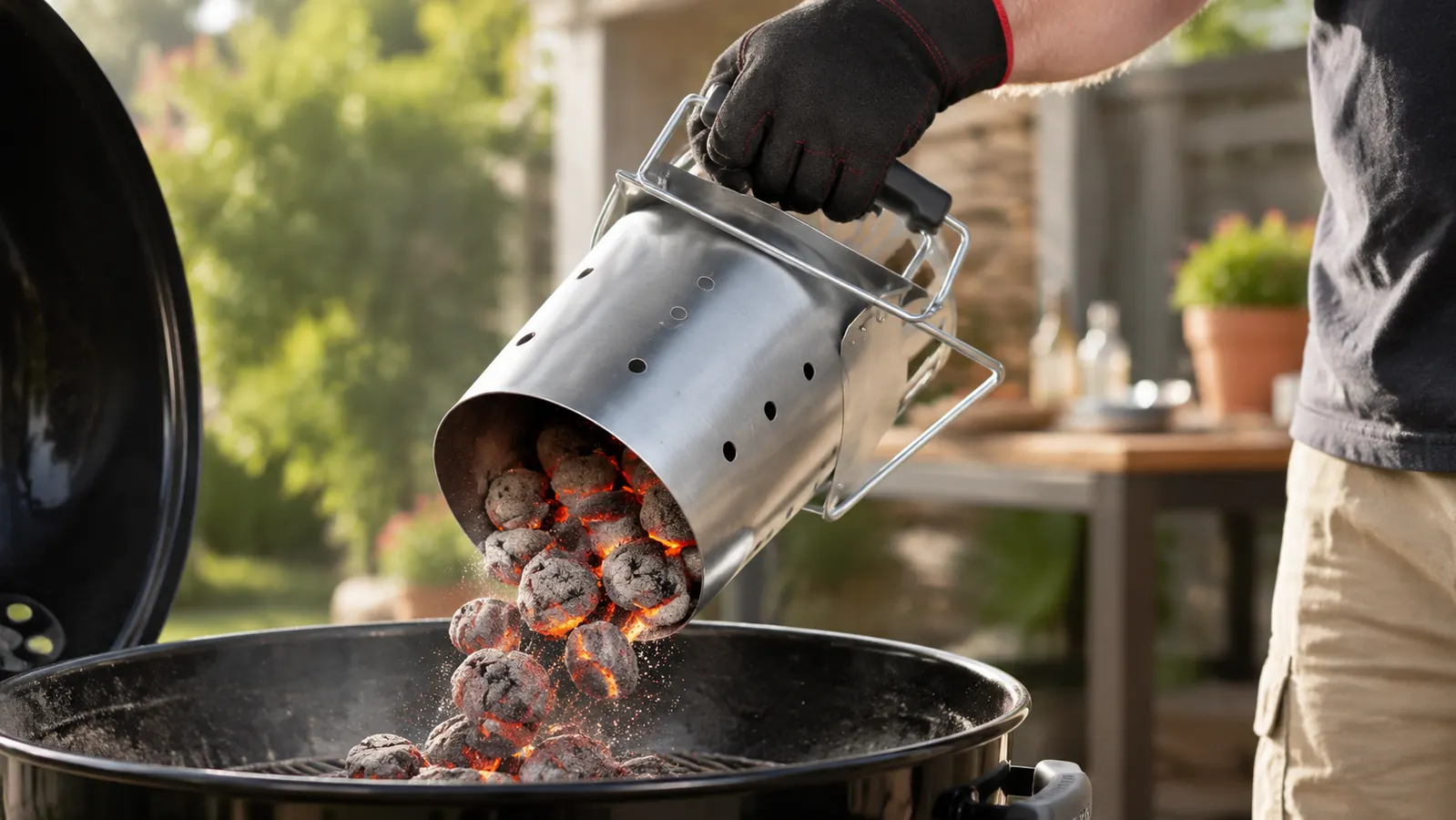
The fifteen minutes it prints on the listing is real, mostly. On a dry, still day my briquettes ran to gray ash in about thirteen minutes and lump a little faster. The honest caveat is that conditions move the number a lot. The same load on a damp afternoon with the coastal breeze rising took twenty minutes, and a bag that had spent a week breathing the moist shed air stretched to a full thirty. The way you live with the claim is to read it as a healthy average rather than a stopwatch promise. Light the paper, start the other prep, and let the coals and the food arrive at the same moment, and the chimney will never be the thing holding dinner up.
The capacity is the number the listing refuses to quote. The standard chimney is rated at roughly a hundred briquettes, and a hundred briquettes is more charcoal than a 22-inch kettle needs for a direct cook. For my first two weeks I never stopped at the right level and heaped the chimney well above the rim and finished every session with a leftover ridge of hot coals that had died in the corner of the grill before the food was on it. That is pure waste, the wood burning for no return. The catalog shoots always show a chimney piled sky-high because a full pile photographs better than an honest half load, and that picture has been costing beginners a wasted load of fuel for years.
The rescue is that a chimney is a column of draft and not a bucket that must be full. The air rushes up through the whole tube from the first flame, so a half load lights as purely as a full one and finishes within a minute or two of the same time. Once I stopped filling to the rim and started filling to the level my grill actually drinks, the wasted charcoal went to zero and the timing never moved. That single habit, learned the hard way, has saved me more fuel than I want to count, and it is the kind of detail you will never see in a promotional photo or in somebody's first-week enthusiasm.
The Steel Wears Out, and That Is the Honest Price
Let me skip the gentleness and say the first true thing about the build. The body of the Weber Rapidfire is a single wall of steel, and that one fact explains the modest price, the fast ignition, and the way the metal climbs to wood-stove heat within thirty seconds of the paper catching. The handle stays genuinely cool through a full burn thanks to a generous heat guard, and the base rides the edge of the grate instead of skidding. But every other square inch of the tube is a burn waiting to happen while any flame is in it, so the rule of ownership is: hold the handle and aim the rest away from everything you care about. I gave up one corner of a picnic table and a section of garden hose before I learned that in my own yard.
The thing nobody talks about is the long curve. Around burn seventy the finish of the outer steel started to scale, and by the middle of summer I was peeling thin coils of coating off the side like the top layer of a sunburn. The handle loop worked loose in the same window, and although the mounting nuts are welded underneath, the two handle screws still relaxed no matter how often I took the driver to them. This is the pattern the brand rides on: durable enough to bang for a few full seasons and modest enough that letting the metal go when its time comes is fine. Two hundred and eleven fills in, the chimney drafts exactly as well as it did on burn one; it just has no interest in pretending to be new, and knowing that before you buy saves you the week I spent wondering what had broken.
One note for the first couple of nights, because it scared me. A brand new chimney pours out a thin, sharp smoke for the first few burns while the factory finish cooks off the fresh sheet metal. I burned mine empty for two minutes over the gas stove before the first real cook, and the smell was fully gone by the second session. If nobody warns you, a fresh chimney venting unknown smoke looks like a defect, and it is not. It does not touch the food and it does not linger in the meat, it is the finish saying goodbye. Take this paragraph into mind now so you do not spend a week of evenings the way I did, convinced I had bought a bad one.
Two hundred and eleven fills in, the only thing I have ever replaced is the newspaper and the only screws I have ever retightened belong to the handle loop. The coals still come out gray and ready, on time, every time. That sentence is the whole reason this review is worth reading.
The Pour Is the Easiest Part, If You Go Slow
The step that scares new charcoal owners is tipping a full chimney of live coals into the grill without launching half the load into the grass, and it turned out to be the part the Rapidfire was built around. There is a small anchor tongue on the base of the tube that seats itself against the edge of the grate and holds the whole column still while you tip, and the big loop handle gives you a second hands-on point and real leverage. With a glove on, the dump becomes a calm, level fall of coals, the way gravel comes out of a toolbox and not the way soup comes out of a pot. In 211 pours I have dropped coals over the rim exactly twice, both times before the coffee had kicked in.
The technique that saves the dinner is the speed of the pour. Unleash the tube in one slam and you launch a gray cloud straight into the middle of the grill and onto your shoes, and now you are eating ash with the first burger. Pour in slow angled bursts instead and the coals fall in a dense line that lands exactly in place with almost no dust at all. The anchor tongue makes the slow way possible, because the whole column is still enough that there is no hurry and no wobble. My ritual came together as a short phrase: slow, straight down, wind at my back. It costs me ten extra seconds and it gives me a clean grate and clean shoes for every session.
For the sake of an honest comparison, I borrowed two cheap no-name chimneys from neighbors during the summer, expecting the same result and instead getting my education. Flat open bases, no anchor, and a flimsy loop turned the pour into a wobble that sloughed coals off the side and, in one bad case, sent everything toward the lawn before I caught it. The difference between trusting a chimney and flinching at it lives exactly in that anchor and that loop, and they are the two details that cheap knockoffs never successfully copy. Everything else about a chimney is a steel tin anyone can weld. The quiet mechanical details are the thing Weber gets right, and they are why I keep reaching past the cheaper options.
The Flavor Is the One True Reason
Strip every other excuse away and there is one reason this tool exists, and it is taste. The old way pours a flammable solvent onto the pile next to the grill, then everyone waits for the flare to burn off before daring to put food over it, and no amount of waiting ever fully cleans the chemical out of the first hour of the cook or out of the first bite of the chicken. You get used to it without noticing, and then the first time it is genuinely gone you taste a cleanness that had not been in your food for years. The chimney lights the paper and only the paper, and the next coals bloom from air moving up the tube instead of from accelerant. The night I served the first meal cooked over this starter, I stopped in the middle of the dinner because the food had stopped tasting like the patio. That bottle of fluid hit the trash within the hour.
The counterweight, so this never drifts into a fan letter: the chimney will not make your food taste like a hardwood smoker, because that is not its job. It gives you a clean gray bed of coals and stops the work there. The depth you chase in the brisket and the ribs lives in the wood, the vents, the patience, and the whole cook after the coals land. A generic look-alike and the Weber will burn the same briquette to the same gray in the same minutes on a good day. What the premium buys you is not magic, it is the dependable boring part: the same finish on every load, the easy pour, the grip that does not fight you, and the experience of a company that has been folding these into sheet steel since before I started grilling. That is not a thrill, it is a steady normal partner, and some of us enjoy the steady kind.
One closing note on the economics before the verdict, just so nobody oversells a chimney to you. It needs no plug, no gas line, no batteries, no pellets, no lighter fluid. The entire running cost is two sheets of newspaper and ten minutes of your evening, and what is left when it is done is a scoop of gray ash you hook out against the grate. Every cook, campout, and backyard supper this season has opened with that same two-sheet routine, and it is the least fussy tool I own that works this hard. When I took it on a camping weekend, the people at the next fire spent more time watching the chimney than their own burgers, and that is the most honest recommendation a backyard tool can receive.
What I Liked
- Clean, fluid-free flavor from the first bite, the whole reason the category exists
- Full load grayed and ready in about 13 to 20 minutes depending on the weather
- Anchor tongue and big loop handle make the live-coal pour the calm part of any cook
- Solid one-piece steel that swallows drops, knocks, and 211 aggressive fills without failing
- Lump charcoal and briquettes both run clean with no separate parts to buy
Where It Falls Short
- Single-wall steel runs scorching hot everywhere but the handle, so the whole surface must be treated like fire
- The full capacity overshoots what a standard kettle needs, and always piling it full wastes fuel
- It is a consumable, not an heirloom; the finish scales and flakes and the handle screws loosen within a season
- Bare metal with no lid or cover, so it starts to rust if you leave it out in the rain
Who This Is For
The Rapidfire is worth the box to anyone who cooks over real charcoal more than a couple of times a month and is exhausted by the old two options: the bottle and the smell, or the corded loop starter with the extension cord across the yard. If you own a kettle, a kamado, or any standard charcoal cooker, this chimney drops in with no mounting and no trick, and there is no learning curve beyond the pour. If charcoal has always felt like a weekend of too much work and too little payoff, the fifteen-minute start is the difference, and it is the tool that changed a chore into part of the evening for us.
It is also the right buy when you are the person replacing a worn older chimney, because at today's price you swap it without resentment and move on with your life. I keep mine hanging on a hook beside the kettle, and I honestly no longer remember when it became the single most used object in the shed. If you are the cook who turns a Tuesday into a charcoal night, this is the quiet upgrade that made that possible for me, and a season of two hundred fills is the evidence that it was not luck. Buy it for the boring work and it will be the least interesting, most used tool in your kit, and I am not sure there is higher praise for gear like this.
Who Should Skip It
Skip the Rapidfire if charcoal only comes out a few times a year, because at that pace the box is buying speed and durability you will never touch. Whatever ritual you already have, however slow, is fine for five outings, and that part of the budget is better aimed at the meat and the sides than at a starter that will sit in the shed cool for half the year. Skip it too if you believe every yard tool must be buy-it-for-life. This is not that. Here is the honest forecast: a single-wall column that spends its nights glowing at eight hundred degrees will scale, the finish will flake, and the handle screws will ask for a turn of the driver eventually. If you want a chimney with a double wall that stays cooler on the outside and lives through more seasons, they sell one and it is worth the difference, but this is not two of the same.
And the most honest skip of all is the person who has lit charcoal with bottled fluid for twenty years and never once noticed a taste on the first bite. People like that exist, and I say this without judgment, because it took me a long time to be able to tell the difference myself. If the chemical note genuinely never registered for you, then my whole flavor argument is a solution to a problem you do not have, and the chimney is offering you speed and cleanliness you never missed. It would still be a perfectly good buy. It just will not be the life-changing upgrade it was for me, so set your expectations to match. Every honest review has one humble boundary, and that is this one's.
The boring workhorse that halves the preparation for every charcoal evening
Two hundred and eleven fills and the same gray coals on time. Clean combustion, a pour you trust, and a running cost of two sheets of newspaper. If charcoal lives in your box, this is the chimney.
Amazon Check Today's Price on Amazon →