
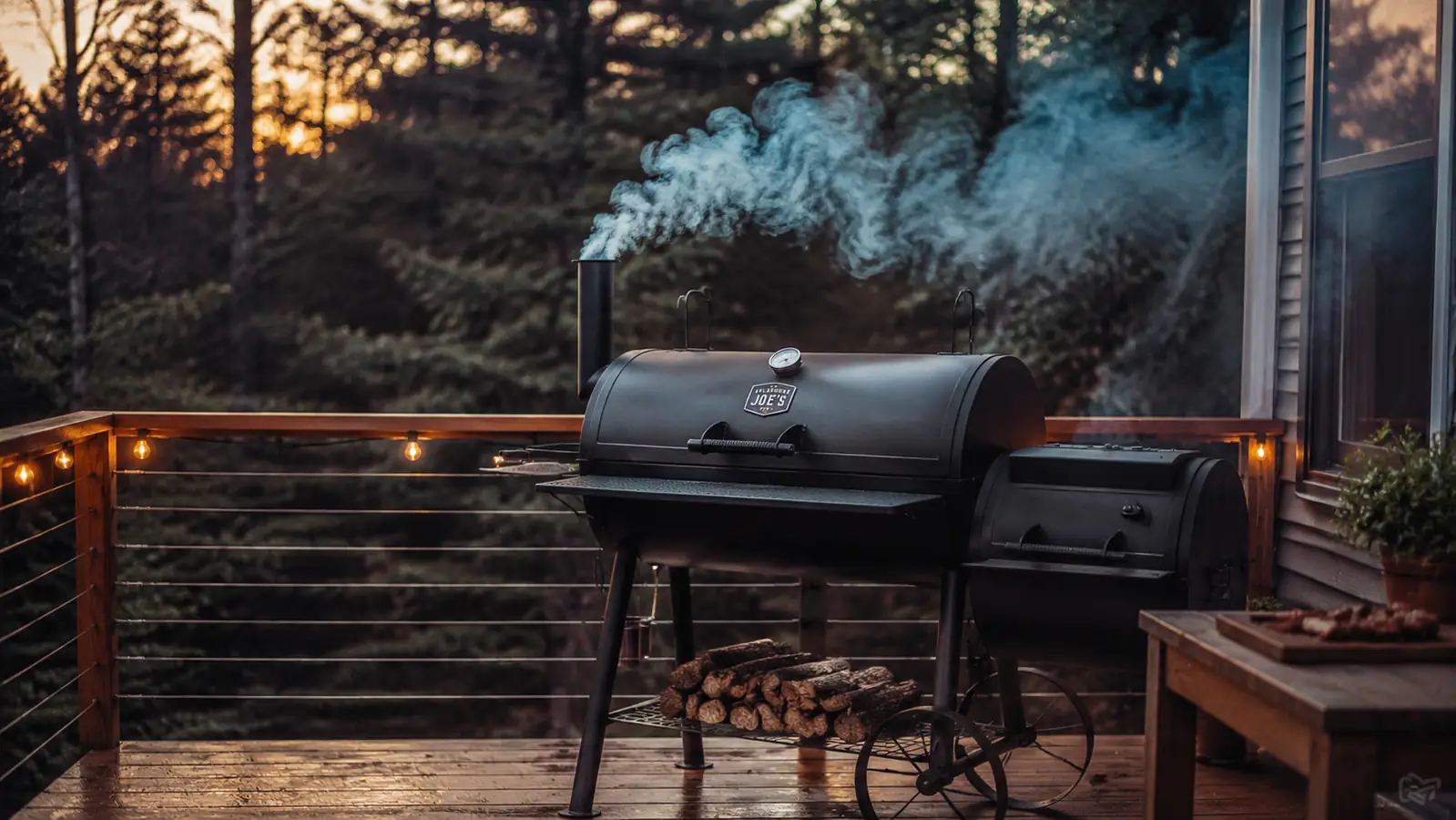
Every brisket I cooked before my old thermometer quit was the same script. I would be out on the deck cracking open the lid of the charcoal smoker, sliding an instant read into the end of the flat, and then standing there for twenty minutes while the coals rebuilt the heat I had just let out. Over a twelve hour cook that cycle repeated a dozen times, and every open cost me bark and pushed dinner later. It fed people, but it pinned me to the yard for the entire night, and I was cooking the biggest piece of meat I buy all year by the hunch in my stomach instead of the numbers the meat was actually posting. A full season with the MEATER Plus was built to end exactly that. Here is how the bet landed.
I work in IT, so the app was never the barrier for me. The reviews were. This wireless thermometer sat in my cart for two years, and every time I circled back I opened the one and two star ratings first, because that is where the truth lives. The complaint that repeats like a chorus is the Bluetooth. The connection dies at the first wall, people write, and the kitchen might as well be another county. So before I bought the MEATER Plus I ran the oldest trick in my book. I walked the exact route from the grill to the kitchen counter, counted the walls between, and picked where the phone would live while a cook ran. That was a year ago this week. The probe has now logged twenty four cooks, and this is what the year actually taught me.
The Quick Verdict
After a year and twenty four cooks, the MEATER Plus is the leave-in thermometer I reach for every single time. The meat reading is close enough to true that I stopped double checking it with a second probe, the app does the heavy thinking, and the only real limit is the Bluetooth distance, which is a placement problem you can solve before you light the first charcoal.
Amazon Check Today's Price →Stop Reading Your Meat at Midnight With a Flashlight
The MEATER Plus shows the meat temperature and the smoker temperature on one screen, so the app does the watching while you stay warm inside. It has earned a permanent place next to my gloves and my tongs.
Amazon Check Today's Price on Amazon →How I've Used It
The hardware is a single piece, and that simplicity is exactly why it is still in my drawer after a year. A thin probe slides into the thickest part of the meat, and a collar that stays above the surface reads the air inside the cooker, so one device hands you two live temperatures at once. There is no cable to thread down the vent, no clamp to snap onto the grate, nothing extra to sync. After each cook I rinse the shaft, dry it, and set it on the counter. That is the whole maintenance plan. Boring is a feature in my world. The tool that asks for nothing is the one still working on the last weekend of the season.
I made the calendar deliberately hard. Twenty four cooks built from the sessions that punish gear: three full brisket on the charcoal cooker, two pork butts that stalled past midnight, a turkey off a smoked oven at six in the morning, salmon on a cedar plank, a cold smoked cheese I needed to hold under fifty degrees, and a dozen chickens besides. Two of the long cooks ran through steady rain, and one was done in a fog so thick I could barely see the smoker from the kitchen window. The probe sat in the meat the whole time and kept reporting the whole time. That matters more to me than any spec list that ships in the box.
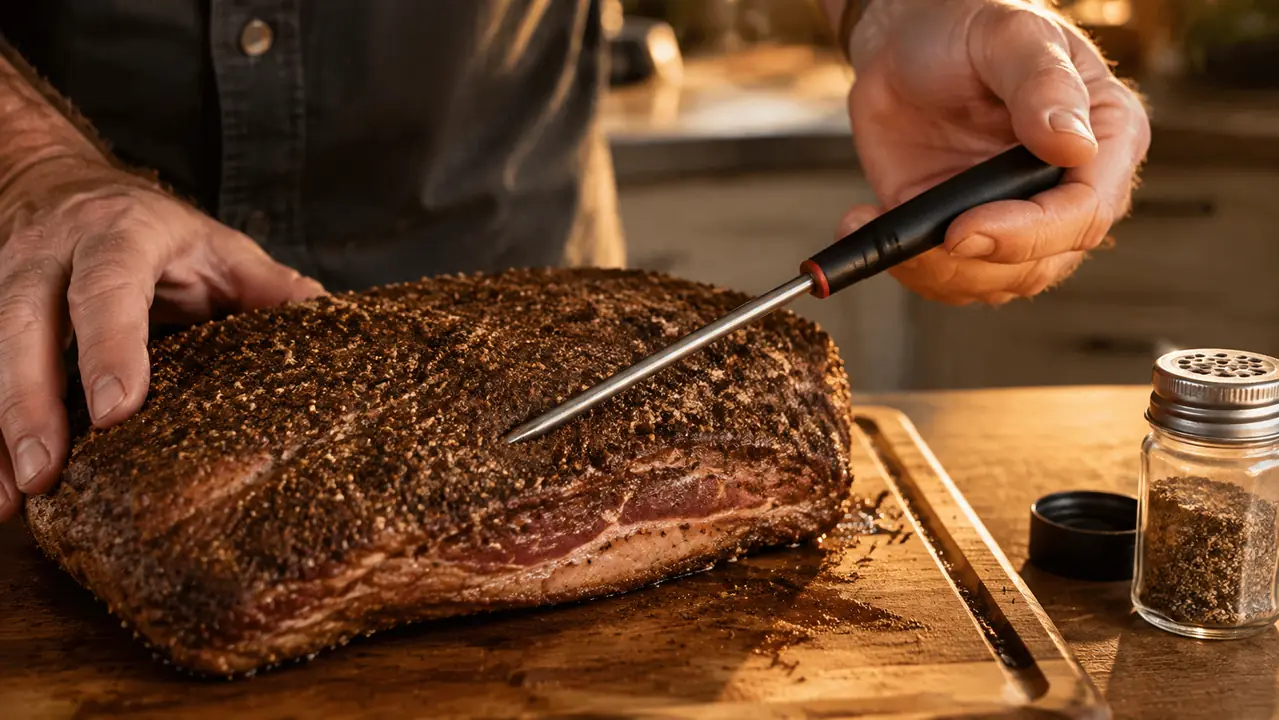
On accuracy I did the honest test an engineer does. At the end of each big cook I pulled the MEATER probe and read the same spot with a known good instant thermometer, always centered in the muscle and clear of the bone. It stayed within about a degree and a half of the reference every time, with exactly one exception, and that exception was my fault. I buried the tip against a flat bone and it read a few degrees hot; I re-seated it in the center of the muscle and it came back perfect. Keep the tip out of the bone and the heavy fat seam, and the number is a number you can build a meal around.
What changed most was the shape of the night. A long cook used to be a part time job built around a chair by the door, an eye on the dome, and beeps that only reached the porch. Now the phone is the base station and it sits on the kitchen island while the meat does its hours. When the lines climbed the way the schedule expected, nobody needed to stand at the smoker, and I did not have to. That is the contract this review is about: the weekend gets to stay a weekend, because the probe took the watch.
The Two Readings Are the Whole Point
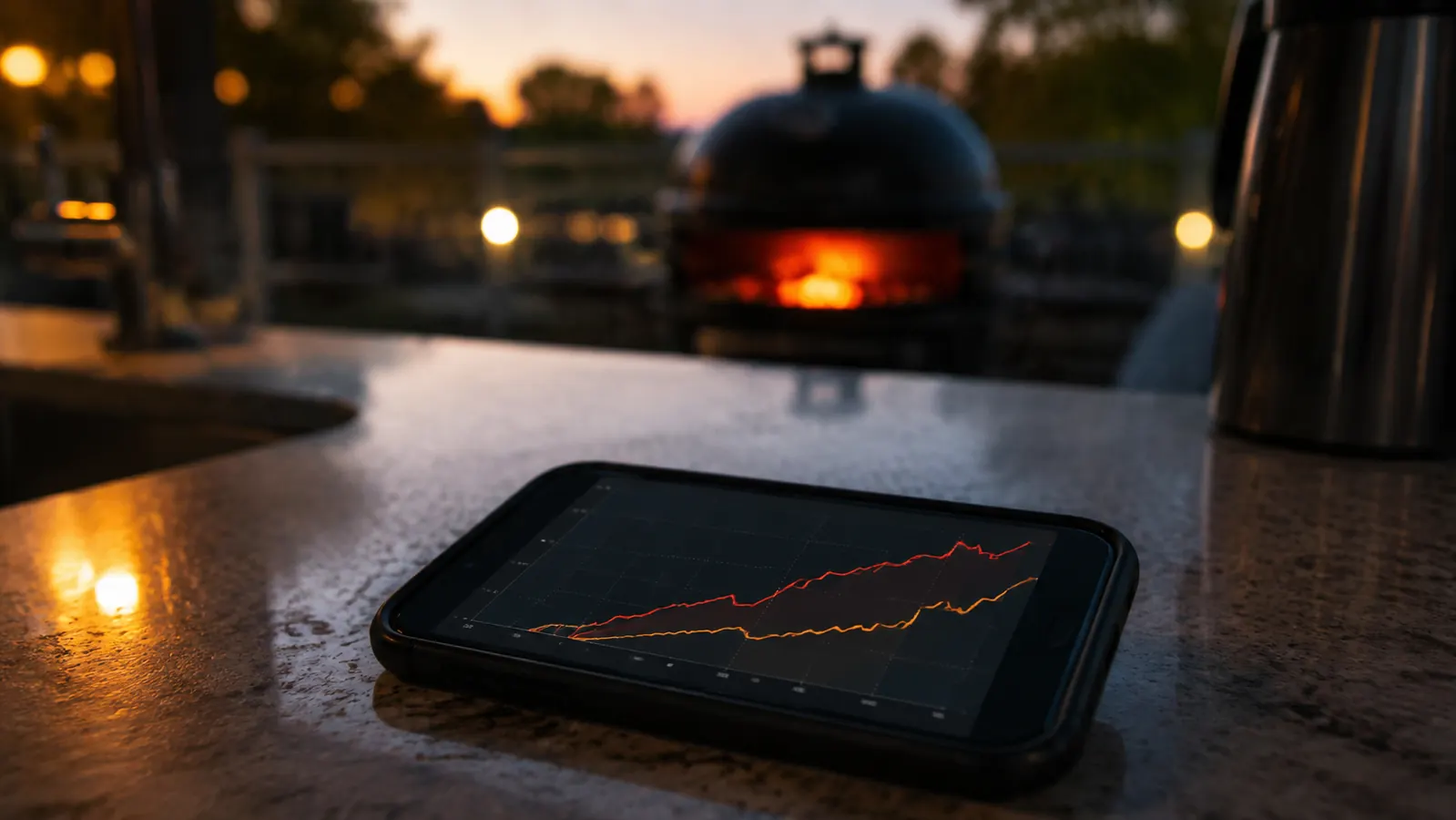
The part that wins me over every weekend is what the two sensors do together. The tip watches the center of the meat, and the collar higher up the shaft reads the air all around it, so the app draws two lines across the entire cook. One number tells you nothing about the shape of a smoke. Two lines tell you the whole story: the smoke drifting, the meat climbing, and the long flat zone that carries a brisket from stall to pull. I learned more in one year of watching that pair of lines than in ten years of popping the lid, and that is a comment on the design, not on me.
October gave me the story I retell at every cookout. The meat line held flat at 152 degrees for almost two hours, and the old voice in my head, the one that has wrecked a couple of good cooks, insisted the fire was dying and the dome had to come off. I put the phone on the table and actually looked. The smoke line was climbing slowly but steadily, which meant the box was holding temperature and the meat was simply doing a stall, trading a little surface moisture for a tender middle. So I did nothing for two full hours, on purpose, and the flat came out tender with the best bark I had all year. I cooked that whole stretch from a chair. The graph beat my instincts, and that evening is the review in miniature.
Now for fairness about the app. It offers a target temperature for each cut and I set my own numbers instead, so after the first two taps it left me alone. The alarms are loud enough to cover the porch, and if the link drops for a moment the app reconnects on its own and keeps the graph. In twelve months the connection dropped once, on the coldest hour of one night, and it recovered before I could even walk out to the rig. That is the reliability story that actually matters after a season.
The Range, and the Truth the Reviews Got Right
Now the honest range, the part I promised to tell you plainly. The 165 feet printed on the box is a line of sight claim, and a house is not line of sight. In my own house the cooker sits at the far end of the deck and the phone lives on the kitchen counter, split by a sliding door and one ordinary wall, and that path holds the link all night because it is exactly the route I measured before buying. Walk the phone down the hallway and the signal sleeps. Take it out the back gate, past the garage, and it will not reconnect until you come back. That has happened twice in a year, and both times the app repaired the graph on its own. The limit is real, and so is the fix.
The fix is a twenty minute test you do once. If the smoker and the couch sit on opposite edges of the house with a floor or a thick wall between, the WiFi edition or a beeping base near your seat is the better purchase and I will not argue. If the two are separated by a door and a short hallway, this probe is basically ideal and the radio will never break a cook. The 165 number is a fair weather figure. The everyday reach is closer to fifty feet through one room, and people have a hard time trusting the small print. Map your path before you buy, place the phone on the route, and the range becomes a problem you solved in May.
The other thing the box never says is about batteries. The probe sips power and the charging cradle tops it up between sessions, so no long cook of mine has ever gone dark. The phone is the part that actually drinks: an app painting a graph on a lit screen all evening goes through the battery like a fire through a dry season. For any cook that runs past midnight, I park the phone on a charger in the kitchen with the display on. That is the nature of a smartphone, not a shortcoming of the MEATER, and one planning session was enough to make the whole year quiet.
What I Liked
- One probe reads the meat and the smoke air together, so no cable, no vent wire, and nothing to crush under the lid
- The app plots both lines for the whole cook and the alarm rings out on the phone, not on a base unit two rooms away
- Cook after cook, the meat reading stayed within a degree and a half of a second gauge when seated center and off the bone
- Survived a season of rain, fog, and smoke, and still pairs on the first try every single time
Where It Falls Short
- The 165 foot range is a fair weather figure; the everyday reach is about fifty feet and one wall, so your layout makes the call
- The phone is the real drain, so any overnight cook means the phone lives on the charger
- The collar reads the smoke a shade high on a charcoal charge, so treat it as a trend line, not a calibration
- It is a leave-in tool only; you still want a quick read pen for the hot grate and the carving board
On a brisket flat at 152 for two hours while the smoke line climbed, I sat in a chair and did nothing. That single night is this whole review.
Alternatives I Considered
The wired double probe with its base station deserves respect, and it is the natural alternative. It gives you real range for less money and a number that never drops. But the wire is the part I could not live with: two seasons of the cable pinched into the lid, a coil broken on the corner of the grate, and then the evening the tug pulled the probe out of the meat and treated a false reading as truth while dinner cruised past tender. The MEATER has no wire at all, and that is the edge that got it into my shed. With a year on it, I still believe that was the right call.
The WiFi systems with a dedicated base are the powerful answer when the distances get big, and they deserve every bit of respect. For my layout the radio path was short enough that the WiFi box would have handed me a second screen and nothing else. The other tool I kept is the instant read pen, and it is a total partner to the probe. The MEATER sits in the cut for ten hours while the pen answers in seconds at the hot side. They are not rivals. They form a pair, and the probe owns the half of the job that used to cost me the middle of the night. That is the plain division of the work.
Who This Is For
The MEATER Plus is for the cook who runs long smokes and wants the night back: brisket that sleeps in the smoke, a string of shoulders, a turkey that has to come out right. It is for the one whose middle of the night used to be a flashlight walk to the dome, and who wants that hour to be an alarm on a phone in the kitchen instead. If the smoker and the phone can share a simple route, this is the tool that will change which cooks are actually enjoyable. I see it sitting there doing its job, and I can honestly reach for a half dozen once.
Who Should Skip It
Leave it in the cart if the smoker and the couch sit on opposite wings of the property and the route between them is a full floor wide. That layout belongs to the WiFi kit, not the Bluetooth. Leave it if the grill is rare and the menu is burgers with dinner over in twelve minutes at the coals, because a simple instant thermometer handles that evening better than a leave in. And be honest with yourself: if the idea of a cook that rests on a phone simply turns you off, a wired probe and a notebook will check the temperature without a smile. None of this is a fault in the MEATER. It just draws the hard line at the tool that fits a shed.
After a Year and Twenty Cooks, the Night Shift Is Settled
One probe, one app, a lid that stays shut. The MEATER Plus turned the middle of my night from a flashlight trip into a curve on the kitchen counter. Compare today's price and let your next brisket decide.
Amazon Check Today's Price on Amazon →