

I used to think a kitchen thermometer was one tool. For years I cooked with a single instant-read needle, a Thermapen-style probe trusted for steaks and searing, and it never once told me anything useful about a brisket sitting at 158 after nine hours. Last spring I stood over a pork shoulder at midnight with the whole cook riding on a guess, and I finally admitted the obvious: I owned the wrong thermometer for the job. The short answer to the question in the title is that you need both. But if this is your first thermometer, buy the wireless leave-in probe first, and here is exactly where each tool earns its place.
These two tools are not rivals. They solve separate problems that only look alike because the word thermometer covers both. The MEATER Plus, the wireless leave-in probe I have run for a full season, stays inside the meat and talks to my phone from the moment I close the smoker lid until the alarm sounds at target temp. The instant-read probe answers one quick question: is this steak, this chop, this thigh done right now? One is a long-haul sentinel. The other is a spot check you can finish in three seconds. The table below is the honest breakdown, and I have marked the rows where the cheaper tool beats the smart one.
| MEATER Plus (wireless leave-in) | Instant-read probe (Thermapen-style) | |
|---|---|---|
| Price to start | Higher upfront outlay than the instant model, but a one-time buy, and the app and ambient probe are included. | A proven instant read starts well below a wireless kit and can outlive your grill. |
| Time to a reading | Continuous, but it lives inside the meat, so it is not a quick-check tool. | A stable number within a couple of seconds, right in the thin center of a steak. |
| Watching a 12-hour smoke | Tracks meat and pit temp for the whole cook, graphs both on your phone, and alarms at the stall and at target. | Does nothing until you walk over and push the needle into the meat. |
| Monitoring from the house | Talks to your phone on Bluetooth, so you check from the sofa or the garage without lifting the lid. | You must be standing at the smoker to get a number. |
| Upkeep and failure | Rechargeable battery inside a sealed probe, more electronics that can break over a long season. | A single cell lasts a year or more, and a decade-old unit still reads true. |
| Best for | Brisket, pork shoulder, turkey, anything with a stall and an overnight watch. | Steaks, burgers, chops, fish, and spot-checking a whole grate of thighs. |
Where the MEATER Plus Wins
The leave-in probe wins any cook you measure in hours. On a Memorial Day brisket, an 11-pound packer, I started the MEATER Plus before the smoke, walked away, and watched meat temp and pit temp climb together on the app graph. When the stall arrived around 160 degrees, the app flagged it and showed that the ambient reading had drifted low near the probe. That second number, the ambient reading, is half the value of the MEATER Plus: one shaft reads the meat and the air at the same spot, so a single unit watches both the meat and the fire. An instant needle gives you the one number it happens to be touching, and only for the second you touch it.
The app also keeps a record, and that surprised me most. Every finished cook is saved with its full curve, so a season later I can pull back the graph from the shoulder that stalled for hours and compare it to the one that cruised through. I work in IT, so I read this data the way other people read recipe blogs, and the history screen has quietly become my smoking journal. It is a feature you would not guess matters until the Sunday you use it to plan the next cook.
My smoker sits sixty or so feet from the kitchen through a brick wall, and the MEATER Plus holds that connection well enough that I cooked a whole turkey from inside the house, checking the curve while I did the sides and letting the phone call me back when the meat finished. The advertised range consists of line of sight, and brick and weather cut it hard, and that is honestly the number one weakness, which I get to below. For its actual job, guard one cut for ten hours, nothing else in my kit comes close. I wrote the full season-long verdict separately in my MEATER Plus long-term review.
Where an Instant-Read Probe Wins
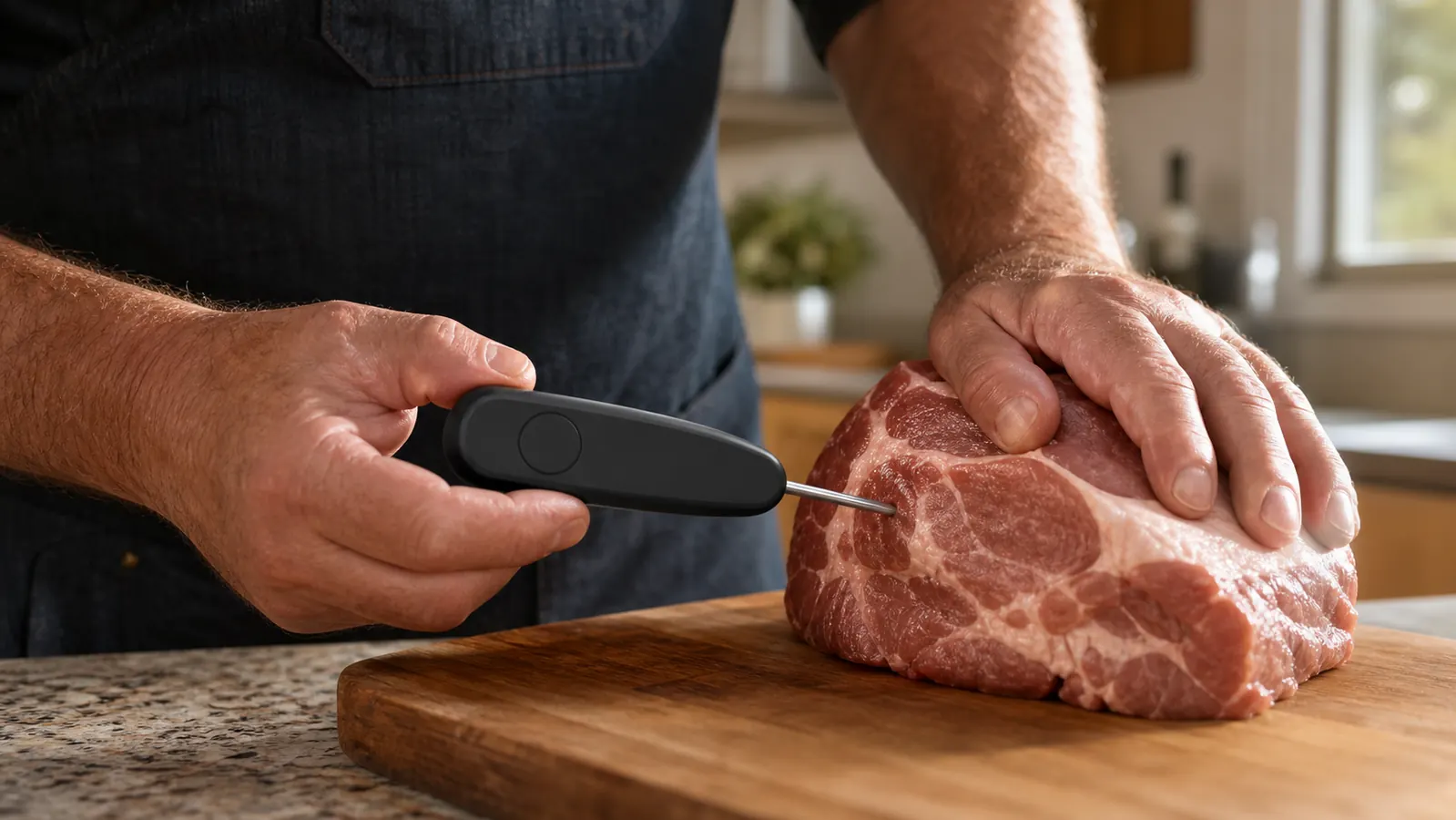
The instant read wins on speed, and that is a broad category. My Thermapen-style probe settles on a stable number in about two seconds, and the fine needle reads the thin center of the piece rather than the nearest pocket of fat. A 1.5-inch ribeye off a screaming-hot grate has no time to wait for a Bluetooth handshake; you want the number now, mid-sear, not after it rests. For burgers, chops, legs spread across a full grate, and fish that moves from done to over in ninety seconds, the instant read is the right tool, and it is the one I reach for at least three times on the usual grilling night.
It also wins on simplicity and on being always ready. A good instant read has one job and no app to update. When it fails, it fails loudly, and most of them take a decade of use, still accurate. The MEATER Plus is more electronics, a probe to keep clean and charged, and that is the honest trade of anything with a sealed battery and a charging case. If your cooking is mostly fast, steaks, skewers, and quick vegetables, the instant read on its own is truthfully enough, and the start cost is well below.
A Word on the Set-and-Forget Promise
The marketing for wireless probes leans hard on set-and-forget, and that is half true, which makes it a trickier promise than a flat lie. The MEATER Plus removes the lifting-the-lid guessing game, which is its real job, but it does not run the fire and it does not calibrate your smoke. The probe reads the air right beside the meat, so it tracks the local pocket in the box, not the whole fire you manage by hand on a charcoal afternoon. You still tend the coals, and the app still needs a phone within range.
The complaints I have lived with for a year are the range and the charging habit. The unit has never missed an end-of-cook alarm, but I have watched the graph stop when I walked to the far end of the yard, and a reconnect can take a moment you do not want during a meal for guests. The probe is rechargeable, so it sits on my list the night before a full smoke, right next to the drill batteries. Neither is a reason to pass, but the phrase deserves the air quotes. The full list of quirks and real faults is in my honest MEATER Plus review.
The most important quirk cost me half a season to find. On a tall charcoal smoker the ambient sensor sits a couple of inches below the lid, and in that pocket of still air it reads high, sometimes twenty or thirty degrees above the real grate. You learn to treat it as a trend, not a gauge: a steady line all afternoon means the fire is holding, and a slow climb means you are running hot. The probe deep in the meat is the number that decides the cook. The ambient number only tells you when to nudge the vents.
The Case for Both, and the Case Not To
The honest middle is that a serious smoker ends up with both, and the whole question is order. I own one of each and they store on different shelves because they work at opposite ends of a cook. The instant read comes out at the start, to confirm two tri-tips are the same thickness, and at the end, to separate a brisket flat from its point. The MEATER Plus carries the middle ten hours that neither an instant needle nor a kitchen and oven probe ever covered for me.
But if I could keep only one thermometer in the shed, it is the wireless leave-in, and that confession is specific to smoking. The common failure in a backyard smoker is not an undercooked steak. It is a dry brisket after an overnight. An instant read can warn you only if you are at the smoker at the exact minute. The MEATER Plus will buzz you from your nightstand at 4 in the morning if the fire dips low. That asymmetry decides the order for anyone who smokes more than they sear. For cooks who only do fast, flip the answer and buy the instant read first.
How a Typical Weekend Splits Between Them
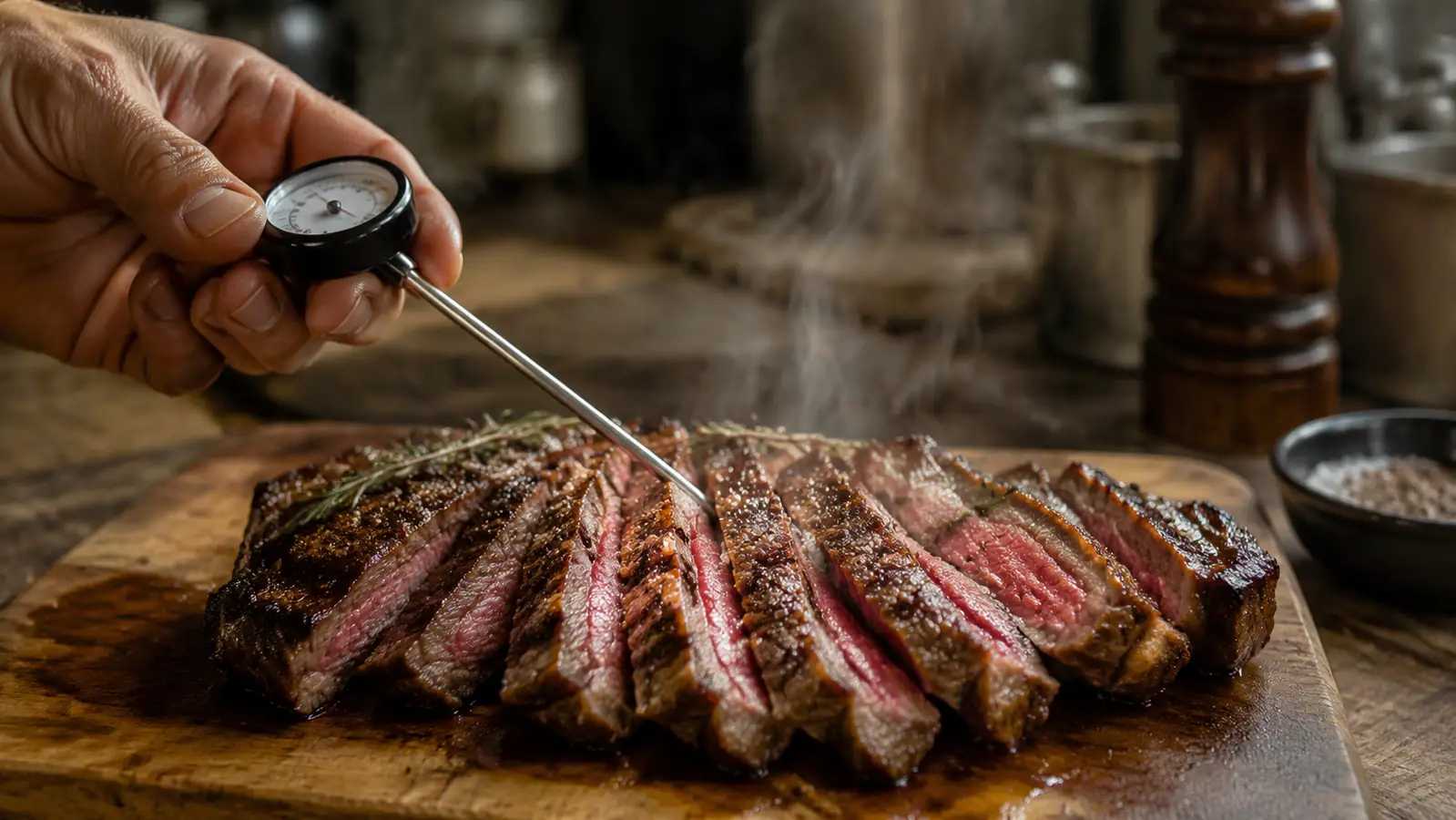
Here is a normal June Saturday. At seven in the morning I put a trimmed shoulder under the MEATER Plus probe, set 203, and went back inside. The app showed it climbing while I rode a 22-mile loop on the rail trail, and I checked it from my pocket at the turnaround. Home by early afternoon, the graph showed the stall begin, and the ambient line caught the dip when I opened the door, so I fed the coals without guessing how long the smoke had gone thin.
The instant read came out later for a different job. Two racks of baby backs and a small chicken stood resting, and I needed a yes or no on each without losing more heat. Two seconds per piece, closed again. Same afternoon, each tool did exactly what the other could not, and neither replaced the other. That is the full case in one day, and it is the reason I have stopped trying to ask a single tool to do both jobs.
How I Check Both Before I Trust a Number
Every thermometer lies eventually, so I have a routine. About once a season I check both probes in boiling water, which should read my local boiling point, and in an ice bath, which should read 32. The instant read has never been more than one degree off in the three years I have owned it. The wireless probe clears the same check, only through the app, so there is a software layer in the way. The point is I do not trust either one blind, and I do not start a long cook until I have seen the two agree.
There is a quieter reason to keep the instant read even with the wireless running, the verification at the exact moment of decision. On brisket day I take the number the wireless reports and then run the needle at the same spot. If they agree, I start the rest timer. The two times all season they did not agree, the needle was right and the probe was sitting in a pocket of fat. That is not an insult against the MEATER Plus. It is the living example of how the two tools work as a pair.
The Leave-In Probe That Watches the Smoke So You Don't Have To
If whole cuts are your weekend, the MEATER Plus is the one to start with: meat temp and pit temp on your phone, stall and target alarms, and no lid lifting all afternoon. It is the thermometer that earned a permanent spot in my smoker kit.
Amazon Check Today's Price on Amazon →Who Should Buy Which
Buy the MEATER Plus first if you smoke whole cuts: brisket, pork butt, turkey, ribs you plan to wrap at a set temperature. Buy it before your next overnight cook if your smoker is bigger than a kettle. The first tough stall it corrects for you repays the outlay, and I have covered how to watch a long cook without the lid in a separate guide. My honest review carries the rest of the story, and it stays the probe I reach for on every long weekend.
Buy an instant read first if your cooking is mostly fast: steaks, burgers, chops, a salmon that turns from done to overdone in the time of a joke. Whatever you start with, plan to own the other by next season, because no single probe answers the final spot-check on a whole grate, and the money on a single saved brisket covers most of a second probe. My only advice is to stop waiting. Either probe changes your cook, and the one you put into service on Saturday is the one that helps you on Saturday. Start there and add the spare the first time an overnight cook demands it.
Buy It Before Your Next Long Smoke
One overnight cook is enough to know the difference between guessing and watching. If your next weekend has a brisket or a pork shoulder on it, grab the MEATER Plus now and set it up before you light the fire.
Amazon Check Today's Price on Amazon →