
If I had to name the single tool that separates my good smoker days from my bad ones, it would not be the smoker itself. It would be the meat thermometer. I spent my first full season guessing. I checked the dome gauge, peeked at the color of the bark, stabbed a pork shoulder with an instant-read every half hour, and still served dry, overcooked meat more often than I want to admit. Nobody told me the culprit was measurement, not technique.
That changed the day I started leaving a wireless probe in the meat and letting it talk to my phone. The MEATER Plus has been the workhorse on my patio for the past two seasons, and it has saved me more meat than I can count. If you only take one thing from this article, take this: a smoker without a thermometer that reads the center of the cook is a stove with a blindfold on it. Here are the ten reasons I treat a meat thermometer as part of a complete smoker setup, not an optional extra.
My pick for long smoke sessions: the MEATER Plus
Two seasons in, the MEATER Plus is the thermometer I trust enough to run an overnight brisket. One probe reads both meat and ambient temperature, there is no cord fighting the lid seal, and the app wakes me up before anything goes sideways.
Amazon Check Today's Price on Amazon →The stall stops being a crisis when you can see it
Every pork shoulder and brisket hits a stall, usually somewhere between 155 and 165 degrees, where the internal temperature holds an hour or two. Without a probe you open the lid, wonder what went wrong, and start fiddling with the vents. With a leave-in probe you watch the stall happen in real time in the app and do the only thing that helps: nothing. The worst mistakes I ever made at a smoker happened during a stall I could not see. Patience gets a lot easier when you watch the number start climbing again.
Big cuts stop being a gamble
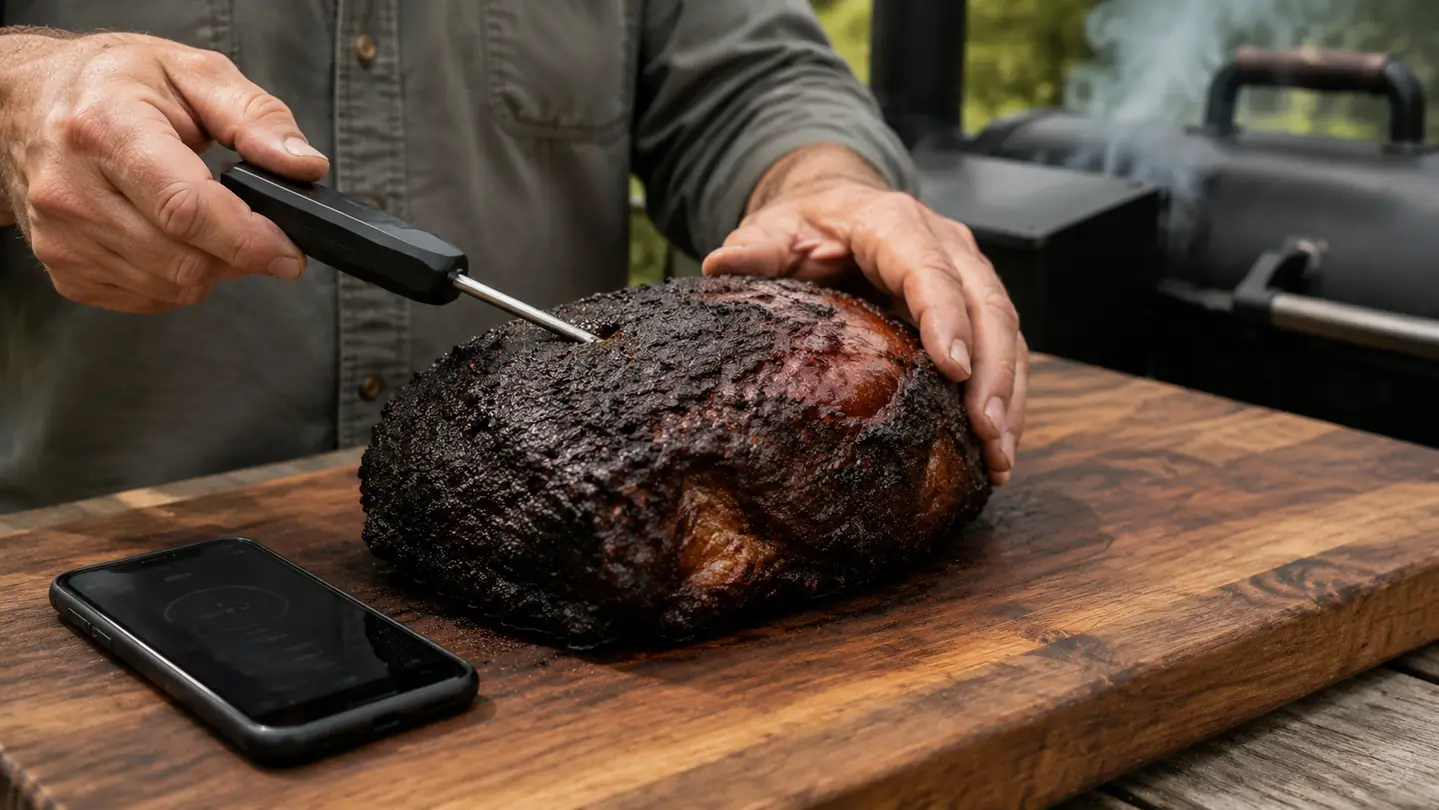
An uncut packer brisket, a rib roast, a whole pork belly. These are not cuts you want to judge by texture, because you only find out when it is gone. I have ruined my share by guessing, and I remember every one of them. A probe that tells you exactly when to pull turns a big cook from a coin flip into a known outcome, and it does that on the very first cook. That one afternoon convinced me to keep the thermometer out of the drawer for good.
The lid stays shut, so the bark comes out even
Every time you crack the lid you dump heat and let the smoke roll out. That is minutes of recovery and a setback for the thin smoke layer you are chasing. The wireless probe means the lid stays closed from load to pull. I notice it on every long cook now: my pit temperature runs steadier, and the crust sets in darker and more even than it ever did in my guessing years.
Overnight cooks run themselves while you sleep
I put a pork butt on at 10pm and the app wakes me once, maybe twice, through the night. It shows the meat temperature and the ambient number in one glance, so I no longer camp in a lawn chair with a light. My Saturday mornings are for a long bicycle ride, not for hovering over the smoker again at 3am. An alarm that wakes you when something drifts is the difference between sleep and a ruined cook.
You pull at the right degree every single time
Brisket finishes at 200 to 205, not 190. Shoulder at 203. Chicken is done at 165 in the breast. Those numbers decide between tender and chewy, and they are not opinions. An instant-read can find them if you are standing by, but a leave-in probe catches the number the very instant it happens, no matter where you are in the yard. I have watched a neighbor pull a shoulder at 195 and wonder why it would not shred.
Resting stops being a mystery
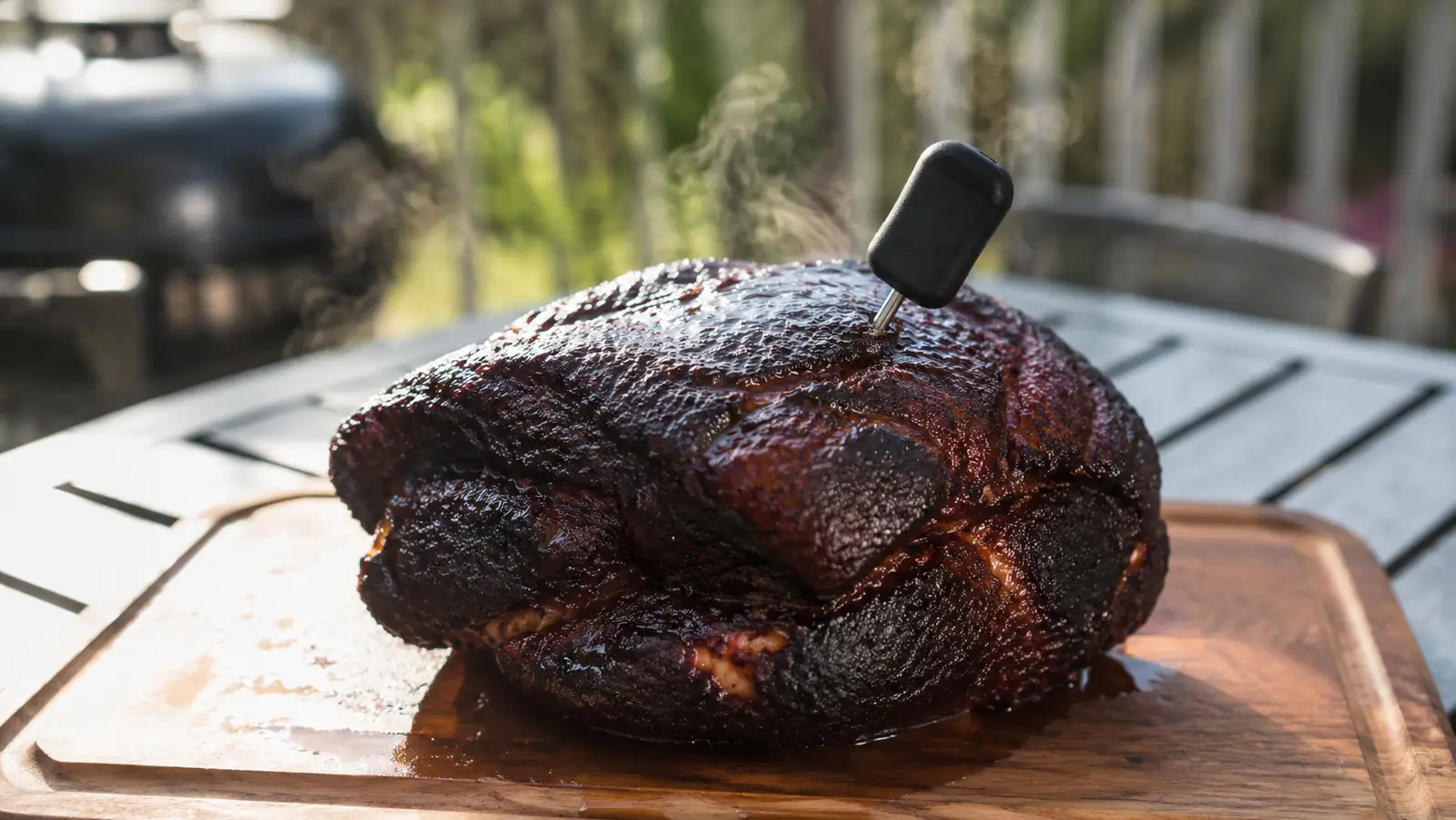
The meat keeps climbing several degrees after it leaves the smoker, and that carryover is doing real work. When I pull a brisket at 198 and it settles to 203 through the rest, I want to know it landed there. A thermometer that stays in for the rest shows you exactly where it ends up. My last brisket came to the table probe-tender, and I already knew it before the first slice.
You finally learn what your smoker actually runs at
The dome gauge on my offset reads one thing while the food sees another. Every smoker drifts a little, and most drift a lot. The MEATER Plus pairs a meat probe with an ambient probe, so I finally learned the true temperature where the food actually cooks. Your unit may be off by less or by more, and the only way to find out is to measure at the grate, not at the lid. That single number changed how I set my vents for good.
Good cooks become repeatable, not lucky
The whole point of a backyard habit is that your friends ask for the same ribs again. I log the numbers from every cook, pull temp, ambient temp, rest temp, and I can match a good result exactly. Before the thermometer, every great shoulder was a happy accident I could not reproduce. Now it is a formula, and the formula always answers.
Poultry hits the safe zone without turning to sawdust
Chicken and turkey are where overcooking and food safety fight for the same bird. The window between fully safe white meat at 165 and dark meat at 175 is narrow, and the only way to thread it is to measure it. My holiday bird spends an hour in the 160s on the app before it tells me to pull, and it arrives juicy. A safe table is the one result worth building the whole setup around.
You get your evening back, guilt free
This last reason is about the ritual, not the thermometer. A wireless probe means I can be on my bike or on a long hike and still know exactly what dinner is doing. Cooking stops being a job where I stand and watch, and starts being something that fits around my day. The smoker sits in the background, working the way good tools do. That is why I will not smoke without one anymore.
What I'd Skip
The MEATER Plus is not the right thermometer for everyone. If you only do quick burgers and steaks on a gas grill, a simple instant-read probe is already enough and you will not use the wireless overnight features. If your smoker sits far from where you spend the rest of the evening, wireless range can frustrate you through a house wall. And if you refuse to depend on a phone, the app-led setup will annoy you from day one. For those folks, honestly, skip it. For anyone who smokes low and slow, this is still the first upgrade I would make.
I pulled my last brisket at 198, it settled to 203 during the rest, and I knew it was tender before the first slice.
Start with the probe, save the next cook
Two seasons in, the MEATER Plus is the one piece of gear I would replace the same day if it died tomorrow. If you smoke anything longer than an hour, this is the single upgrade that changes the results. Give the inside of the cook a voice, and it will repay you.
Amazon Check Today's Price on Amazon →