
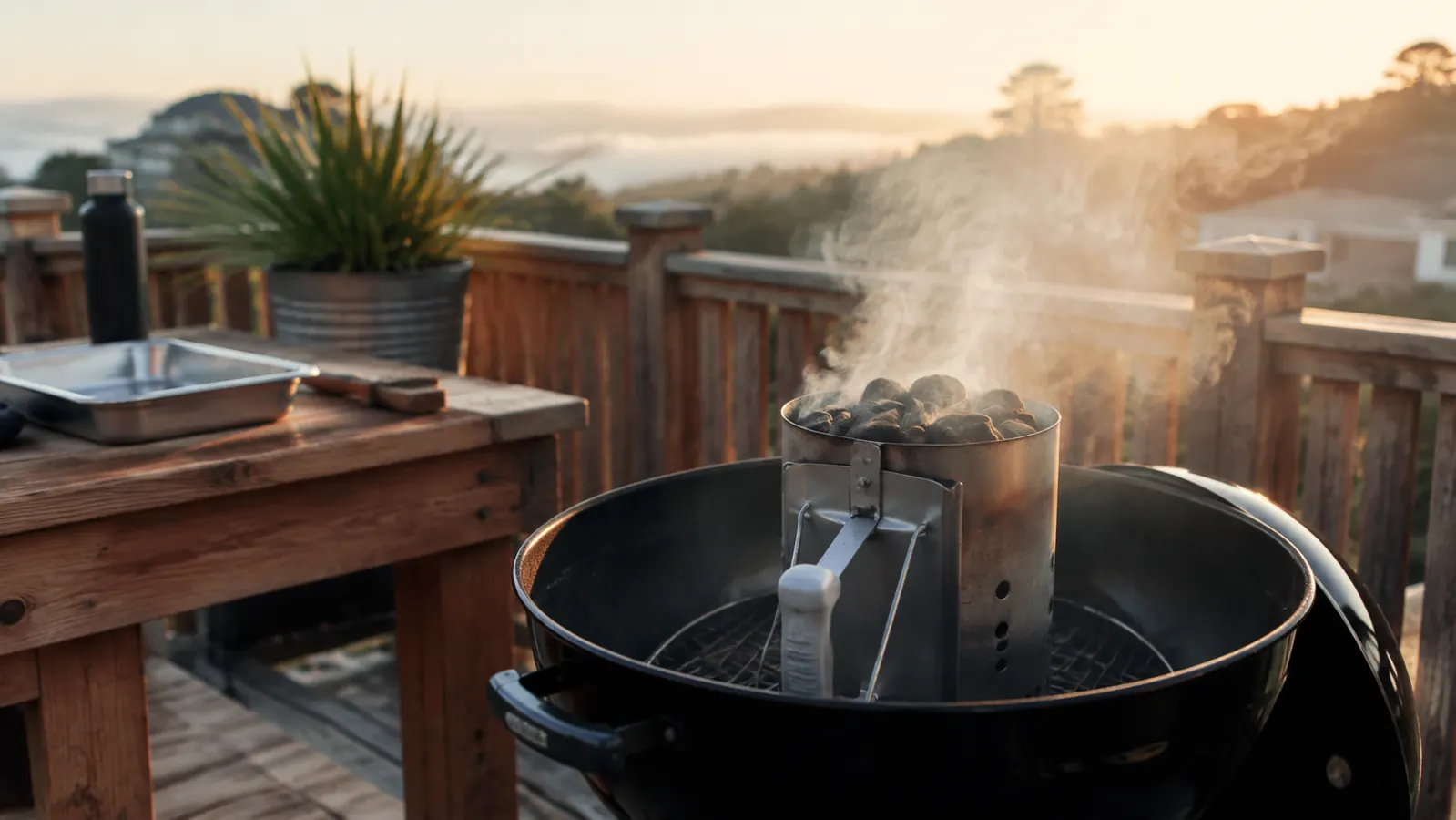
Short answer: for the way I actually grill, the Weber chimney wins, and it is not close. I searched hard for an electric charcoal starter I could love, because I work in IT and I genuinely like a gadget that does the work for me. Letting a coil, a plug, and a heating element handle the whole first ten minutes sounds exactly like my kind of tool. After a full season using both side by side, I keep reaching for the chimney, and the electric starter spends most of its life in the shed.
The honest reason is not pure speed. An electric loop can be a touch faster once it is warmed up, and for the first ten minutes it is genuinely effortless. What the chimney keeps quietly winning on is that it works everywhere, has nothing to wear out, and never depends on a grounded outdoor outlet being within reach of the grill. When you cook as much as I do, on the patio and at the campsite and out at the lake, that one fact ends up deciding everything. The tool you can start anywhere beats the tool that is faster only where the power happens to live.
At a Glance: What Each One Actually Is
A charcoal chimney is a simple steel cylinder with a grate across the middle and a wooden or coated handle. You crumple newspaper in the bottom chamber, fill the top with briquettes or lump charcoal, light the paper with a match, and within about fifteen minutes the coals on top are ashed over and ready to pour. The one I run is the Weber Rapidfire, a single welded body with no moving parts and no cord attached.
A typical electric charcoal starter is an open coil of heating element on a short stand, with a cord and a plug. You set the element on the charcoal, heap the fuel over top of it, and let it heat the briquettes until they catch and spread. It is a real convenience the first time it works, and I do not want to undersell that. But it only works where the cord reaches a live outdoor outlet, and the coil is a wear part that will eventually die. That single practical detail drives most of the rest of this comparison.
| Weber Rapidfire Chimney | Electric Charcoal Starter | |
|---|---|---|
| Price | One piece, nothing else to buy | A second device that needs a power cord and a working outlet |
| Works anywhere | Paper, a match, and you are running. Campsite, beach, shed, tailgate, the lake | Only where a grounded outdoor outlet reaches. A stationary tool by nature |
| Time to ready | About 15 brisk minutes, same batch after batch | Often a little faster once it is up, but a tripped breaker or a short cord restarts you at zero |
| Durability | Welded steel with no moving parts; mine has lasted years with no sign of quitting | Elements and cords are wear parts that fail, and a dead coil means buying a new one next cook |
| Light what you need | Fill it to the top or a third full, pour off a partial batch for a small cook | Heats whatever you heap over it, also fine for small loads, but you still hover around the cord |
| Safety on damp ground | Hot steel, no electricity, nothing that cares about a wet patio | A cord run across the deck is a trip hazard, and water near a live outlet is a real concern |
| Flavor cleanliness | Coals ashed over clean, no chemical taste and no metallic note from the fire | Also fluid-free, but a coil heated directly against the same fuel batch after batch builds a cooked-on smell |
| Portability | Folds nowhere and needs nothing, it just rides in the truck to any fire | Lives where the outlet is; think of it as part of the patio, not a travel tool |
The one I still reach for every cook
After a full season with both, the Weber chimney is the one that earns its place on the shelf. It runs on paper and a match, holds up for years, and starts a clean fire anywhere you happen to be. It is the tool I would buy again without hesitation.
Amazon Check Today's Price on Amazon →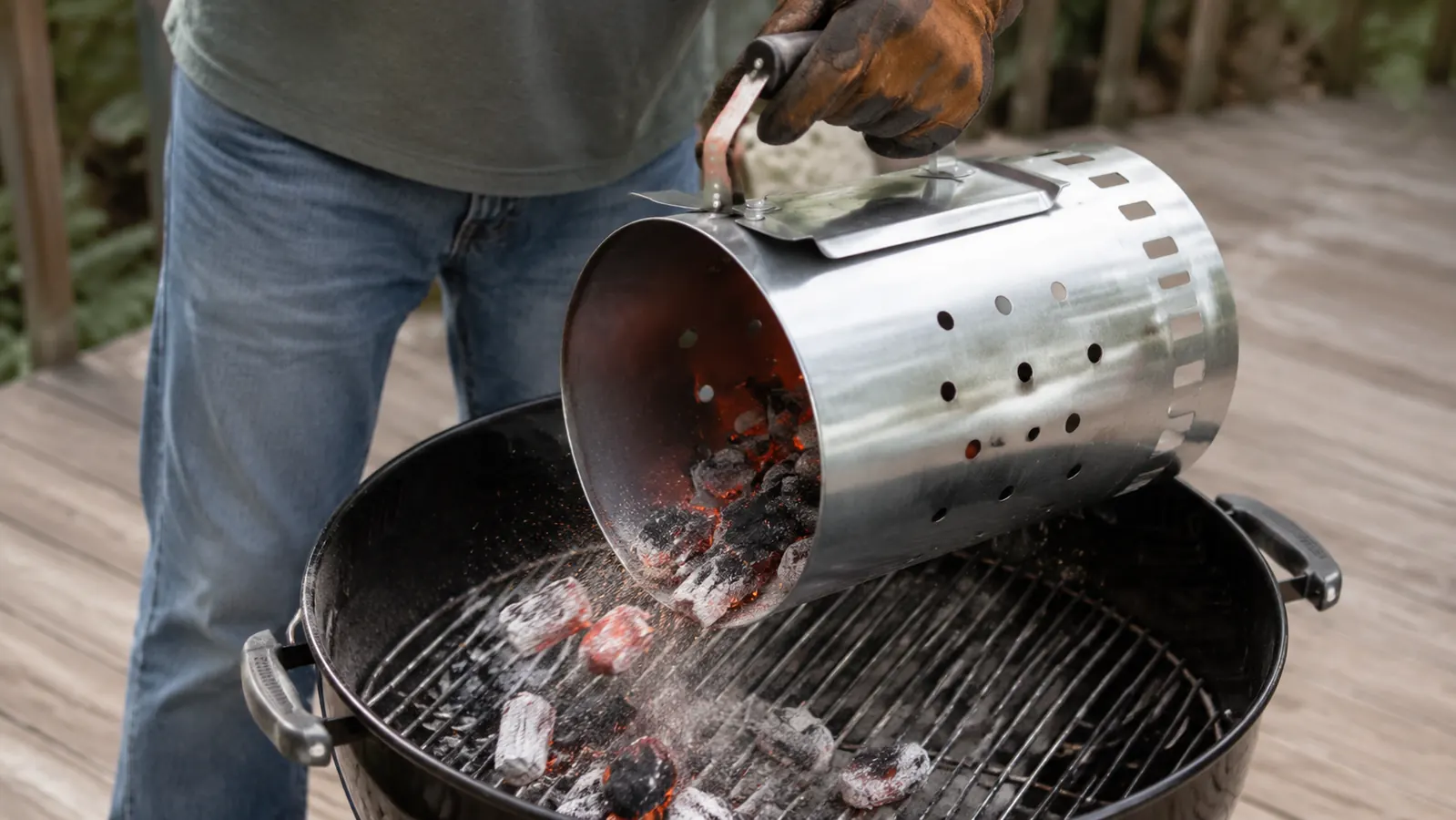
How I Ran the Comparison All Season
I treated this like a proper field test, not a one afternoon stand. From late spring through the first real frost I ran charcoal at least twice a week, most weekends on the patio and a handful of times off it. I used the same fuel every time, the same kettle grill, the same load size, so the only variable was the starter. On patio cooks I went back and forth, one session the chimney, the next the electric, and I kept notes on time, fuss, and whether I could taste any difference in the finished meat.
The electric starter got a fair shake. I bought a good one with a proper coiled element and a long enough cord to reach my deck outlet, and I followed the included advice about heaping the charcoal over the coil and giving it ten minutes before checking. There were mornings it worked beautifully, especially calm ones with nothing in my way. What kept showing up in the notes was not the minutes, it was the setup: the cord across the walkway, the outlet being full, the coil needing a scrub after it had cooked on a season of debris. The chimney never had a note like that.
Where the Weber Chimney Wins
The first weekend of the season I did a clean side by side. I filled the Weber chimney with the same lump charcoal I use for ribs, crumpled two pages of newspaper underneath, and lit it with a book match. I set the electric starter into a second basket, ran its cord out to the deck outlet, and waited. Fifteen minutes later both baskets were glowing, the chimney coals grey and ready to pour, the electric coals ashed over too but with that faint cooked-on smell hanging around the element that I have learned to recognize over the course of the summer.
The chimney's real edge showed up the weekend after, when I hauled it to a buddy's place at the lake. He has no outdoor outlet anywhere near his fire ring. We lit the chimney on the gravel, dumped the coals, and had burgers going long before the electric starter could even have started, because there was nowhere on earth to plug it in. That is the whole argument in one sentence: the chimney runs on paper and a match, so it works exactly everywhere you are, which is most of the point of cooking over charcoal in the first place.
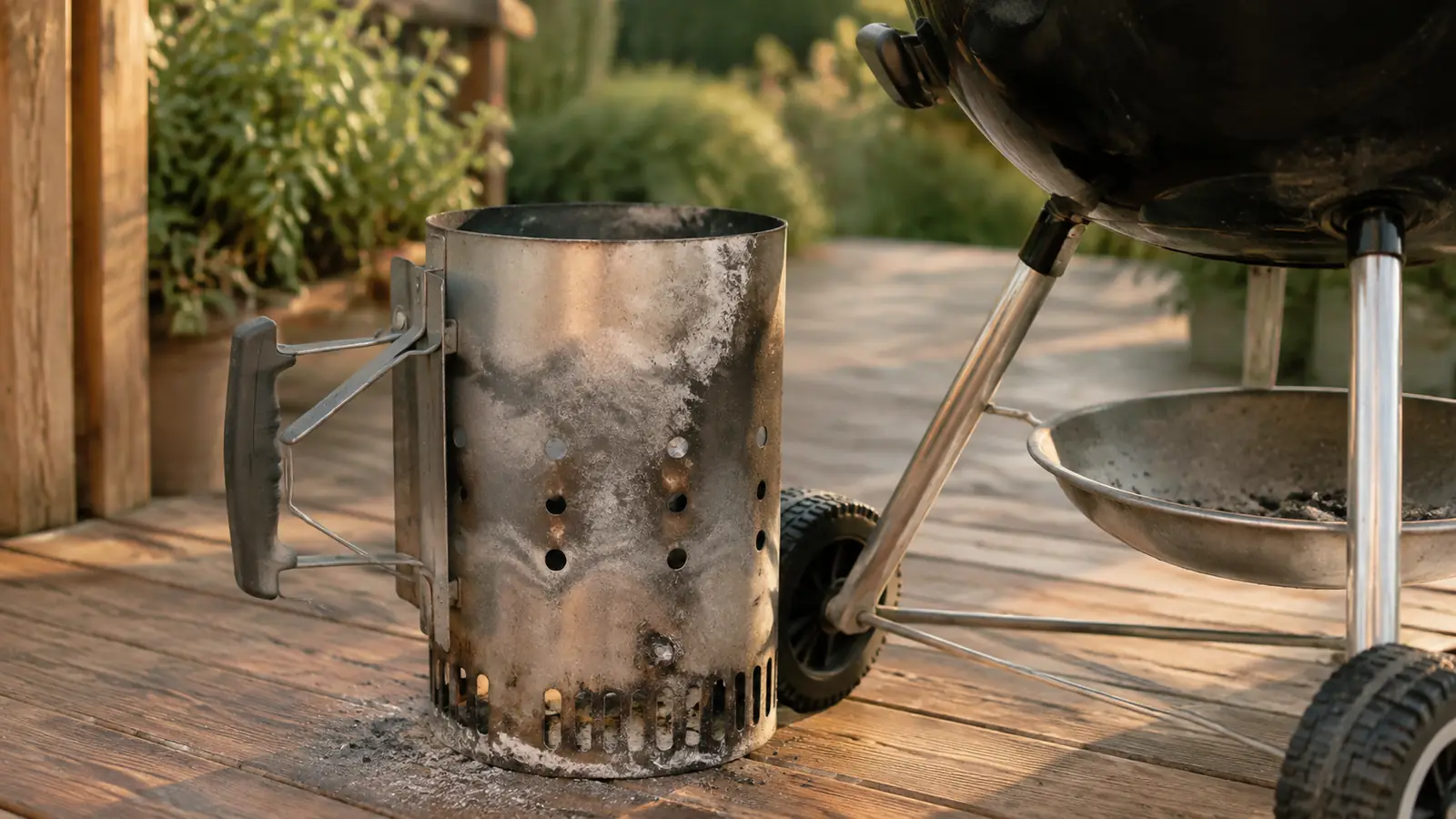
I also value how little there is to go wrong. The Weber is one welded steel body with a handle that has never even loosened on me after years of use. No element to burn out, no cord to fray, no breaker to trip, no outlet to dedicate. For a man who keeps tools for a long time and expects them to earn their shelf space, that durability is a big part of why it wins. I am fairly sure the Weber will still be lighting my charcoal after the electric starter has been replaced twice over.
Where an Electric Starter Wins
I want to give the electric starter its fair due, because it genuinely does some things better and I have no interest in pretending otherwise. For someone with a dedicated grill station, an outlet built right into it, and a body that does not enjoy bending down to arrange crumpled newspaper, the electric loop is genuinely the more painless start of the two. You set the element, heap the fuel, and walk away for a bit. The coil does not need you to nurse it the way a flame flickering through newsprint sometimes does on a blustery afternoon.
It can also shave a couple of minutes off the slow grey middle, the part where a chimney sits there looking like nothing is happening while the paper catches gradually. On placid evenings with the outlet close at hand, the electric starter got me to cooking faster and with less attention. During long smokes where I was already busy with the rub and the prep and the phone, that hands-off window was a real convenience rather than a gimmick. If your whole charcoal life happens on a flat patio within reach of one reliable outlet, the electric starter is a completely defensible choice, and I would not talk you out of it.
There is one more thing worth saying in its favor. On a windy, gusty day when a chimney flame gets beaten around and sometimes struggles to take, the enclosed coil under a heap of charcoal keeps working regardless of the breeze. That is a genuine advantage I hit a couple of times in late summer, and I would not want to pretend the chimney never struggles on with the stubborn gray middle while the wind does its worst.
The electric starter is faster when the outlet is right there. But the chimney is faster than the electric starter everywhere an outlet is not, and that turned out to be most of my cooking.
Who Should Buy Which
Buy the Weber chimney if you cook off the patio, or at the campsite, or at the lake, or anywhere the word outlet makes you look around and think twice. Buy it if you want a tool that will outlast the season and never needs a spare part. Buy it if the flavor difference matters to you, because a clean paper fire with no metallic note from a cooked-on coil is something you can actually taste in the ribs and shoulders that come off your grill.
Choose an electric starter if your grill never moves, the outlet is already built into the station, and you would happily trade a cord and a heating element for ten hands-free minutes on a calm afternoon. It is a fine tool for exactly that person, and I respect how much it simplifies their start. But for everyone cooking in more than one place, I would put the chimney first, keep it handy, and only add the electric loop later if the patio setup ever begs for it.
At the end of the season, the verdict writes itself. Both tools get you to glowing coals without a single drop of lighter fluid, and either one is a step up for anyone who still smells chemicals in their first bites of the day. The difference is that one of them works wherever you are and lasts for years, and the other wants an outlet and a calm breeze and a gentle hand. For the way I cook, the Weber chimney earns its place, and that is the recommendation I would give to my own neighbor across the fence.
The Flavor Difference You Can Actually Taste
Before I owned either tool this was the whole story, and I think it is worth spelling out because it is the emotional reason anyone gives up lighter fluid at all. For years I stood over a kettle with a jug of fluid, squirted the charcoal, and told myself the smell would cook off. It never really did. The first few bites of the evening carried that faint chemical edge, and I just got used to it the way you get used to a hum from a fridge. The moment I started lighting with a chimney, that edge vanished, and it stayed gone with the electric starter too.
So on flavor, both tools beat the old way decisively, and I want to be clear that the electric starter is not a downgrade to fluid. Where they differ is the finish. The chimney lights clean paper under the fuel, and the coals ash over with a neutral, almost sweet woodsmoke smell that makes you want to start cooking. The electric element, pressed against the same charcoal day after day, slowly cooks an odor onto itself that you can smell at the grill before you even put meat down. It is subtle, but for someone who cooks ribs every weekend, subtle is exactly what you start to notice.
If you are only going to own one, and you cook anywhere other than a single fixed patio, the answer is the chimney. It lasts for years, never needs a spare part, and never leaves you stranded at an outlet. The electric loop is a fine second tool, one I would happily keep beside a dedicated grill station, but it is not the foundation. The chimney is. Factor in that it doubles as a way to carry and pour hot coals precisely, and it starts to feel less like a convenience and more like a small piece of essential kit.
One chimney, every outdoor cook handled
The Weber Rapidfire has lit one charcoal session after another for me, at home and off the beaten path. If you are done with lighter fluid and want a clean, patient, durable start that works anywhere, it is the tool I would buy again.
Amazon Check Today's Current Price on Amazon →