
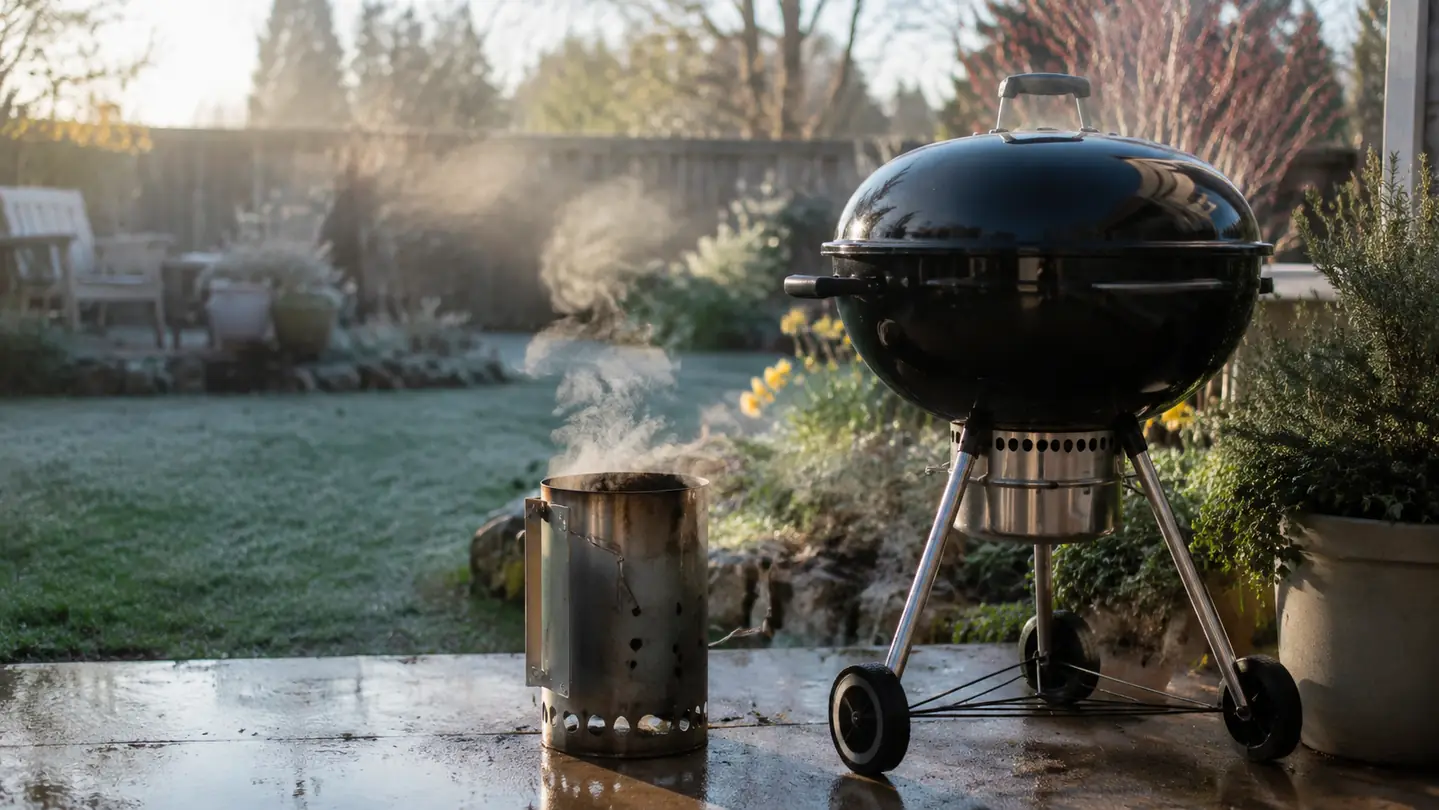
I can tell you exactly when this season almost started, because I have started it the wrong way for fifteen years. The first warm weekend of April, I drag the kettle out of the corner of the garage, wipe a winter of dust off the porcelain, and set a neat cone of fresh briquettes. Then, without thinking, I reach for the lighter fluid can that has lived in the cabinet since I moved in. That reflex was the whole problem, and the fix turned out to be a Weber chimney starter, a steel cylinder so plain it hardly looks like the answer until you have run one fire with it.
The first fire of the season is supposed to mean something. It is the green light, the moment you decide the patio is open again and the ribs still have a future. But for me it always carried a thread of dread going into the first bite, because I had already done the one thing that ruins it. The first burger came off the grate and I tasted the can. Not smoke, not charcoal, not the hickory I was sure I was buying. Just the sharp, oily finish of lighter fluid that stays no matter how long the coals sit.
For years I told myself the same lie. Let the coals run long and gray and the fluid would cook off. It does not. I switched to natural lump charcoal, hoping a cleaner burn would cover whatever was left. It did not. I poured less, then barely dampened the pile, as if the dose were the problem and not the can itself. Every first cook ended at the same table, on a plate that smelled faintly of the back of a hardware store, next to a cook too stubborn to say where that smell was coming from.
The thing that finally broke me was not one dramatic failure. It was the math of it. Lighter fluid is fast, and it buys that speed with a light coat of chemicals that rises straight through the very coals you are about to cook over. I had spent fifteen seasons telling myself the taste would burn away if I only waited long enough, and a shelf of finished dinners already said it would not. The only open question each year was how loud the flavor would land, never whether it would land at all.
Waiting for a lighter pour to burn off does not work. The first taste of the season is what it is, and mine always tasted like the can.
Give this season's first fire a clean start.
The Weber chimney lights a full load of coals evenly from underneath with nothing but newspaper and a match, ready in about fifteen minutes. It is the one change that gave me back the first bite.
Amazon Check Today's Price on Amazon →The morning I finally bought a Weber chimney I expected almost nothing. The thing is too plain to look like a fix. A steel cylinder with a grid fixed inside, a heat guard around the handle, and a pair of openings cut for air. No motor, no battery, no part that can wear out, and that is the whole of its appeal, along with the reason my father's generation has sworn by this same shape all these years while I kept feeding the can.
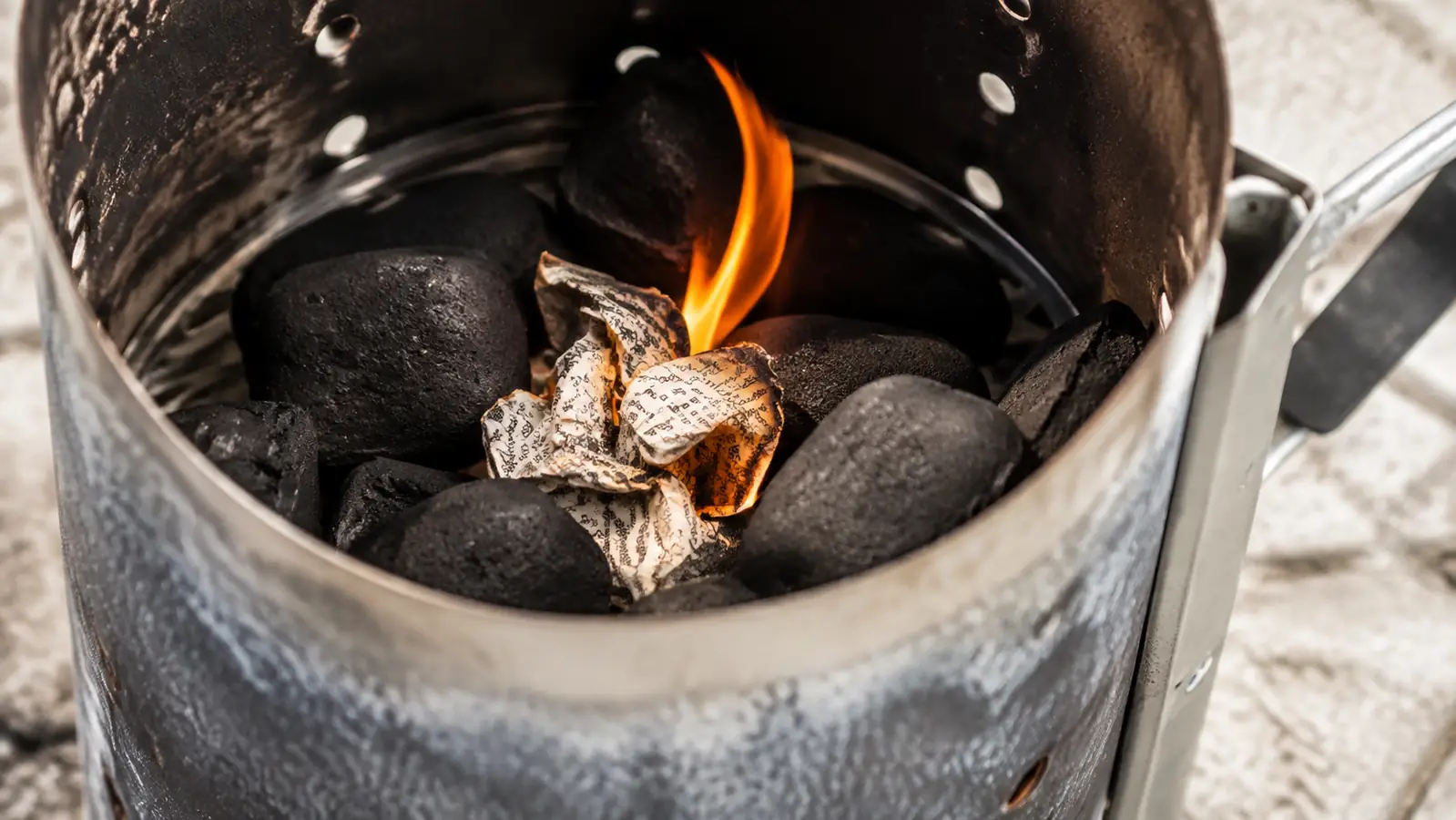
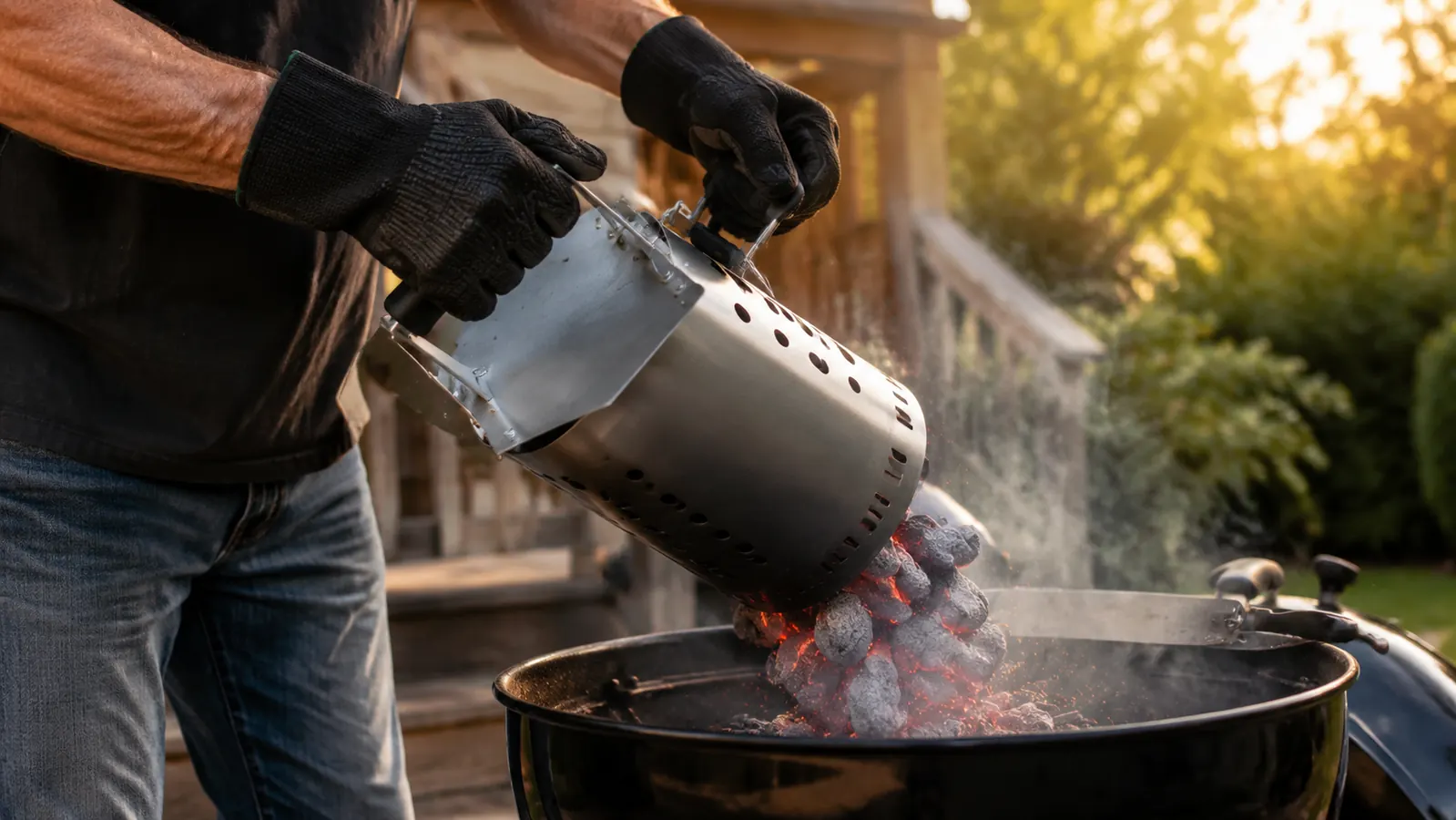
The first fire turned out almost boring, and that was the best part. I shoved two crumpled sheets of paper into the bottom, filled the top with the same briquettes I have always used, and set a match to the paper. Fifteen minutes later the top layer had flaked to gray while a clean column of heat stood off the chimney. I dumped the whole load into the kettle, spread the coals with the same shovel I already owned, and put the grate back in place. No smell to wait out, no timer to keep, no taste written into dinner ahead of time. The cook just started.
I have not touched a can since, and the Weber has lit every fire in the year that followed, including the small weekday ones. It earns its place first fire, but it shines on the damp coastal mornings when every tool in the shed wears a film of water. Because the heat climbs from below and pulls air through the whole stack, the coals catch evenly even after a winter in a humid garage. That even bottom-up burn is exactly what a large butane torch and a mound of lighter fluid both manage to get wrong.
This season's first fire went light and unremembered. Kettle out, paper in the same Weber chimney, coals on top, one match. I stood on the patio for a couple of minutes while it caught, went inside to scrape the grate, and when I came back the coals were already and the whole afternoon tasted like charcoal and apple wood instead of a bottle. That unremarkable, reliable start is exactly what I had been missing for fifteen years.
What I'd Tell You If We Were Sitting at My Kitchen Table
If there is a can of lighter fluid in your pantry, hand it to someone who actually wants it and get a chimney for the barbecue. I am not going to tell you fluid never works, because it does, and that is the trap. It works just well enough to keep you using it while quietly painting a finish on every cook that you keep explaining to yourself as the charcoal. A Weber chimney takes ten minutes and costs about the same as an ordinary bag of charcoal, and then it simply ends the conversation. It is a tool that earns its place on the first weekend and then stays forgotten until the exact moment you need it. That is the right shape of a season.
Give the can the day off for good.
One chimney replaces the lighter fluid habit completely. It is simple, it does not wear out, and it makes the first fire of every season open the way it should. While the season is still fresh, it is worth a look.
Amazon Check Today's Price on Amazon →