I will admit the bias up front: I lit charcoal with lighter fluid for fifteen years and never once thought twice about it. Pour it on, wait a few minutes, touch a match to the edge, and brush the residue off my hands before heading back inside. Then one rainy Saturday I grabbed a can that had sat in the shed too long, the fluid soaked into the briquets unevenly, and the first two steaks of the cook came off the grate with a petroleum edge that no rub could hide. That was the day I bought a Weber chimney starter, and the difference was not subtle at all.
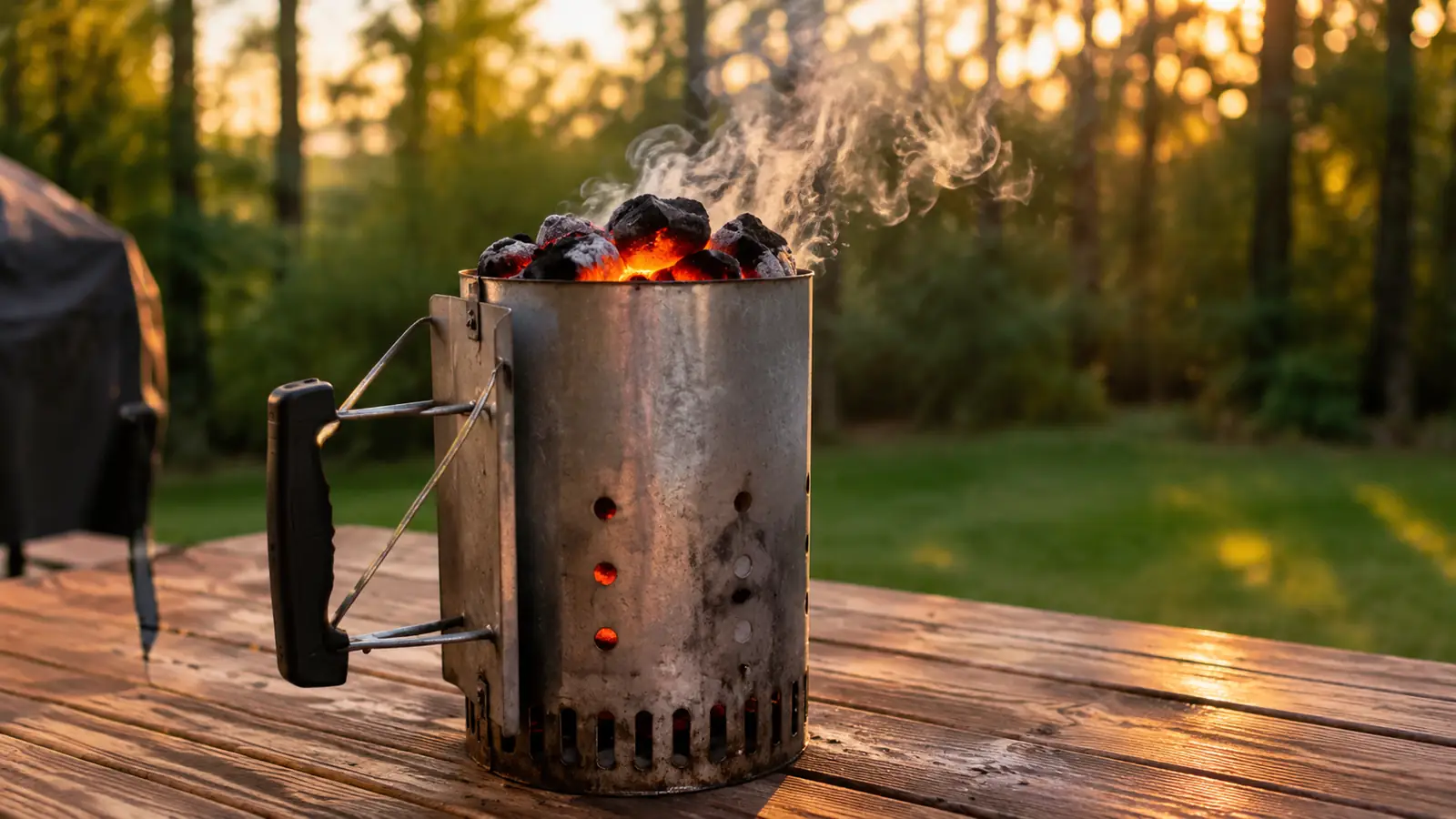
The Weber Rapidfire chimney holds a full standard charcoal load, lights off nothing but crumpled newspaper, and has ashed-over coals ready for the grate in about twenty minutes. It is not fancy. It has one job, and it does that job better than any can of solvent in my shed ever did. Here are the ten reasons I have not picked up a bottle of lighter fluid since.
The Weber Rapidfire Chimney Starter
Retire the fluid and start your coals on newspaper alone. This is the steel chimney I have used for every charcoal cook since the day it arrived.
Amazon Check Today's Price on Amazon →You stop tasting lighter fluid in the food
This is the whole reason anyone makes the switch. Lighter fluid has a flash point that is hard to land just right, and every drop that has not fully burned off rides the first smoke straight onto your food. For years I told myself I cooked it off. I did not. A chimney that burns from crumpled paper leaves no fuel residue at all, and the first chicken thighs I pulled off a clean start were the first I ever ate without that thin chemical afternote. A good rub cannot hide the taste either, because it mixes with the smoke. Take the fuel away and the meat tastes like fire and seasoning, which is the whole point of charcoal.
The coals light evenly, not just on top
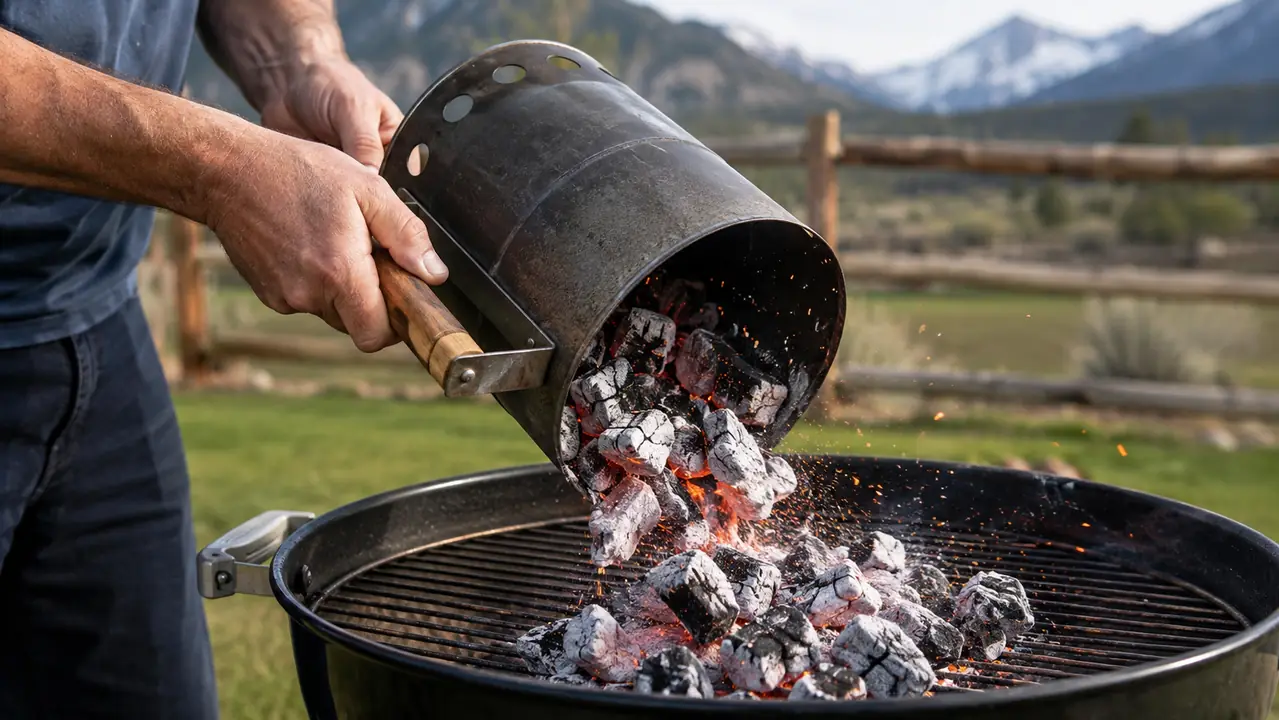
Pour fluid over a pile and the flames race across the surface, which leaves you with glowing coals on top and cold, dead ones in the middle. That patchwork is exactly where the hot spots and dead corners of your grill come from. A chimney pulls its own draft up through the whole column of briquets, so the load catches together and turns gray as one piece before you dump it. Even coals change every cook, because a uniform bed of embers holds a steady temperature instead of spiking, fading, and leaving you to chase the fire all night.
Dinner is ready about twenty minutes sooner
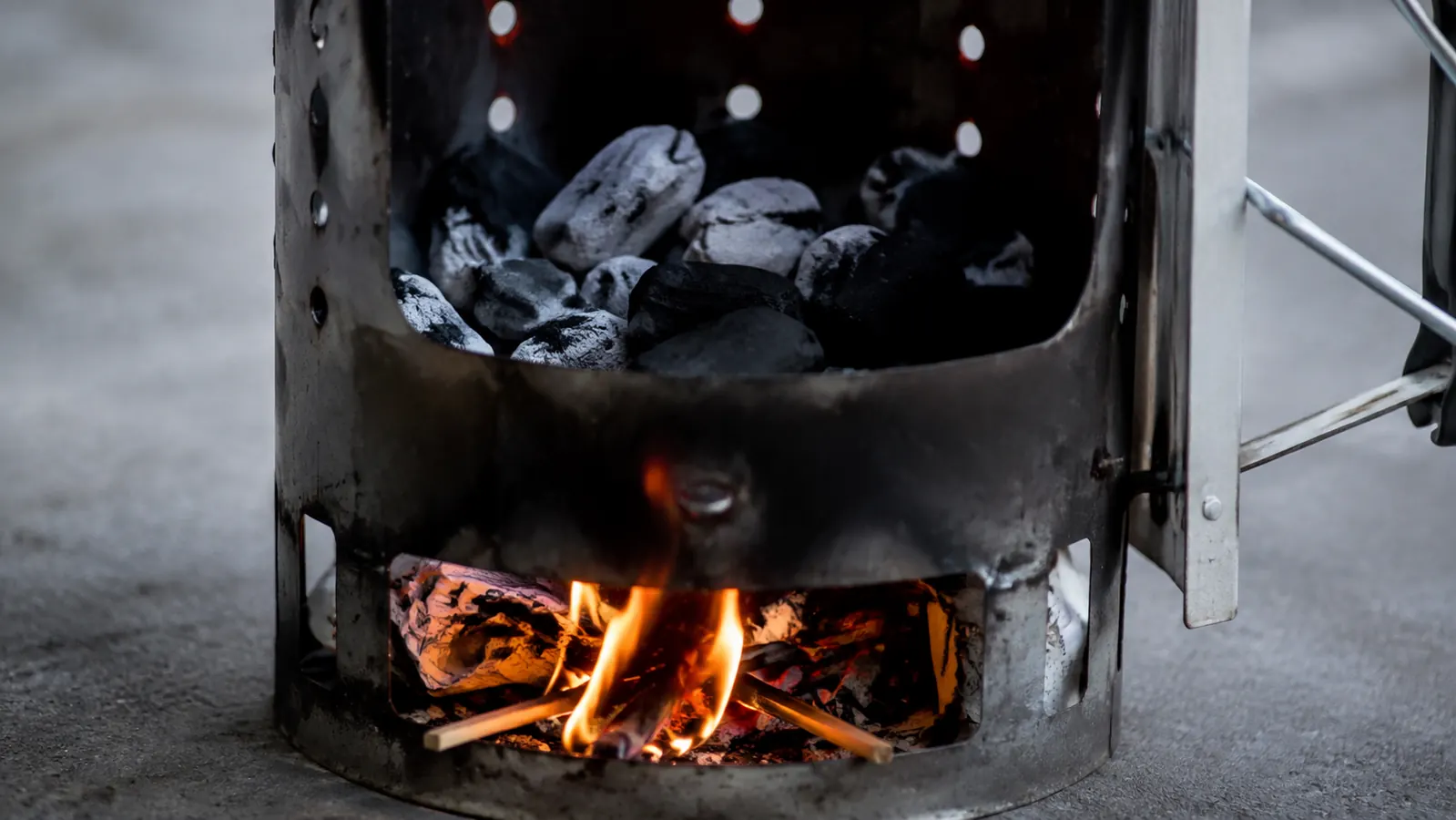
The old routine was a long one: pour, wait, light, relight, watch the smoke clear, then pour in more charcoal because half the first load never caught. A chimney is moving in the first minute and drafts the full load from there. Most of my Saturday cooks now go like this: crumple the paper underneath, light the chimney, and by the time the prep is done the coals are gray and ready to dump. Nobody mentions speed when they recommend a chimney, but it is the first thing you notice the second time you cook with one.
No splashes and no surprise flare
Shake a bottle of fluid over grates that are already warm and you have the fastest way in the world to flash a sleeve or start a fire you did not want. The flame can even run backward up the stream of fluid you are still pouring. A chimney needs none of that. The load sits in the steel while it lights, nothing flammable stays in your hand, and the whole start happens above the deck and away from you. If you cook with kids nearby, that alone is the whole argument.
You never run out of fuel again
Fluid disappears in ways you do not track: a nervous squeeze here, a can tipped on the shelf once and leaked there, and by mid-summer the bottle is empty with no cook to show for it. A chimney has no use for any of that. It burns crumpled newspaper out of the recycling bin, and that supply never runs low, never spills, and never goes bad in storage. I keep a small stack of old mail next to my charcoal bag and I have stopped thinking about fuel entirely. Not having to add a store run to cook night is a benefit I never appreciated until I switched.
Your shed and your grill stop reeking
Open the garage after a wet month and you can smell a can of fluid before you can see it. That odor gets into the charcoal itself, into aprons, and under the lid of a covered grill, and I could never completely wash it out. The chimney changed the smell of the whole setup. Bagged charcoal now smells like nothing but what it is, and the inside of the grill finally smells like smoke and old oil instead of a hardware store. When the gear smells clean, the food tends to follow, and in my yard that has held true all season.
You get the same temperature every cook
Fluid-flared charcoal is a gamble. Some nights it blazes high and you wait for it to settle, and other nights it barely catches and you push dinner back coaxing it along. The chimney takes the guesswork out of that, because it always hands you the same thing each time: a full load of gray even coals, ready to arrange for whatever you are cooking. When I want a hot sear for steaks or a low bank for ribs, the repeatable start is everything. Unpredictability, not temperature, is what ruins more dinners than anything else.
Windy evenings do not ruin the start
A match over a puddle of fluid loses to a breeze about half the time, and our coastal evenings have plenty of breeze. You crouch over the grill and light the same corner twice, and by the time the bed catches you are already annoyed with the cook. A chimney is built for draft. It draws air across the base and up the cylinder on its own, so a gust that would kill a match only feeds the coals more oxygen. I set it in the lee of the house and let it work while I finish the prep inside, and the fire is where I left it when I came out.
The whole load dumps into the grill in one motion
Moving burning charcoal by hand is the riskiest part of the old way. Coals scattered across my deck one evening, and I spent the next morning scraping. The Weber chimney has a flat, wide base and a long wooden handle, so the full load tips out in one clean pour over the grate and lands as one even pile. The whole move takes about three seconds and comes out the same every time, which is far more than I ever got from a shovel and a pan.
The chimney lasts for years
Only so much can wear out on a starter of this kind: a steel cylinder, a fixed grate, and a wooden handle, with no plastic parts sitting anywhere close to the heat. A cheap can gives you about one season before the plastic parts get brittle and the threads bind. This Weber chimney has seen two full seasons of coastal humidity, dozens of cooks, and it still fills and dumps exactly like it did the first Saturday. Simple and built to last, it has earned its place next to the other good tools in my shed.
What I'd Skip
Being honest, not every cook needs one. If you only fire the kettle a handful of times a year and fluid works fine in your routine, the chimney will not fix the part where you are not willing to stand by the fire while it catches. It wants your attention for the better part of fifteen minutes, and there is no way around that. But if you cook a few times a week, the trade makes sense for the taste alone, and it asks nothing more than waiting. Patience, paper, and a draft do the rest, and that is the fairest deal in the charcoal shed.
On the first fluid-free cook I ate a chicken thigh that tasted like charcoal and smoke for the first time in fifteen years. That one bite retired the bottle.
The Tool That Ends Lighter Fluid for Good
One chimney, crumpled paper, and a little patience. Clean coals, even heat, and no solvent taste on the food from your first week. It is the quietest and most durable upgrade in the charcoal shed, and it earns its place with every single cook.
Amazon Check Today's Price on Amazon →