
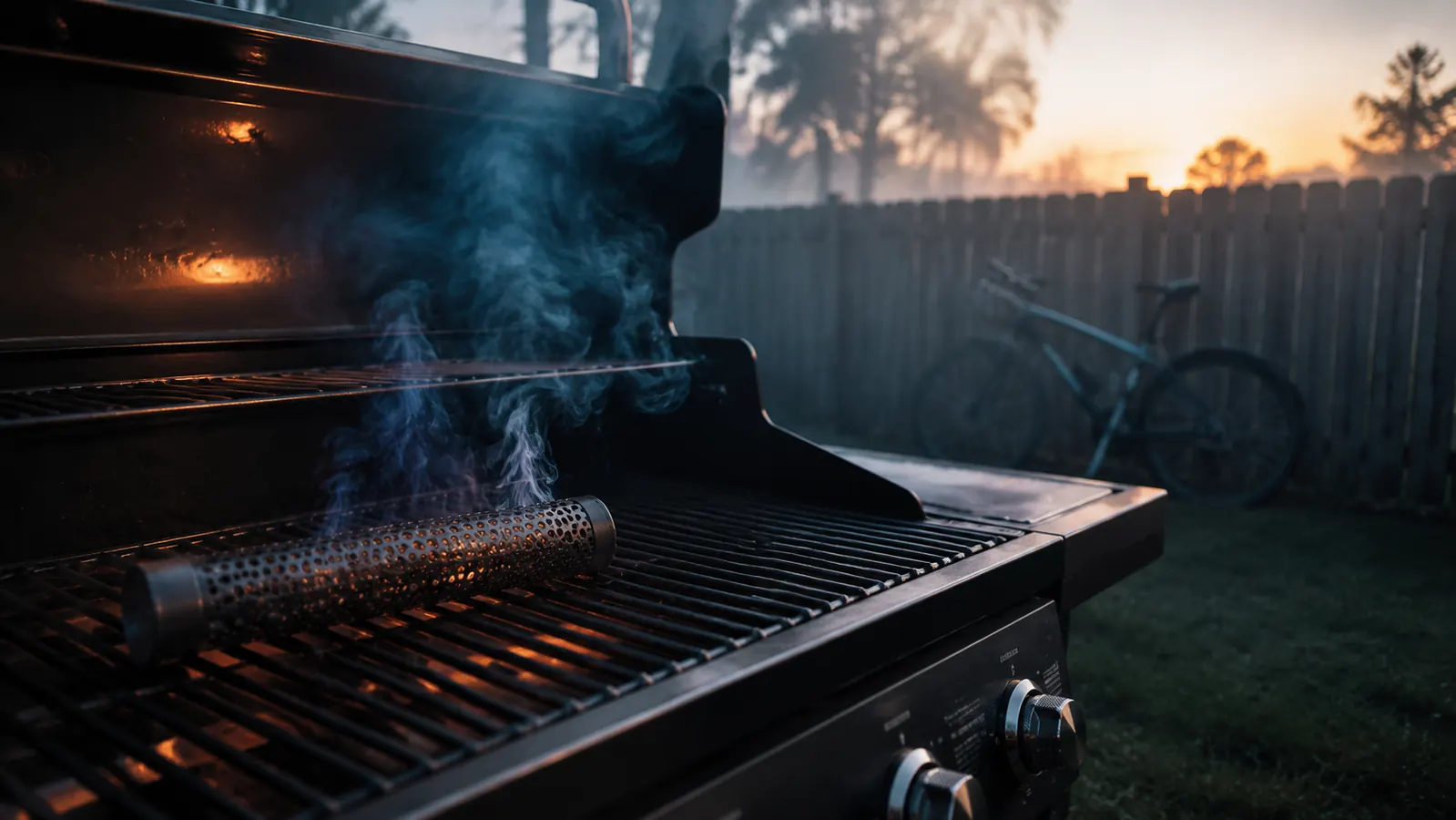
Every summer I watch the same ad play out in front of me: a shiny gas grill, a foil packet of soaked wood chips, and the promise of real smoke flavor without the fuss. I fell for that promise for years. You fold a few hickory chips into foil, poke holes, kick the burners to medium, and forty minutes later you are standing there chasing a wisp of gray smoke that dies before the chicken hits the grate. Then I upgraded to a metal smoker box that clogged, smoldered unevenly, and never once produced smoke that tasted like anything but burned dust.
A neighbor who actually owns a pellet grill handed me the Lizzq tube one Saturday in late spring and said, try this before you buy a pellet smoker you do not have room for. That was more than a hundred cooks ago. The Lizzq 12-inch pellet smoke tube has become the most-used accessory in my shed, and it was the cheapest single upgrade to my cooking in the past eight years. But an honest review means telling you what the Amazon listing leaves out, so here is the whole picture: what a real burn looks like, which pellets matter, where to put the tube, and the three things I would do differently if I were starting over today.
The Quick Verdict
The cheapest honest way to make a gas grill produce believable smoke, as long as you treat the burn time as an honest range instead of a promise.
Amazon Check Today's Price →Turn your gas grill into a weekend smoker without buying a second appliance
The Lizzq 12-inch tube smolders low and steady, needs no electricity, no water pan, and no new cooking habit to learn. Mine has been through a hundred cooks and still rides in the drawer.
Amazon Check Today's Price on Amazon →How I've Used It
For the record, the tube lives on a four-burner gas grill with a heavy lid and does weekend shifts on a Weber kettle when the mood calls for charcoal. I cook two or three times a week from April through October and about once a week in the winter months, and a cook for me means anything from a nine-pound pork butt to a baking sheet of eggplant. Cold-smoked cheese counts as at least a dozen of those hundred cooks all by itself.
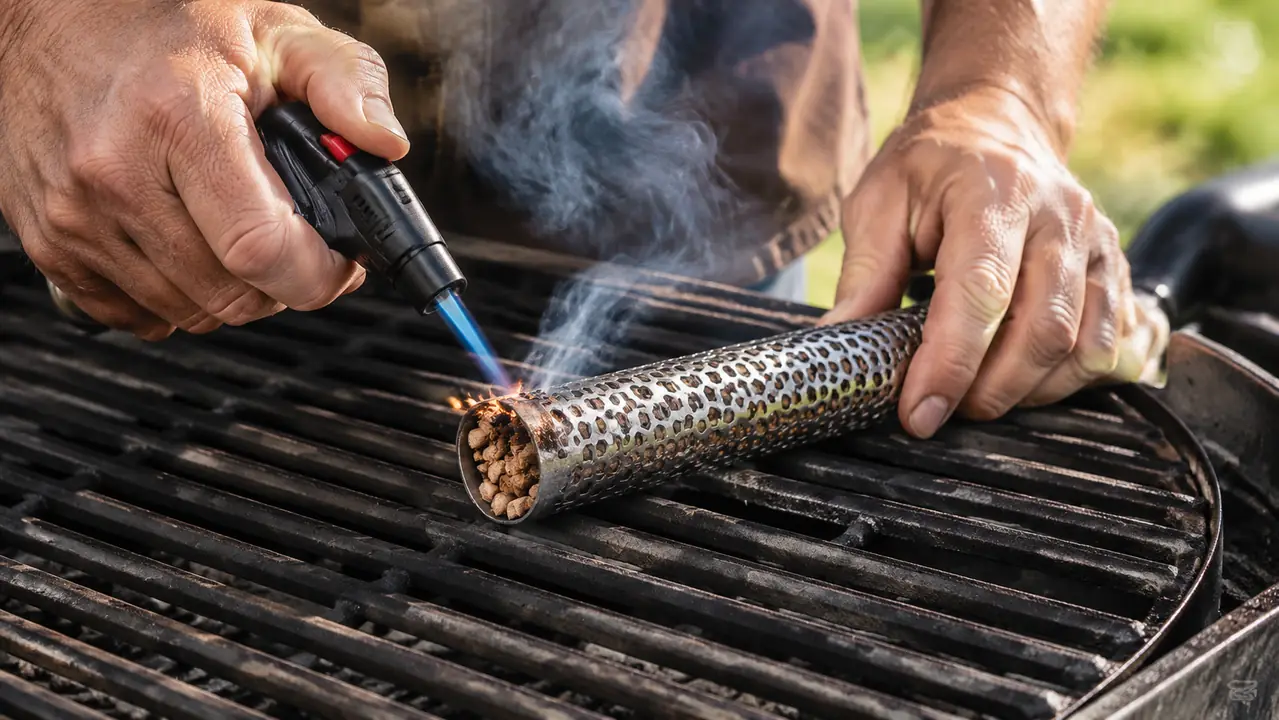
The routine has settled into something boring and repeatable, which is the highest compliment I can give any tool. Fill the tube, torch one end for about sixty seconds, let it flame for a minute or two, blow it out, and set it on the grate away from the burners that are holding temperature. That gets me three to four hours of steady, clean smoke more often than not. The same tube has survived rain, coastal fog, a dropped lid on the patio, a kicked-over ash spill in the garage, and every pellet brand my local hardware store stocks.
The honest headline is that this tube became the highest-usage accessory I own, and it is not close. The grill brush and a bench scraper see more daily hand time, but nothing at this price gets switched on nearly as often. It sits in the drawer next to the thermometer and the heat gloves, and it comes out first. It has also hit the concrete patio twice, once hard enough that I braced for a dent, and it took both drops without losing a single cook to a clogged hole. The welds have held through a hundred fills, which is more than I can say for the cast-iron smoker box that preceded it and failed inside one season.
What the Listing Does Not Tell You About Burn Time
The listing, and most of the reviews, promise five hours of billowing smoke. That number is the ceiling, not the average. The same Lizzq tube with the same fill has run forty minutes short on a damp, still evening and nearly five full hours on a dry one, and the difference was never the tube.
Two variables dominate. Pellet density comes first: a tight, sweet fruit-wood pellet like apple or cherry smolders slower than a soft, low-grade blend that wants to crumble inside the tube. The second variable is how hard I torch the end. Over-light it and you build a coal bed that eats the entire fill in two and a half hours. Sixty seconds of flame, then blow it out, and the smolder creeps along at its own patient pace, which is exactly how you want it.
And billowing is doing a lot of marketing work in that sentence. On a good burn the tube puts out a thin, pale blue stream of smoke, and that is a feature, not a letdown. Clean smoke is the whole point of low-and-slow cooking. If you see thick white billows pouring out of the tube, something is wrong: a wet fill, a greasy pellet, or an over-lit end, and that smoke will taste the way it looks.
One habit I stole from the neighbor who set me up: fill the tube to ninety percent, no more, and tap it twice on the counter before lighting so the pellets settle instead of stacking. Overfilled, the top row just smolders in place and breathes onto nothing, which reads as a stalled burn and makes people blame the tube.
The Pellet Question Nobody Answers in the Reviews
The single biggest variable in this whole setup is what you put in the tube, not the tube itself. I keep three bags in rotation: a mild apple for fish and chicken, a hickory for pork, and a mesquite for the rare days I feel like being reminded what campfire tastes like. The tube does not care which one is inside. Your food absolutely does.
What I learned the hard way is that heating pellets, the kind sold by the forty-pound bag for pellet stoves, are a different animal. They burn, but the smoke sits flatter, and some of them throw noticeably more ash. For a few cents more per cook, food-pellet brands that commit to a single species are worth every penny of the difference. And I will say it plainly: soaked chips in a foil packet taste like pretend smoke next to an honest dry pellet smolder.
Sawdust is the secret weapon for delicate work. A fine-ground dust smolders so gently that you can cold-smoke butter and cream cheese without cooking them, and the tube holds dust almost as easily as it holds pellets. That is more versatility than I have found in any accessory at this price.
Placement Is Everything, and Nobody Shows You Where
The number one question I get from neighbors who taste my smoked chicken and then order the same tube is simple: where do you put it? On the gas grill, set it lengthwise across the grate on the far side, away from whichever burners are holding the temperature. It needs a little air moving past it to keep the smolder alive, but too much moving air makes it burn faster, so it is a placement to learn, not a spot to guess.
On the charcoal kettle, put it across from the coals, never on top of them. Set directly into a hot coal bed, the pellets ignite into real flame for twenty minutes and then quit, which is the one failure mode that wastes an entire cook. On its best day the tube behaves like a candle, not a bonfire, and the heat source should be near it, not underneath it.
The other half of placement is the phrase nobody wants to hear: run the fire low. The most common mistake I see people make is cranking the burners to 400 and leaving the tube to smoke the food at the same time. At that temperature the tube becomes a furnace and the smoke it makes is thick and mean. I keep the grill kitchen between 225 and 275 when the tube is working, and I let the smoke do what smoke does.
Cold Smoking Cheese Is the Killer App
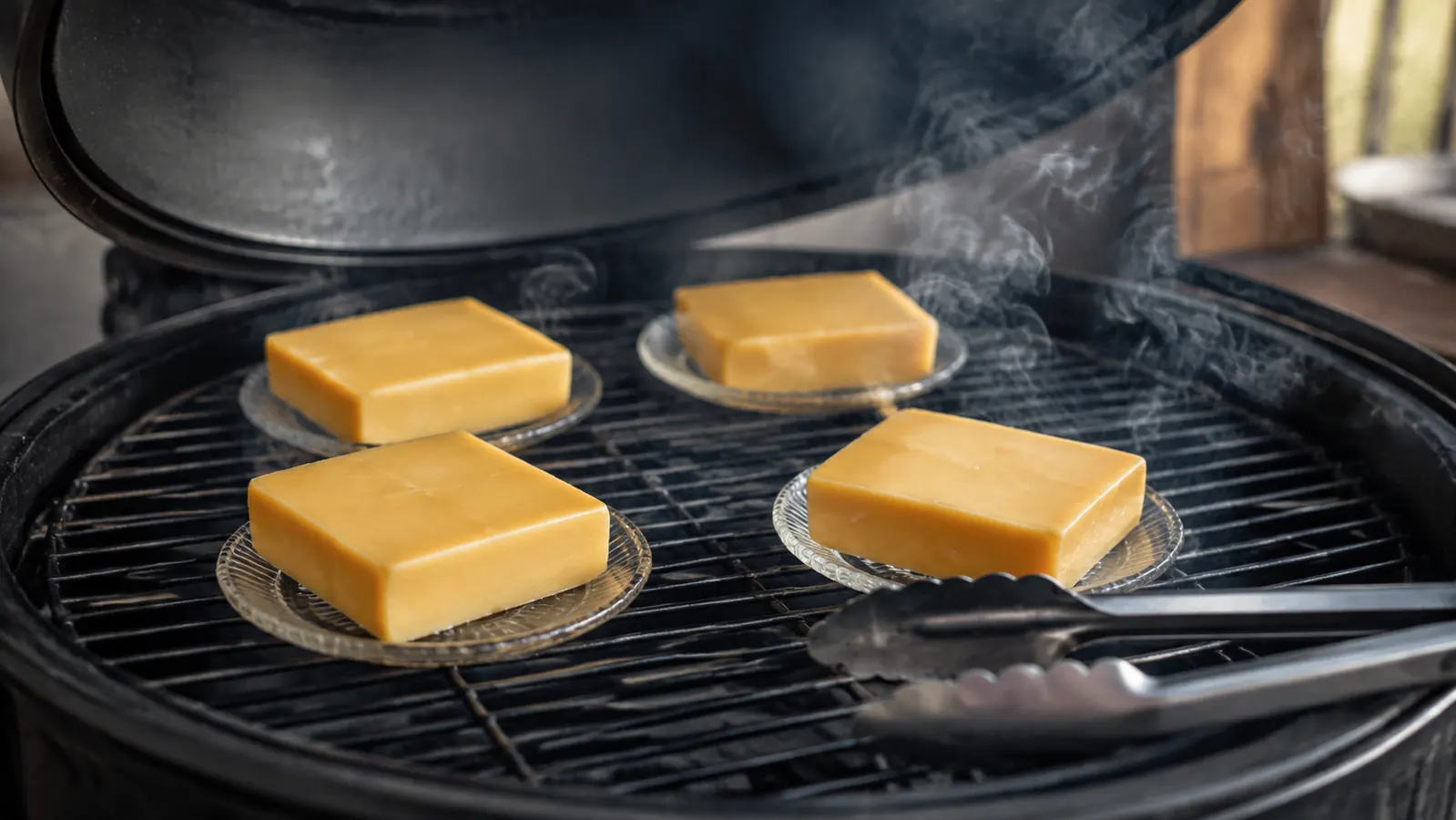
If there is a single job where this tube beats every other gas-grill rig I have owned, it is cold smoking. I smoke two pounds of sharp cheddar, a wheel of gouda, and a block of cream cheese in the weeks before the holidays every year, and the whole operation is a tube, a closed lid, and patience. No electric smoke generator, no separate box taking up garage space.
Cold smoke wants the fire to stay spiritually far away from the cheese. I set the tube against the far grate, keep the burners dark or on a pilot-low whisper, and crack the lid vent two inches so the smoke can wander out and around the rack. Take any shortcut on that and the cheese sweats, the rind turns, and the whole tray comes out with an oily, bitter surface instead of a clean band of smoke that makes people ask what you did to it.
The soot lesson is the one I never see in any review. My first cold-smoked cheddar came out speckled with wet, black grime because I over-lit the tube and ran it with the lid shut tight on a damp coastal evening. The smoke stalled, condensed, and painted the cheese. Now I torch the end briefly, let the first five minutes of rough smoke blow out the vent, and only then settle in. That one habit fixes almost every bitter-cheese complaint you will read about this tube.
My first cold-smoked cheddar came out speckled with wet black grime because the smoke stalled against a shut lid. The second wheel, set on the far grate with the vent cracked, started a holiday gifting habit that has lasted six years.
The Tradeoffs I Keep Coming Back To
Let me be straight about what this tube is not. It is a flavor supplement, not a smoker. On a fourteen-pound brisket it lays a clean smoke ring on the outer inch, and the rest of that flat tastes like grill fire because it is grill fire. It will not give you the deep, all-the-way-through penetration of an offset or a dedicated pellet smoker. Anyone who tells you a smoke tube turns a gas grill into a brisket machine is selling something.
Where it wins is on ribs, chicken, fish, turkey, pork butt, and anything modest that cooks in an afternoon. The best pulled pork this grill has produced in eight years came off the far grate with one tube of hickory running beside it the whole time. But it earns its keep on the medium jobs, not the overnight brisket shift. I keep a charcoal kettle for the heavy lift, and the two of them together cover every cook I do without me buying a third appliance.
The other tradeoff is attention. A gas grill with a tube is still a live-fire cook, and I am on the patio for the whole afternoon, not walking away and trusting a thermostat. If you want to set it, sleep, and check in the morning, an electric smoker is the honest answer, and I have made that case separately for anyone who is on the fence about which route fits their weekends.
What I Liked
- Puts real, believable smoke on food for a tiny fraction of what a dedicated smoker costs
- Small enough to live in a drawer, and tough enough to survive drops, rain, and garage spills
- No electricity, no water pan, no burner to clean, nothing to plug in
- Turns cheese, poultry, and fish into the most-requested food on your porch
- Easy to learn, one torch end and one placement habit
- Pellet brands and even fine sawdust extend what it can smoke
Where It Falls Short
- The five-hour burn is a ceiling, not an average, and damp evenings run short
- It adds smoke on the outside, not deep penetration, so it is not a brisket replacement
- Cold smoking needs a cracked vent and patience, or you get bitter soot
- The open end gets dangerously hot and needs gloves and a clear counter
Who This Is For
This is for the gas-grill cook who already owns a good grill and refuses to buy a fourth appliance for the garage. If your weeknight pattern is a three-burner gas grill with a charcoal kettle for weekends, and you secretly suspect your ribs are missing a layer that only smoke can add, this tube is the lowest-risk experiment in BBQ. If you cold-smoke anything, or have ever wanted to, it is the best value in the niche I know. If you are the kind of person who likes gear that earns its drawer space, this is that gear. I have bought cheaper accessories and regretted them by the same season, and I have bought this one exactly once.
Who Should Skip It
Skip it if you will not give it a placement decision. The tube goes out in still air and turns acrid under a shut vent, and if you expect to drop it on the grate, slam the lid, and walk away for the afternoon, you will blame the tube for what is really a cooking habit. Skip it if your entire smoking life is overnight whole brisket on a gas grill, because that is the one job a tube cannot carry alone. And skip it if you cannot keep the open, glowing end away from kids, pets, or whatever hangs on the garage wall behind the grill. One more honest line: if what you actually want is the ritual of a big steel box with a thermometer dial and a water pan, a tube will not scratch that itch, so be honest with yourself before you order.
If you are about to buy a smoker, start here first
The Lizzq 12-inch pellet smoke tube is the most-used accessory in my shed for a reason. One torch, one placement habit, and a hundred cooks later, I would buy the same tube again tomorrow. Check today's price, read the fresh reviews, and decide with both eyes open.
Amazon Check Today's Price on Amazon →