
I grilled on propane for twenty years, and for most of those years I told myself the same lie at every cookout: that a soaked chip packet, a cast iron smoker box, or a careful drizzle of liquid smoke was putting real wood smoke on my ribs. It was not. The chips steamed, the smoker box scorched through in under half an hour, and the liquid smoke tasted like a condiment rather than a fire. I wanted smoke, my grill could not make it, and I had quietly stopped believing it ever would.
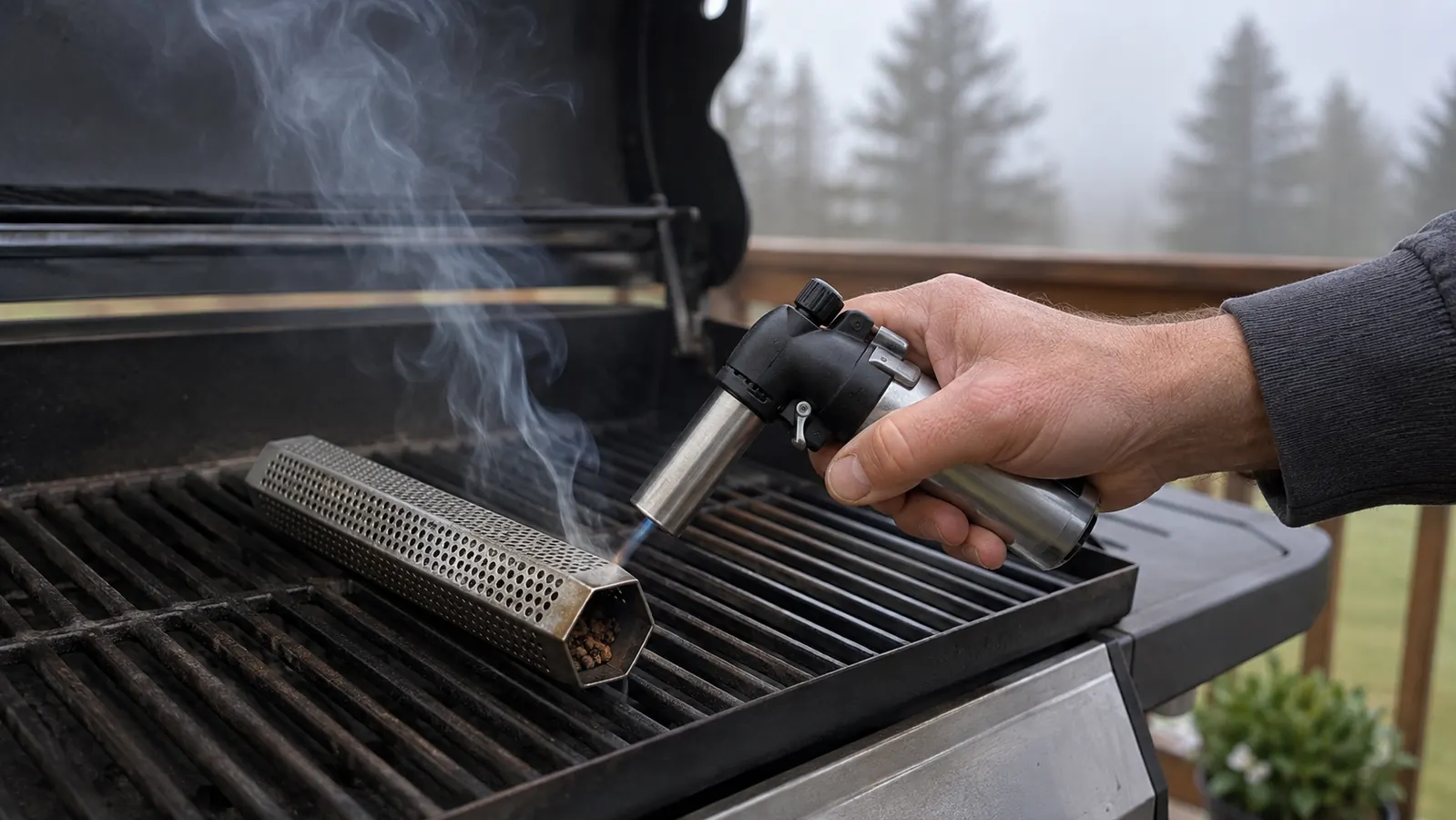
Last spring I bought the LIZZQ 12 inch pellet smoker tube on a Tuesday lunch break and half expected it to become a garage ornament. It is a metal tube with holes along the side, capped at one end and open at the other. You pack it with wood pellets, light one end with a torch until the embers catch, then blow out the flame and let the pellets smolder for hours while the regular grill does the cooking. A year and roughly thirty cooks later, it is the most used accessory in my grill shed, the cheapest thing that ever gave my propane grill a real taste of wood fire, and the tool neighbors ask me about more than any other.
The Quick Verdict
The LIZZQ lets a gas grill finally produce real, clean wood smoke for hours, as long as you are after gentle flavor rather than a championship smoke ring. It is the best cheap upgrade I have made to my grill setup in a decade, and it earns its place in the drawer.
Amazon Check Today's Price →The fastest way to put real smoke on a gas grill
The LIZZQ 12 inch tube smolders for four to five hours on a single fill of pellets and works on almost any propane grill. It is the single smoking accessory I would buy again before any other gadget in the shed.
Amazon Check Today's Price on Amazon →How I've Used It
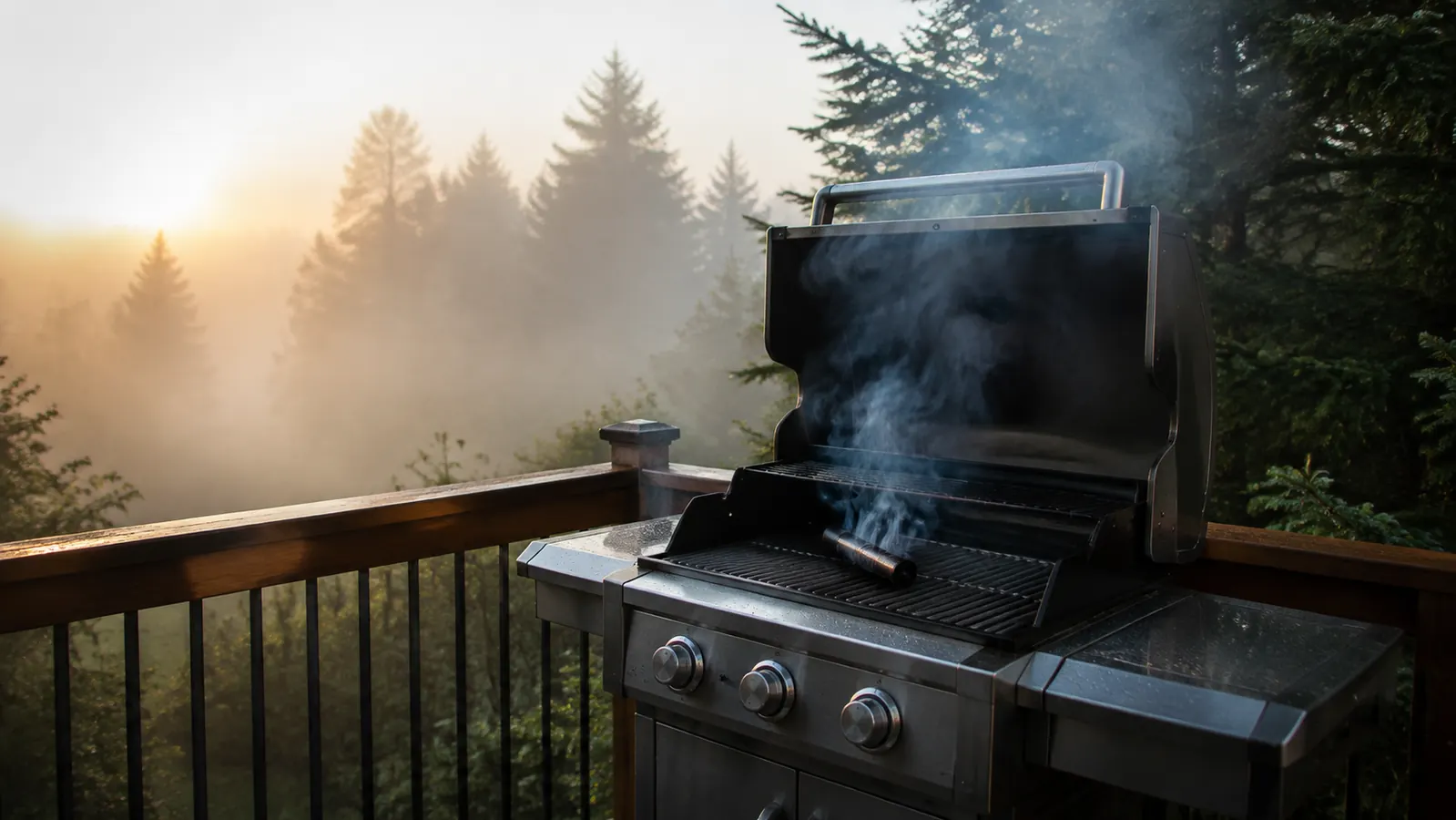
I run a three burner propane grill on a raised wooden deck about a mile from the coast, which means foggy mornings and damp air for much of the year. The tube lives in the bottom drawer of the grill cart, between the chimney starter and the long handled brush, and it has earned that spot. On a normal smoke I fill it about three quarters full of dry pellets, tap the side once to settle them, light one end with a butane torch for two or three minutes until the pellets glow through the holes, let the flame ride another minute, then blow it out and leave a quiet bed of embers. Total setup is about five minutes, and most of that is waiting for the flame to hold.
The first real cook was a four pound pork shoulder with hickory pellets, and the smoke rolled across it for the whole afternoon. I pulled it at 203 degrees internal, wrapped it in foil for an hour, and it carved like a proper cookout shoulder instead of a backyard chore. After that the tube never went back to the drawer for long. Hickory over pork, apple and cherry over ribs, mesquite over a chuck roast for one experiment I will not repeat, and two cold smoke sessions of aged cheddar and gouda that I would not have attempted on a gas grill a year earlier.
The long game is what matters, because a smoking gadget like this is judged differently after a season than on the first night. The novelty wore off by cook six. The budget-gadget feeling would have sunk it by cook ten if it did not actually work. What follows is my unsentimental report from year one, including the nights it let me down and the dent I gave it on a hot July evening getting it back onto the grate.
What a Smoke Tube Is, and What It Isn't
The LIZZQ is the simplest smoking tool you can buy. It is a roughly one foot long metal cylinder with small holes punched along its length, capped at one end and open at the other. You pack it with wood pellets, and the embers smolder in slow motion because airflow is limited to those holes. Because the airflow is so tight, the smoke comes out thin and bluish rather than a thick white haze. That thin smoke is exactly what you want around food. Thick white smoke from wet or barely lit wood is what coats meat in bitter tack, and the slow smolder avoids that failure entirely.
What the tube is not is a smoker, and keeping those two apart saves you disappointment. It does not hold a temperature, it does not run low and slow for you, and it will not put a heavy smoke ring on a brisket the way an offset or a dedicated pellet grill will. On a gas grill the LIZZQ adds smoke to the heat your grill already makes. That distinction sets the honest expectation for the flavor you will actually get, and I come back to it below because it is the difference between loving this device and calling it junk when a three pound brisket comes out mild.
Pellet choice matters more than the brand of the tube, and that surprised me. Hickory is the default and gives the most familiar barbecue smoke. Apple and cherry smoke sweeter and lighter, which I prefer on chicken and ribs. Mesquite is the aggressive one, and I would spend it only on beef where the tube can actually keep up. One twenty pound bag has lasted me all year, because a single fill is only about two cups of pellets, which is part of why the running cost is easy to ignore.
The honest placement of this gear matters too. A smoke tube rides alongside food that needs a slow cook, and it shines brightest when the grill is running at smoking heat. On a charcoal grill it can revive a fire that is running clean but tasteless. On a gas grill it is the main event. If you already run a dedicated smoker or a pellet grill, the tube adds almost nothing, and I spell that out honestly in the closing section.
Burn Time and Smoke Output: What I Measured
The box claims five hours of billowing smoke, and I did not believe it, so I clocked eight separate fills across the year with a stopwatch on the deck railing. On hickory pellets that are truly dry, the honest number is four to four and a half hours of useful smoke, then another half hour of thin wisps that are mostly spent ash. Apple and cherry ran slightly longer, closer to the advertised number, because the softer woods smolder slower. If I pack the tube only to the top and stop tapping, the burn is shorter and lazy, so a light settle gets the full burn.
Packing matters more than anything but the torch. Stuffed too tight, the embers starve for airflow and the tube dies after ninety minutes with half the pellets left unlit. Tapped down lightly and filled to three quarters, the burn is even and quiet. I also learned not to tap mid cook, because knocking the tube shifts the ember bed and the unburnt pellets can relight and push that bitter initial smoke into the food. Let it settle and it fixes itself.
Damp pellets are the one real killer. In this coastal pocket of the country the garage air is soggy for months at a time, and a fill of damp pellets smolders in fits and starts, going dark just when you depend on it. I keep the bag rolled shut and the stack stored dry, and that single habit fixed at nine of every ten failures I had in the first month. If your smoke dies mid cook, it is almost always that you packed too tight, the pellets took on moisture, or both.
A typical Saturday makes the number concrete. Torch at seven in the morning, tube smoking by 7:05, three racks of ribs on by 7:20, one fresh fill at the four hour mark to cover the final stretch. The timeline is repeatable enough that I plan whole cook days around it, and that predictability is the real value of a device this simple. It is why the tube is still in the daily drawer while two accessories that cost more went back to the store.
The Flavor: What the Smoke Actually Tastes Like
Here is the honest tasting note. Tube smoke is real wood smoke, but it is a gentle layer, not a bold transformation. On ribs it is clearly present in every bite and recognizable as hickory or apple depending on the fill, but nobody would confuse it with meat from a fifteen hour offset cook. I have learned to call that a feature. A gas grill runs hotter and faster, a quicker cook, and a heavy smoke flavor would fight the shorter time and leave everything tasting charred instead of smoked.
The first cook and still my favorite proof: a rack of baby back ribs with apple pellets. They cooked for a short three hours, and the smoke flavor was in every single bite, right down to the last clean bone. That is the outcome I had chased with soaked chip packets for a decade and none of my stunts had ever delivered. The rest of the family noticed without being told, which in my house is the only testimonial I trust.
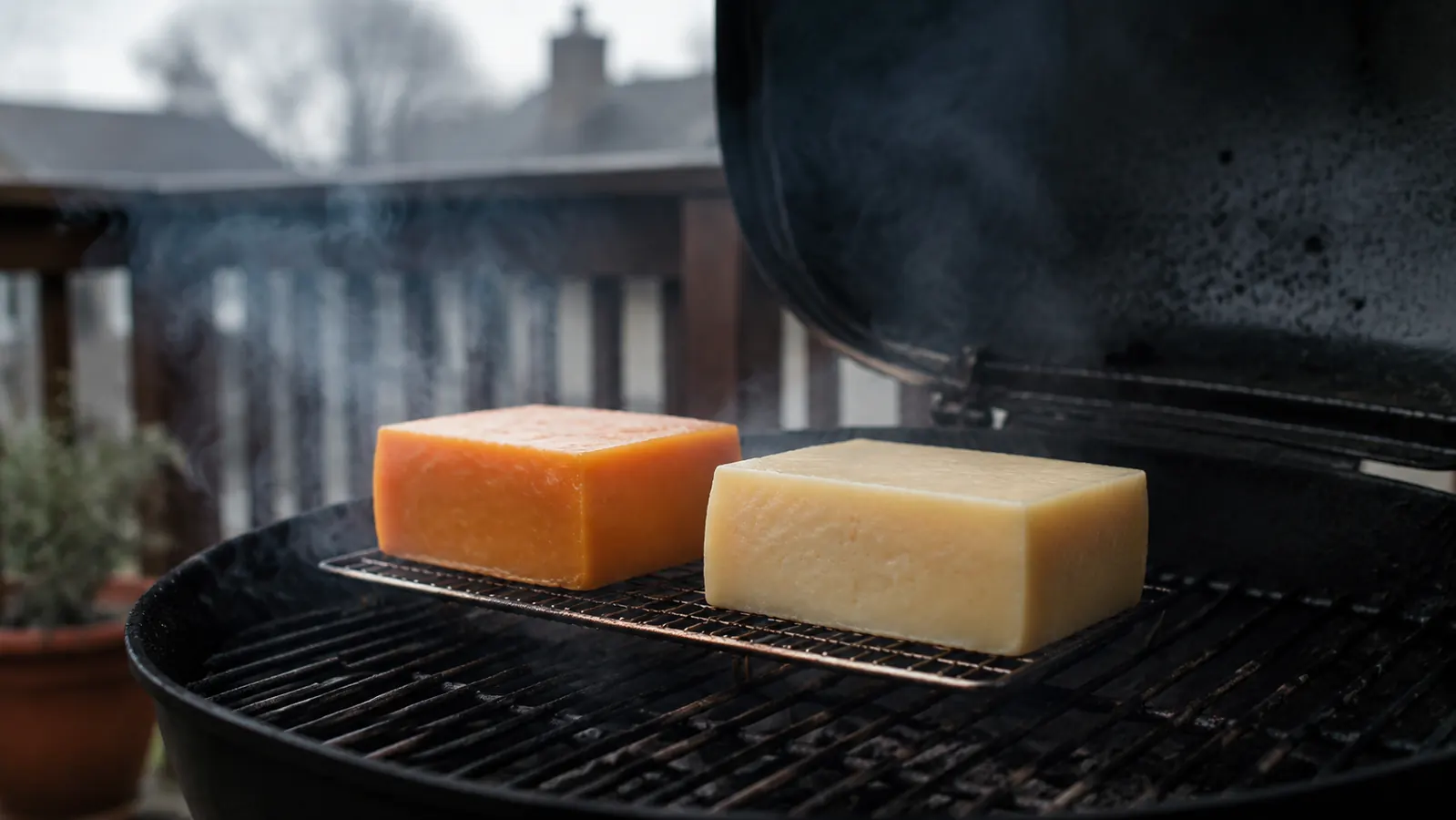
Cold smoked cheese is where the tube is genuinely excellent, and it is the reason the math works for me. Two hours of thin smoke on a block of sharp cheddar, then wrapped and left in the fridge for two days, gives a soft lingering smokiness that tastes nothing like liquid smoke and nothing like the smoked cheese at the counter. I have also done butter on a saucer and kosher salt that coats a wide batch of steaks, both twenty minute sessions, both almost effortless. This single use case is what made the tube necessary to me, more than any pork I cook.
One flavor failure I hit: smoking a chuck roast hot and fast. With the grill cranked up for the sear, the tube could not match the demand, the smoke turned acrid, and the meat soaked it up. The lesson is that the tube wants low and slow like any good smoke source, and fighting it with high heat wastes the pellets and works the meat. If you want hot and fast, skip the smoke and use a dry rub instead.
I also ran a generous hickory chicken day that fed six, and the same question came up every time: somebody asked what I had done to the grill, going on about it like it had been sitting idle in the backyard for a decade. People who have eaten my careful propane cooking for years do not ask that unless the smoke is actually landing in the food. That was the afternoon the tube stopped being a gadget for me.
Four and a half hours of clean smoke on a single fill is the number that made me stop reaching for soaked chips wrapped in foil once and for all.
Placement and Technique That Actually Work
Placement is where most people give up early. On a three burner grill I run the far left burner on low, set the food on the right side, and stand the tube in the middle of the grates with the open end toward the meat. The warm air rising from that low burner carries the smoke across the food instead of straight up and out the vent. Over a roaring burner the pellets race through the tube, and over cold grates the embers can die. The sweet spot is a low nearby burner, not direct flame underneath.
For cold smoking, every burner stays off and the tube carries the show. Light it, let it flame, blow it out, and set the smoldering tube on the far side of the grate with a block of cheese on a wire rack opposite. Closed lid for two hours, and the cheese picks up a gentle smoke that tastes nothing like anything from a shelf. Foggy mornings have become my favorite time, because the cool damp air makes the smoke hang low and wrap the food instead of rising straight away.
The only real ritual is the torch. A grill lighter will not do it; the open end needs a good two minutes of real flame to establish a settled ember bed. Once you accept that the torch is part of the routine, lighting takes ninety seconds and the smoke runs unattended for the rest of the cook. I keep a small butane torch hanging on a hook beside the drawer, and it gets used for this one job.
The last trick is patience when the tube looks done. There is a window where the final pellets glow but the smoke is barely visible and easy to take for the end of the cook. Give it half a minute and the smoke comes back. I do not know why the embers rekindle, they just did, and learning to count to thirty before touching the food saved several nearly finished cooks for me.
Cleanup and Durability After a Full Season
After a year in a damp coastal drawer and about thirty cooks, this LIZZQ shows its age honestly. The metal has not rusted despite the fog and the salt air, which is more than I can say for a pair of tongs that lived in the same drawer. The cap still fits snug after a season of heat and sudden cool downs. I dropped it once while it was hot, getting it off the grate, and it took a small dent. The dent changed nothing about the burn, which tells you the build is simple enough to shrug off blame.
Cleanup is a tap and a rinse. Wait until it is cool, tap the gray ash out, knock out the few pellets that did not turn, rinse it and stand it on end to dry. No scraping, no baked-on grease, no special tools. That is the part the marketing photos never show, and it is the reason the thing lives in the bottom drawer rather than on a shelf where forgotten tools go.
The only maintenance I do is an occasional soak in warm soapy water to clear the little holes of sticky resin after heavy apple and cherry fills. Ten minutes, once a season. I see no reason it will not last several more years, and at today's price a replacement would not be a budget event, it would simply be a Tuesday.
What I Liked
- Real wood smoke on a propane grill that otherwise makes none
- Four to five hours on a single fill, enough for most cooks
- Cold smokes cheese, butter, and salt without melting them
- Metal build has shrugged off a damp coastal season with no rust
- Small enough to live in a drawer, cheap enough that wear is not worrying
Where It Falls Short
- Needs a butane torch to light; a match or grill lighter will not do
- Smoke flavor is mild next to a real smoker, so drop bark expectations
- Damp pellets or overpacking can kill the burn early
- A refill mid cook means working around a hot, ash-heavy tube
Who This Is For
Buy this if you own a gas grill and have been quietly annoyed for years that your ribs come out clean, fast, and flavorless. If you want real smoke without a second machine, without running wiring out back, and without learning to babysit a firebox, the tube is the lowest effort smoke you can add to a grill you already own. It is also the answer for anyone who wants to cold smoke cheese and bacon at home without giving a corner of the garage to a dedicated smoker.
Who Should Skip It
Skip it if you already operate a pellet grill or an offset smoker, because the tube adds little those do not already give you. Skip it if you are chasing a heavy smoke ring on big cuts, because four hours of gentle tube smoke on a gas grill is a flavor, not a transformation. And skip it if you are not willing to keep a torch and a sealed bag of pellets as part of the routine, because the tube is only as reliable as the embers you bother to start.
The one accessory I would buy again tomorrow
After a year and thirty cooks, the LIZZQ 12 inch pellet smoker tube is the highest leverage upgrade in my whole grill setup. If you have been tolerating flavorless propane smoke, this is where I would confidently spend today's price, and it will likely outlive the grill it sits inside.
Amazon Check Today's Price on Amazon →