
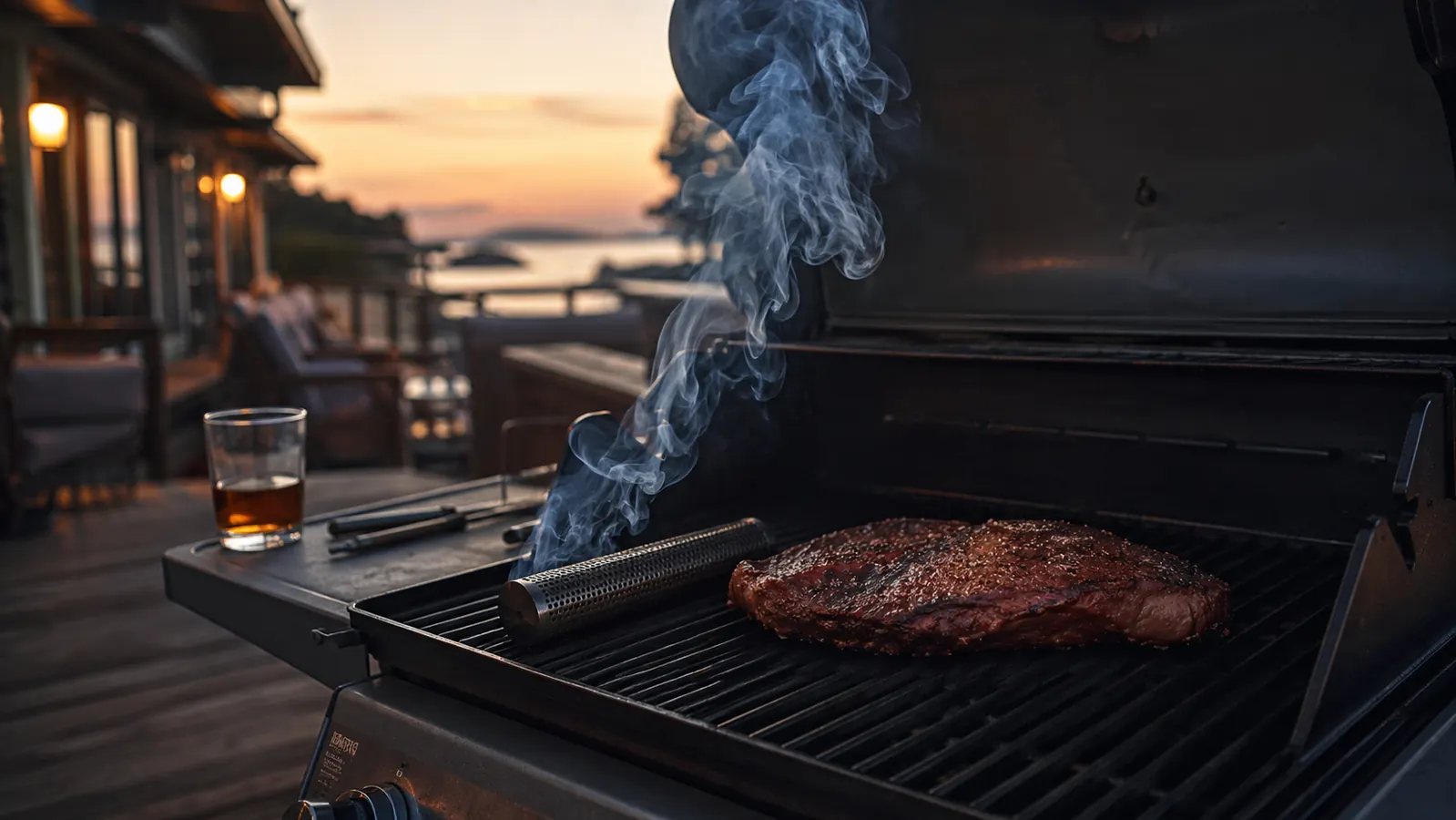
I can date the exact Saturday I stopped pretending my gas grill alone was a barbecue. A pork belly had been on for nine hours, and when I sliced it the bark was a deep mahogany with a clean pink ring right under the surface, the ring that is supposed to mean real smoke did the work. The meat underneath promised the same story. It had none. It was sweet and clean and carried about as much smoke as a hot dog from a deli case, because I had spent five years running the foil-pouch chip trick: twenty minutes of campfire on the patio, then nothing but plain propane for the other eight hours of the cook. So last fall I finally ran the comparison I should have run years ago. The LIZZQ pellet smoke tube sat in the back corner of my Weber gas grill, and a borrowed electric smoker the size of a dorm fridge sat two steps away on the same deck, and I fed them the same meat all season.
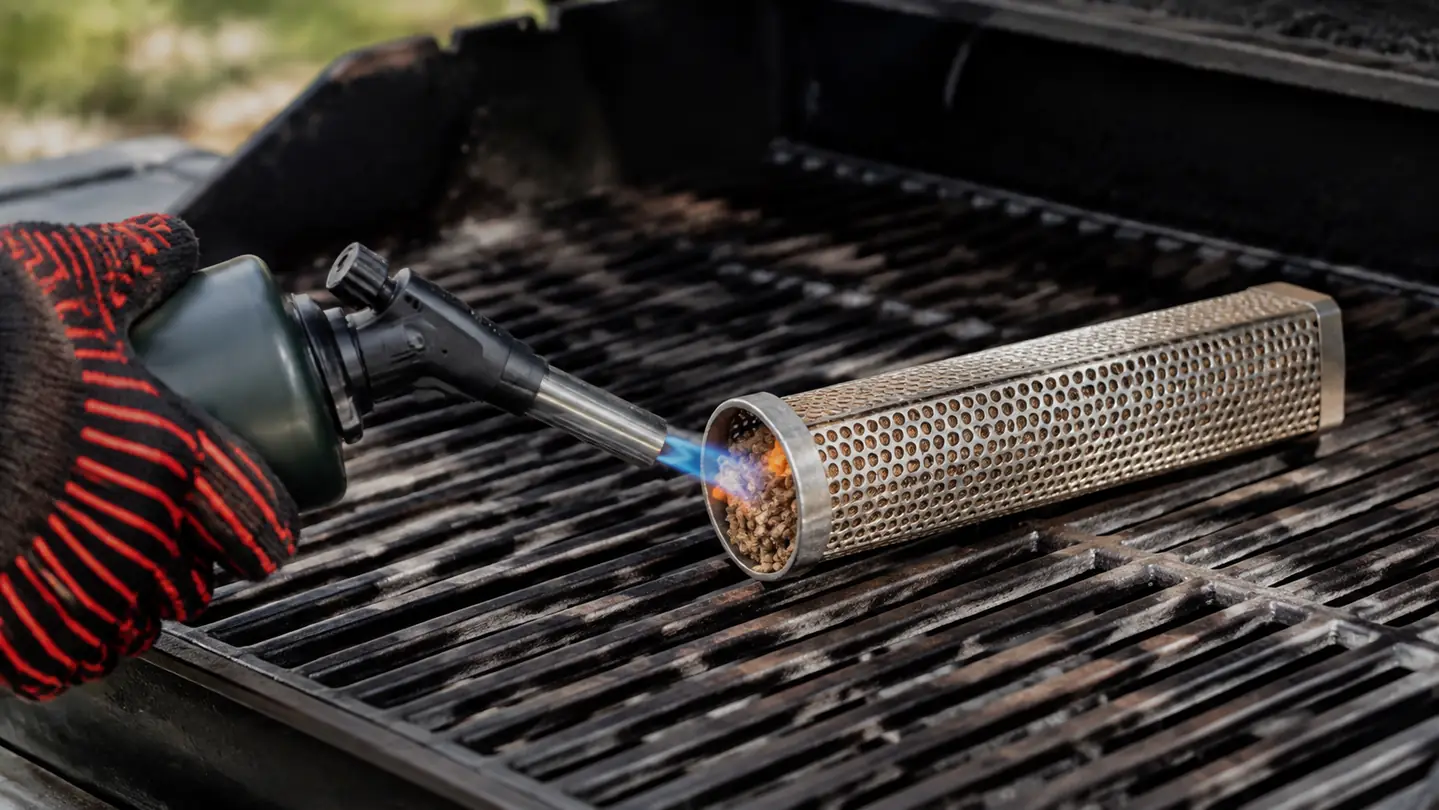
Both tools did a full season with me, not a single weekend. I ran them on two brisket Sundays, two batches of cheddar and gouda, a whole salmon fillet, and a steady river of Friday-night chicken thighs, keeping a written note on every cook. The difference between the two is not whether they produce smoke, they both do, it is the job each one was built to do. The LIZZQ tube is a 12-inch metal cylinder you fill with hardwood pellets, torch the open end, and let smolder for about five hours beside whatever you are cooking. The electric smoker is a self-contained appliance with its own heating element, a chip tray, a water pan, and a thermostat that parks itself at whatever number you set. One adds smoke to a cooker you already trust. The other is the cooker, heat source included. That single idea predicts most of the verdict below.
| LIZZQ 12-Inch Pellet Smoke Tube | Electric Smoker | |
|---|---|---|
| Cost to get smoking | A small accessory that works on the grill you already own, the cheapest smoke upgrade in the hobby | A full appliance with heating element, chip tray, racks, and a footprint that needs its own deck spot |
| Depth of smoke flavor | Dense even hardwood smolder that throws clean smoke for hours, like the flavor from a pellet grill | Real smoke, but the chip tray burns fast and turns acrid the moment you overload it |
| Holding low heat overnight | Adds no heat of its own, so your grill has to sit at 225 all day and night on its own | A thermostat parks the box at 225 and holds it there while you sleep |
| Cold smoking cheese, salt, trout | Runs at whatever the air temperature is, exactly what cold smoking needs, with no heat to fight | The heating element will not get out of your way, so cold smoke becomes a losing battle |
| Effort and babysitting | Light it once with a torch, set it on the grate, and mostly walk away until it empties | Chip reloads roughly every hour and a water pan to keep filled across the whole cook |
| Capacity | Limited to how much your grill can hold at low heat over a single tube | Racks stack a whole brisket above a pork shoulder at a steady 225 |
| Cleanup and long-term repairs | Shake out the ash and burn the tube hot every few cooks, no parts to fail on a sheet of metal | Grease trays, water pans, and a heating element that needs scrubbing and will eventually die |
Where the LIZZQ Pellet Smoke Tube Wins
Depth of flavor is where the little tube beats the big box, and honestly it is not close. Wood pellets are compressed sawdust at a consistent density, so they ignite to a slow even smolder and hold a thin, clean plume for four and a half hours. A chip tray dumps smoke in bursts and then in air, so the meat sees fog followed by nothing. That steadiness is what shows up in the fork. I filled the LIZZQ with hickory for the Saturday brisket, applewood for the cheese, lit the open end with a plumbing torch that was already hanging in my garage, and let it sit. A halved chicken, two hours over the smoldering tube on my grill's lowest setting, came off tasting like it had spent the day in a stick burner, and I have cooked long enough to know when glass is the truth.
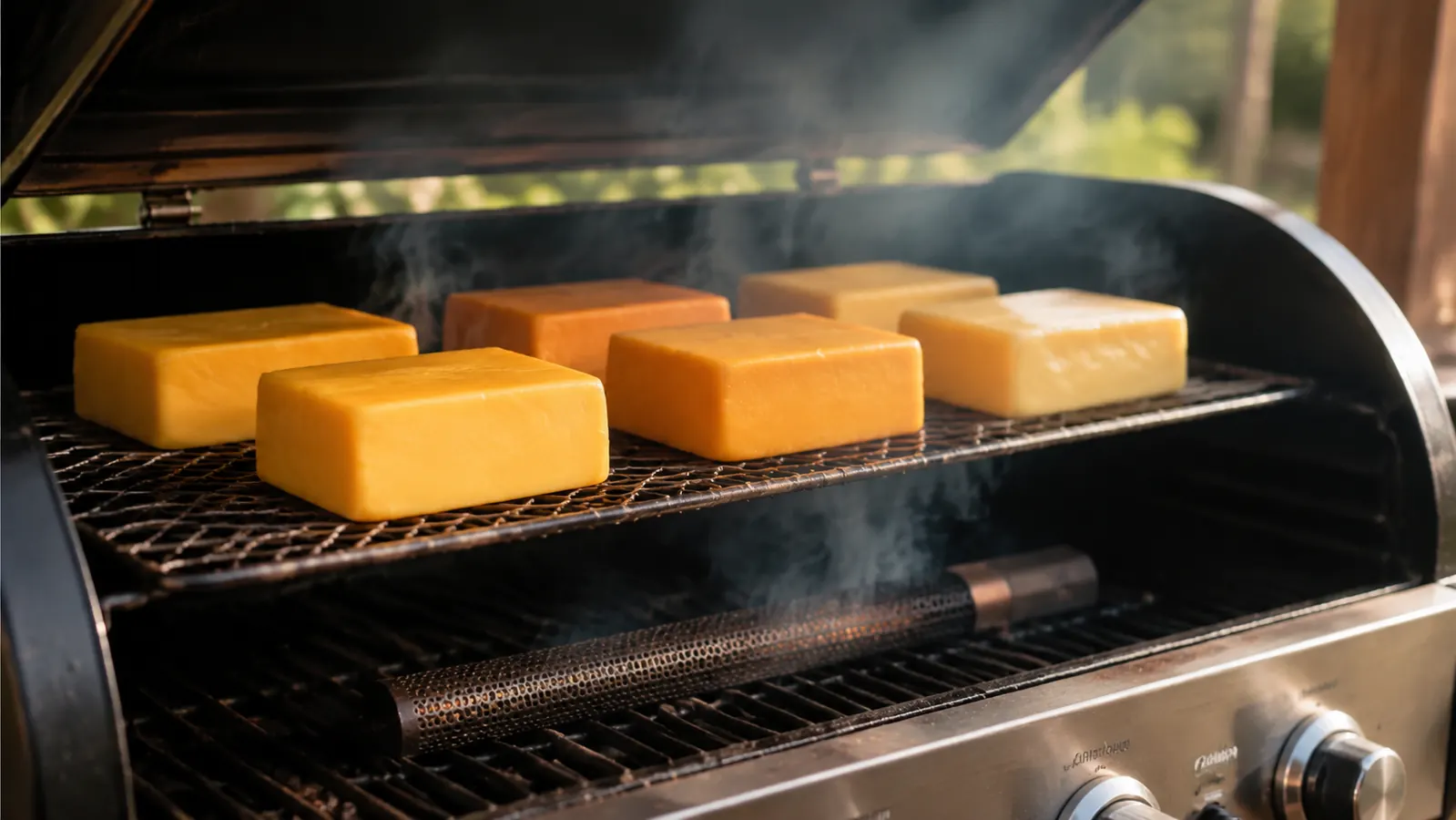
Cold smoking is the second and clearest win, and it is the one most people do not consider until the tube reminds them. Pellet smoke is produced at the temperature of a smolder rather than at the temperature of a heating coil, so the tube makes its smoke in whatever the ambient air already is. On a foggy fifty-five degree morning I ran two blocks of gouda over the tube for three hours, wrapped them, and let them rest two weeks in the fridge. They came back with the kind of clean, delicate wood sweetness you gladly overpay for at a cheese shop. I tried the same gouda in the electric box twice. Both times the coil kept cycling on to feed the chip tray, the cavity climbed into the seventies without meaning to, and I was softly baking the cheese on the way toward the melting point before the smoke ever got going.
Cleanup and long-term repair point the exact same direction. When the tube has done its last smoke of the week I shake out the ash, give it one hot burn-off over the gas to clear the crevice, and put it back in the drawer. It is a folded sheet of metal with no moving parts, no coil, no thermostat, no display, nothing that can fail. The electric box asks for chip reloads every hour, a water pan that turns grimy, and an element that needs a real scrub every few cooks or the next batch picks up a scorched note. Neither is a deal breaker, but one is a tube and the other is an appliance, and the tube simply takes care of itself.
Where an Electric Smoker Wins
Temperature control is the big one, and I will give the box its full credit here. A thermostat that parks the cabinet at 225 and holds it there while you sleep is exactly the hands-off that a gas grill with a smoldering tube in the corner is not. On the two overnight briskets I loaded the box, closed the door, and let its internal dial do the night watch. At six in the morning it was still sitting at 224 with the brisket chugging along at 163. My gas grill can hold low heat with the tube running, but a gusty coastal afternoon drifts it by twenty degrees, and you reset burners three times over a twelve-hour cook. When the cook runs overnight, or while you are at work, that is the whole difference between sleeping and not sleeping.
Capacity and beginner-proofing follow from the same design. The box stacks a whole brisket on the top rack with a pork shoulder below and keeps every shelf in the same temp envelope, no flare-ups, no chasing the warm spot. My brother-in-law, who had never smoked anything in his life, loaded the chips, set the dial to low, and pulled dry and clean predictable thighs out his second time running it. There is a real confidence that comes from a machine holding the temperature for you. If you plan to smoke seriously on a schedule, you have the deck room, and you want the set-and-forget version of the hobby, the box is the honest answer and I will not argue the point.
How I Ran the Two Side by Side
The test that should have been the closest was an eight-pound pork shoulder split in two: four pounds over the tube on my gas grill, four pounds in the electric box, both cooked at 225, both rubbed with the same brown sugar and salt blend the night before, both started at the same hour the same Saturday. The shoulder half that came off the grill had the better smoke ring, the clean red band under the bark that tells you actual wood smoke did the work. The half out of the box tightened smooth because the thermostat never let the cabinet wander. Both were fully smoked, not close, but the character was different: the tube half had smoke that read all the way through, the box half had smoke that sat closer to the surface.
The ribs were the decisive test for a company that cooks for a family. On a Saturday when the whole crew came over, I smoked three racks with the tube and three racks in the box, same rub, same morning, same people at the table. The tube racks had the sweeter and deeper smoke, the kind I kept cutting one more bite of to confirm it was real. The box racks were excellent too, but the smoke sat more like a surface seasoning than a thing that had soaked to the bone. Nobody at the table found the tube racks bitter, and everyone noticed the difference. If I am putting smoke in front of guests, the deeper one is the one I will choose.
The salmon settles the cold-dishes argument for good. A two-pound fillet, cold smoked over the tube for three hours on a fifty-degree morning and then rested in the fridge, came out with the gentle sweet wood smoke you would pay restaurant prices for. The box, even on its lowest heat with a half tray of chips, wanted to cook the fish and sharpened the smoke within the first hour. If cheese, salt, nuts, trout, or anything that needs to stay cold is part of your plan, the tube is the tool, and no wattage on the label changes that.
What the Smoke Actually Tastes Like
The quickest way to describe the flavor difference is that the tube tastes like someone with a woodpile and the patience to use it, and the electric box tastes like a delicious machine. On the tube, smoke is the background on purpose. Hickory showed up as a rounded warm sweetness, applewood as a clean fruitiness that never crossed into perfume. On the electric box the smoke is real smoke, nothing to apologize for, but it comes across more one-dimensional, mostly wood, less layers. For a burger night or a batch of butts, you would be happy with either. The divide only turns when the flavor is supposed to be the point of the meal.
There is also a real appetite difference in how much the two will let you get away with. The tube gives you hours on a single fill, and a consistent density of smoke over all of it, so you can taste and adjust from hour one. The chip tray wants to be reloaded on the hour, and it is tempting to toss in a big wet handful, which is exactly how smoke turns sharp or bitter. The deeper flavor is not a miracle, it is just steady, low-temperature smoke over a longer time, which is the mechanic that always wins.
What Neither Tool Will Do for You
The tube has hard limits and I will not hide them. It does not hold a temperature, and if your grill cannot hold a low flame steady on a windy afternoon, you will be out there nursing burners for hours instead of relaxing. It also has an over-smoke ceiling. I left a rack of ribs over the tube one evening while I went to deal with the irrigation, and came back to bark so strong they were bitter, and we ate them bravely and said nothing. Smoke is a spice, and the tube makes it easy to over-season if you walk away at the wrong minute.
The electric box has its own accounting and it is mostly chores. Chips want reloading hourly, the water list gets enamel, and the heating element wants a serious cleaning every few runs or the next smoke gets off. It also wants a flat dry corner of the patio, an outlet, and a cover for the rain, and if the element fails on a budget unit it becomes a very big coat hanger. Neither tool is the complete answer by itself, and that is the honest thing nobody types on the retail listing.
A halved chicken, two hours over the smoldering tube on my gas grill's lowest setting, came off with more depth than the electric box produced on any bird all season.
Ready to make the grill you already own finally taste smoked?
Every test that measured depth of flavor went to the same side: a smoldering tube of hardwood pellets beats a heated chip for honest smoke. If you own a grill, the LIZZQ tube is the highest-leverage upgrade I made all year.
Amazon Check Today's Price on Amazon →Who Should Buy Which
Buy the LIZZQ pellet smoke tube if you already own a grill and you cook on it all the time, which is most of you reading this in the first place. You want real smoke character on the dinner you are already making, you want cold-smoked cheese without a second machine, and you would rather spend the difference on a better thermometer than on a patio appliance that does one thing. It is the right first buy nine times out of ten. It changes the meat tonight, it travels to a campout, and if you ever outgrow it, the electric box will still be waiting for you at the store.
Buy a dedicated electric smoker only if one of two things is genuinely true. Either you own no cooker at all and you want a complete set-and-forget machine out of the box, or the large majority of your smokes run overnight or while you work, situations where a thermostat that holds itself is worth more than the deepest smoke ring. Those cooks exist, and for them the box is the right tool. I kept mine for the wet overnight brisket stretches and the days when I wanted more rack space than one grill held. It earns its spot. But for depth of flavor per dollar, per drawer, and per evening, the tube is the tool that pays for itself on the first Saturday.
The final call after a full season
Buy the tube first. It layers honest smoke onto the grill you already trust for less than a bag of pellets. If you ever truly outgrow it, the electric smoker will still be there, but most backyard cooks never do.
Amazon Check Today's Price on Amazon →