
Here is what almost nobody tells you about cold smoking cheese at home: the smoke is the easy part, and heat and patience are the whole battle. I spent years over the propane and wrote cold smoking off as a hobby that needed machinery I would never buy, one of those upright smokehouses the size of a mini fridge. A neighbor changed all of that with one wedge of his backyard gouda, fog still beading on the rind. The entire equipment list turned out to be three things: a LIZZQ pellet smoke tube, a gas grill you are willing to ignore for a few hours, and a block of decent cheddar. I work in IT, so I braced for something precise and finicky. It came out much closer to a patience exercise with one exact waiting period at the end.
My first batch produced the classic failure: a sweaty, slightly softened block that tasted like standing downwind of a damp campfire. Hot smoke melts cheese, and raw smoke is sharp until it has rested, two lessons you only really learn by ruining a batch. Since then I have run a dozen batches through the same LIZZQ tube on the same grill, and the process has settled into something I can hand to a neighbor without notes. This is the exact method I use now, including the mistakes I made along the way.
The single purchase that makes this a ten minute setup
The LIZZQ 12 inch pellet smoke tube takes a loose fill, smolders for around five hours of clean white smoke, and sits flat on any grill grate. It is the tube in the photos on this page, and it is the only piece of hardware this project actually depends on.
Amazon Check Today's Price on Amazon →Step 1: Pick firm cheese and pull it out of the fridge early
Choose cheese that can hold together under the smoke. Sharp cheddar, gouda, Swiss, provolone, and low-moisture mozzarella all take a cold smoke beautifully. The soft cheeses, the brie and the spreadable rounds, are for a later batch once you have the timing dialed in, because they sweat and go greasy long before the hour mark.
The store brand is fine here. Nothing about this needs a fancy aged cheese. My standard batch is one block of extra sharp cheddar and one block of gouda smoked at the same time, enough to learn the timing and still have something left to eat at the end. Buy whole blocks, never slices. Slices dry out, turn rubbery, and hold no depth for the smoke to work into.
About an hour before you light the tube, pull the blocks out of the fridge. You are not trying to warm them, just to take the chill off the surface, because smoke clings to a slightly tacky surface better than it does to a cold, damp one. Pat each block dry with a paper towel while it warms, and leave a wax rind on. The rind does the work of a clean wrapper, and the smoke finds its way around it just fine.
Step 2: Turn your grill into a smoke box and leave the burners off
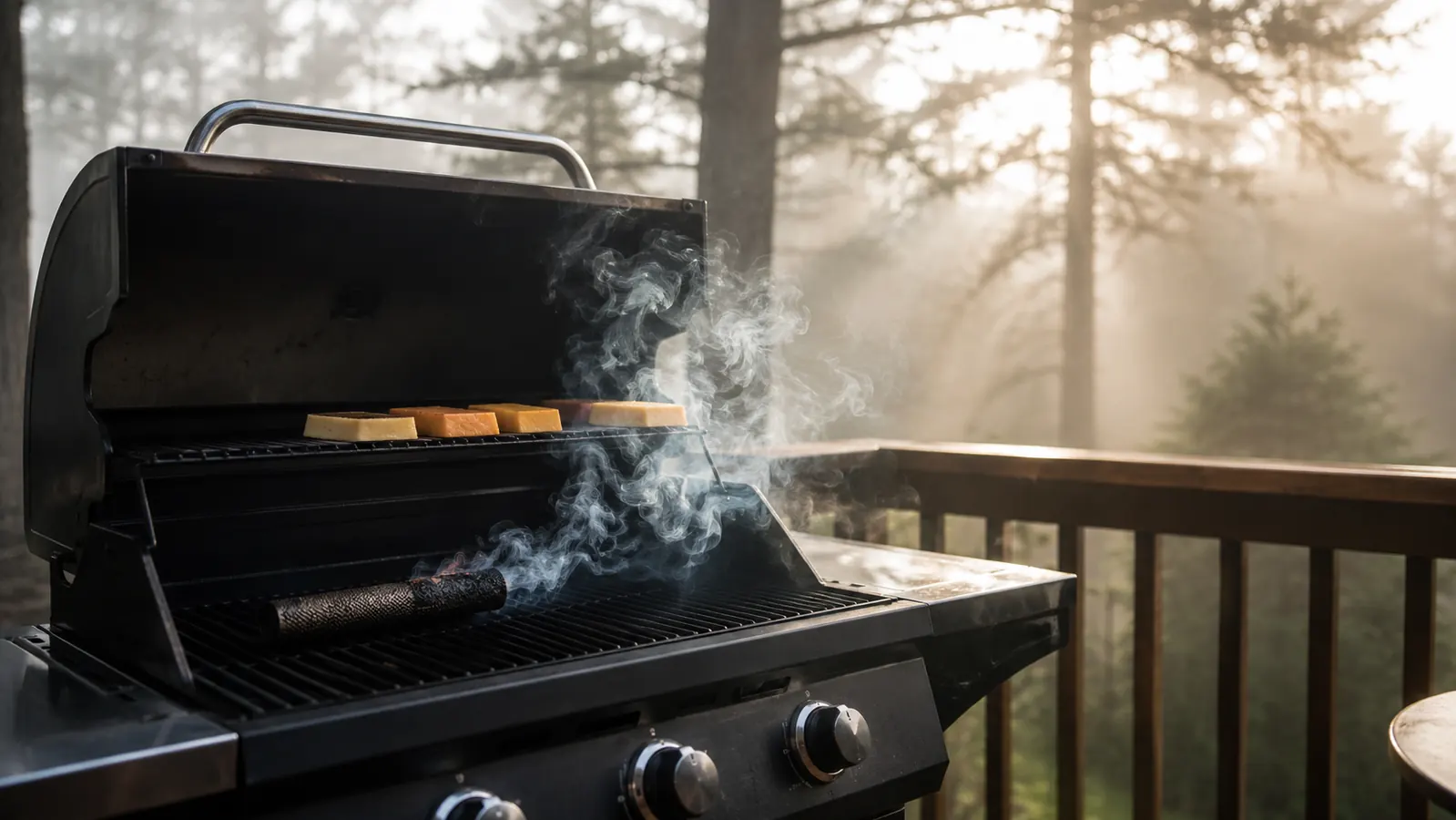
Your gas grill is the best cold smoke chamber you already own, and this is the step people ruin by reaching for the knobs. Every burner has to stay off. You want the smoke and none of the heat, because even the lowest setting pushes the air inside past the point where cheese starts to lose its shape. A closed grill burning nothing is just a smoke tent with a lid.
Set the tube on the grate at one end, parked on a small fireproof block or a folded sheet of heavy foil so the bars never scorch the deck. Put the cheese at the far end of the grate, as far from the tube as the grill will allow, then crack the lid or the vent open about an inch so there is a path for moving air. Stale smoke turns bitter fast. You are chasing a slow current of fresh smoke over the blocks, not a pocket of old smoke sitting on top of them.
A wetted mat or a shallow pan of water in the far corner helps a dry climate. A murky morning does the same job for free, because humid air is what lets the smoke cling to the cheese instead of skidding off a dry surface, and if you intend to skip the grill entirely, an old cooler with the lid propped open makes a steadier box with the tube on a brick facing away from the cheese. I swap between the grill and the cooler all season and both turn out the same block, so the cooler route is ready whenever the grill is wet.
Step 3: Fill the LIZZQ tube loose, light it, and blow the flame out
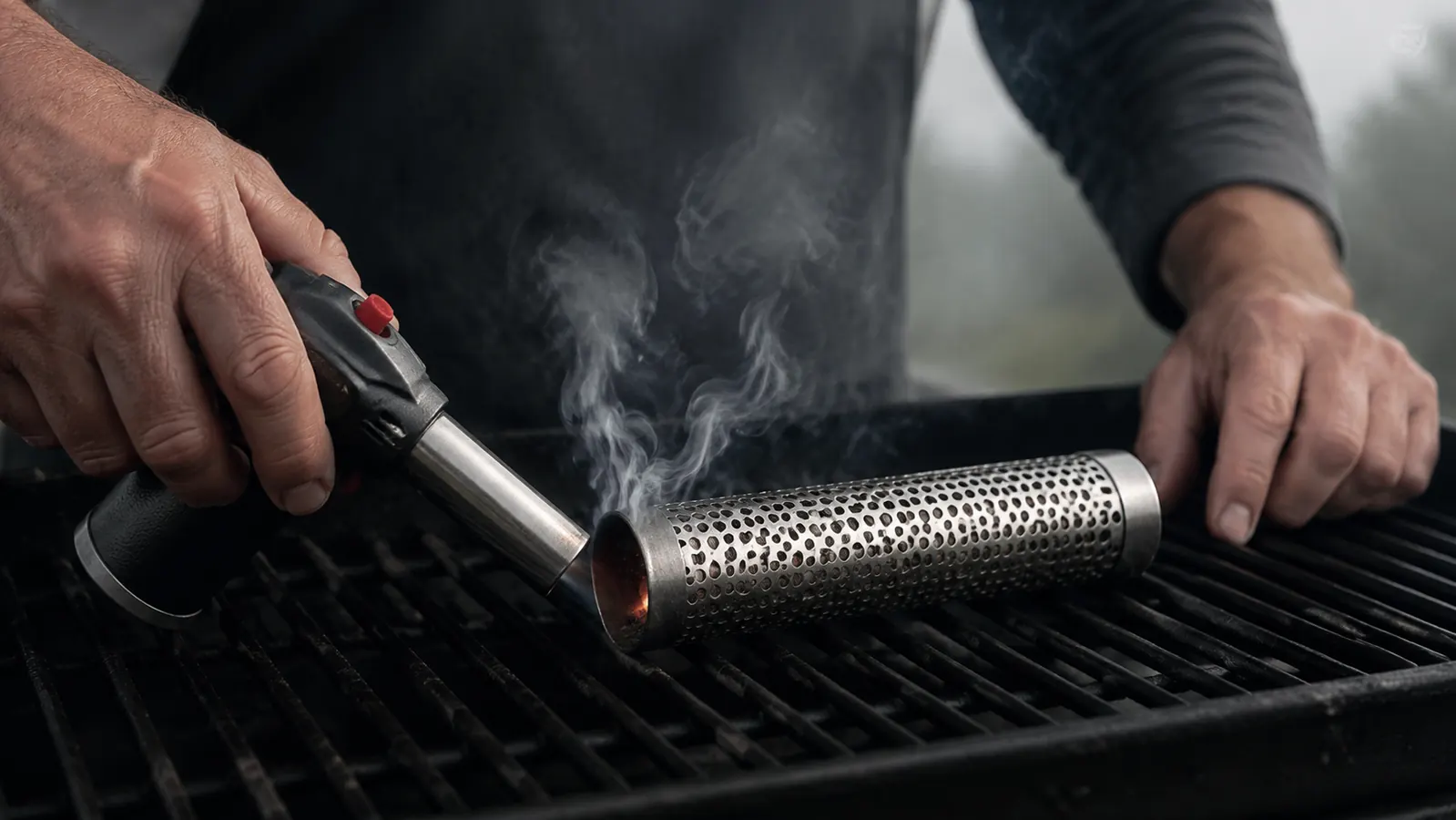
Scoop the pellets in loose by the handful, and never pack them down. Loose is the trick, because the pellets need air around them to smolder instead of petering out. The LIZZQ 12 inch tube holds a loose fill that runs about five hours of smoke, which is more than a batch of cheese will ever want, and that reserve means you never open the box mid-batch to reload.
Hold the tube at an angle, run a butane torch along the open end until the pellets catch and a real flame licks up, and let it burn that way for about five minutes. Then blow it out. What stays behind is a smolder, and it pours thin white smoke for hours, and that is the entire difference between cold smoking cheese and roasting it.
Set the tube back on its block, close the grill, and give the box a few minutes to settle. The first smoke is always thick and gray while the tube warms, so do not worry about it. Every time you open the lid you dump the smoke you worked to build, and cheese does not need the attention anyway.
Step 4: Smoke one to three hours, keep the air under 90 degrees
The number that matters is the air temperature inside the box, not the temperature of the cheese, because the cheese is never supposed to cook. Under 90 degrees the smoke does the work and the block absorbs it. Once the air climbs past that, the cheese sweats, and a sweating block goes greasy and blotchy instead of firm and clean.
On a cool, damp morning my grill sits around 70 with the tube running, which is exactly where I want it. When the weather is warm I do the batch first thing in the morning. For the first batch of the season, I drop a spare thermometer probe on the grate next to the cheese and confirm the number before I trust the same layout for the rest of the year. Give me a measured number over a guess any day, and cold air does not hurt this at all. I have even run a batch in a light drizzle under the porch overhang, and the smoke lands about the same, just a touch gentler on the rind.
An hour of smoke is a gentle hint, two hours is where most people land, and three is the higher, bolder end. Rotate the blocks front to back at the halfway point so one side does not spend the whole session nearest the tube. None of these timings actually cook the cheese, which is the whole point of calling it a cold smoke.
If you are not sure how far to go, split the batch into three blocks and pull one at the one hour, two hour, and three hour marks, labeling each as it comes out. After the wait, taste all three side by side. One good afternoon of that tells you your own house style forever.
Step 5: Wrap the blocks, then wait two full weeks
Every block tastes sharper and harsher on the day you smoke it, and this is where people decide the hobby is not for them. Do not judge a batch on its own day. The smoke flavors are raw at first and they need time to settle into the fat, which takes cold and quiet. I nearly wrote off my first batch the same afternoon, and the exact same blocks, unwrapped two weeks later, are the reason a pellet tube lives in my shed.
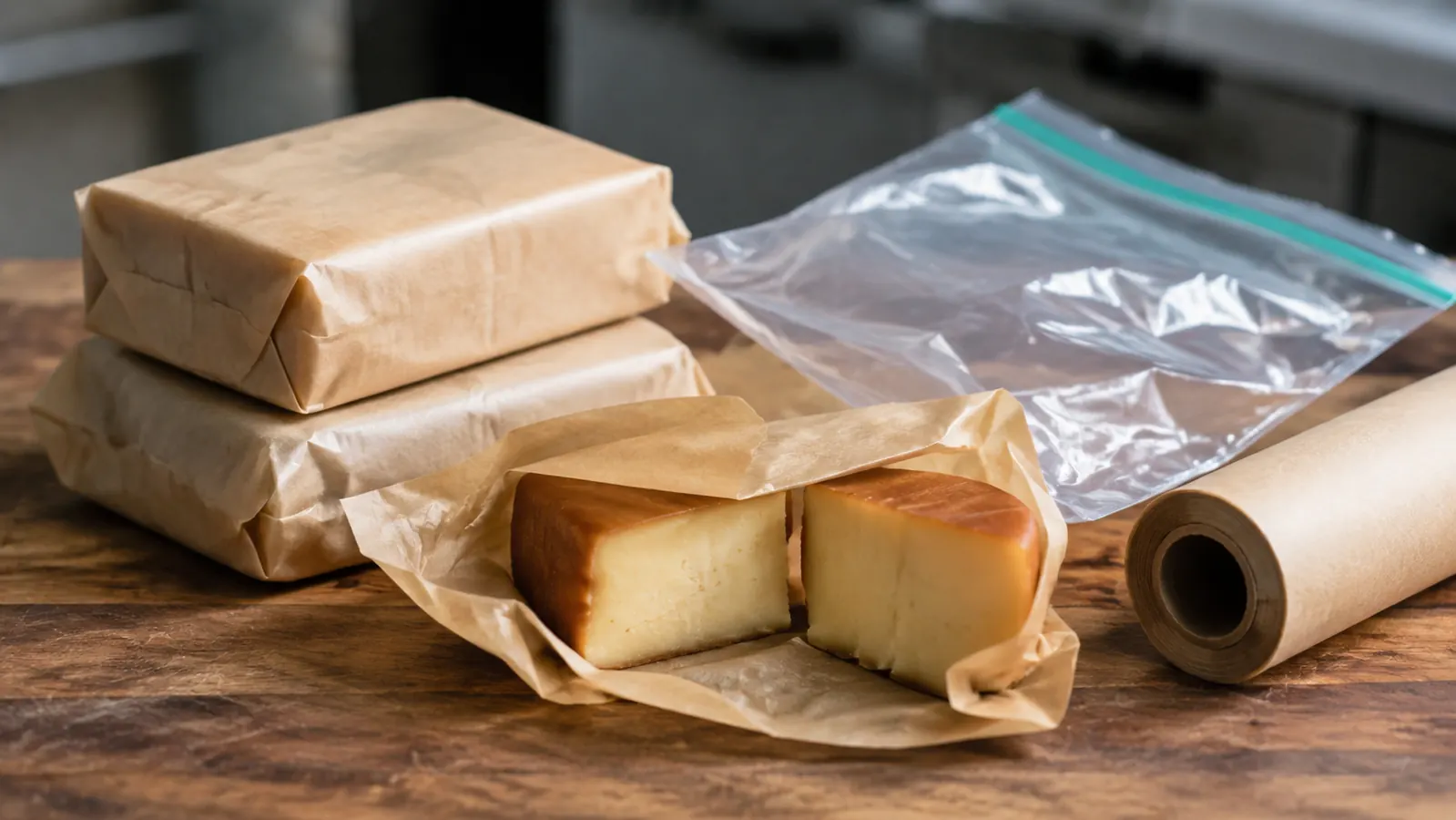
Rest the smoked blocks on a rack in the fridge overnight so the wet face dries down, then wrap each in parchment paper or slide it into a ziplock and push the air out. Wait at least one week. Two weeks is already softer and better, and by the third week most cheeses have stopped changing. The rest all happens in the fridge, since cold smoke does not cook the block like hot smoke cooks meat. I keep a roll of parchment and a stack of zip bags on the shelf next to the grill, so the wrapping step never takes more than a minute.
The rested block is the payoff. Grate it over mac and cheese, let a thin slice melt onto a burger, or press it into a grilled sandwich, and you get flavor with a period of aging behind it that the deli does not sell. I keep a small stash of cold smoked cheddar going all year, and the only hard part is waiting for the next batch to finish resting.
What Else Helps
A short list of gear rounds out the setup. Apple and cherry chips give a mild, sweet smoke that suits cheese, and hickory runs stronger and easier into bitter. A spare air thermometer that reads the box gives you real numbers instead of moods, and a small brush or gasket is all it takes to keep the grill lid honest.
A vacuum sealer, if you already have one, is the best resting container, since the film presses on every face of the cheese and stops surface moisture from forming. A ziplock bag works almost as well if you squeeze the air out firmly. And a batch that comes out milder than intended is not wasted, because the smoke flavor simply settles deeper as the block ages.
Cleanup is the part every how-to skips, so here it is in one short paragraph. When the tube finally runs dry and has gone fully cold, tip it over the bin and give it a single tap; the ash falls out on its own, and because there is no grease, no oil, and no sticky glaze anywhere in a cold smoke, there is nothing to scrub. Mine has sat on a garage shelf through a whole wet season now, and the only care it has ever asked for is that one tap after each batch.
The honest boundary, because every tool has one: the LIZZQ is built for cold smoke, and it is not trying to be a hot smoker. I use the LIZZQ for cheese, for cold smoked trout from time to time, and for the days when I want the smell of smoke without a long cook, and the big box is still the one for a full brisket. Two different jobs, and each piece of gear stays in its lane.
If you want the full record on the same tube, my pellet smoke tube review follows it across a real season of cooks, and the honest six month view is in the LIZZQ review. The cheese is the reason this purchase ever made sense to me, and those reviews are about everything the tube has done since.
Two hours of smoke and fourteen quiet days in the fridge will do for a block of cheddar what a decade of deli 'smoked' cheese never managed.
The easiest tool in the shed to keep coming back to
The LIZZQ 12 inch pellet smoke tube is a small, durable tool that turns a foggy Saturday into the best meal setup you have done in months. Check today's price with one click, clear a corner of the fridge, and run the method once for yourself.
Amazon Check Today's Price on Amazon →