
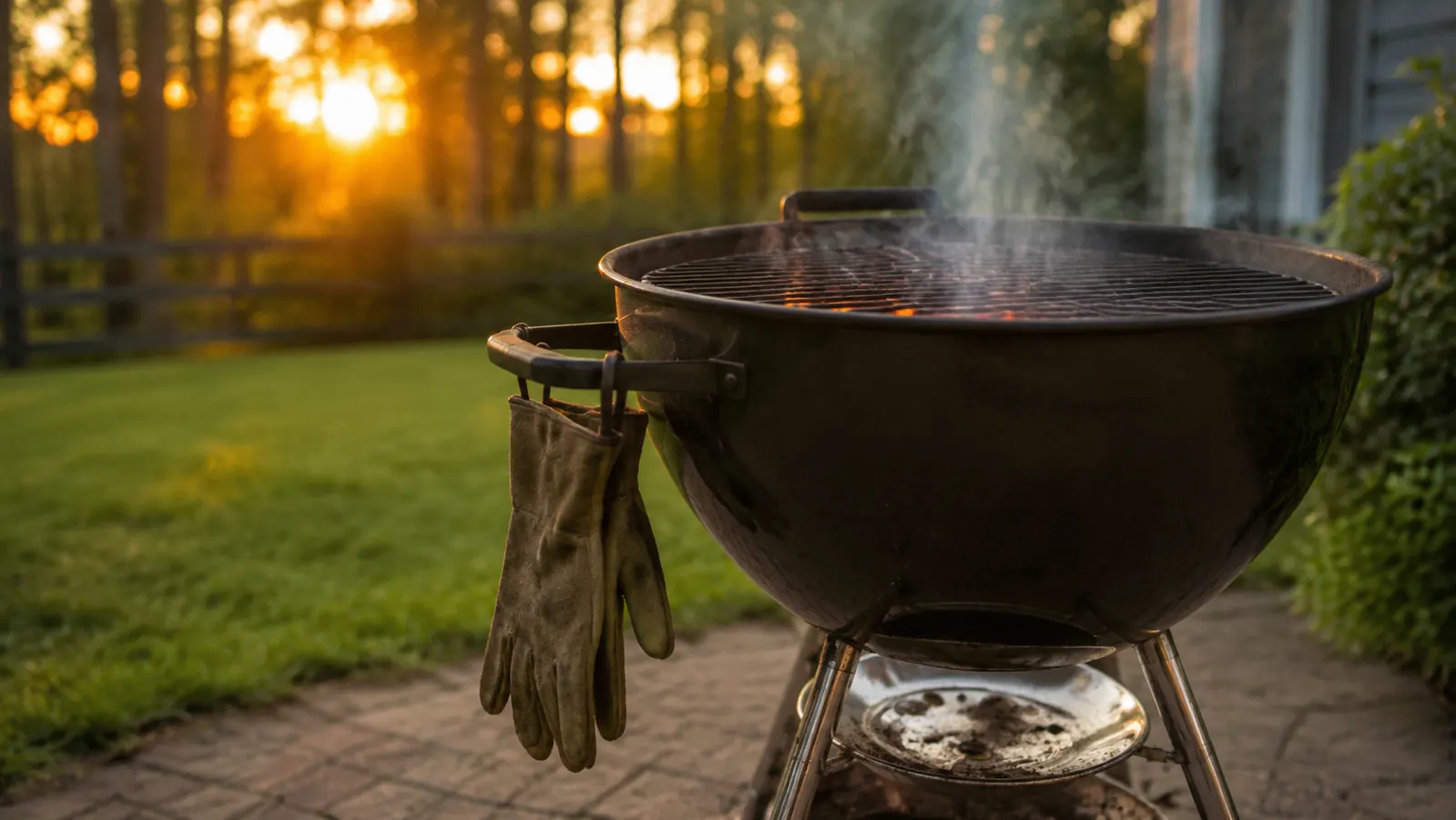
One night I stopped trusting a cloth oven mitt at the grill, and the timing was not something I planned. I was carrying a sixteen pound brisket off my charcoal kettle when the heat came through the cotton seam before my thumb cleared the rack. It was not the first close call of that season. Two weeks earlier the same mitt had scorched along its weave where it touched a grate that was sitting over a full chimney of coals, and twice I had watched it soak up rendered fat until what should have been a shield was a wet cloth pressed against my wrist. None of that was the fault of the mitt. It had a kitchen job, and I had been dragging it out to a live fire all summer, which is a scheduling error on my part and not a defect in the cotton. The week after that brisket I bought a pair of Grill Armor gloves, hung them on the top rail of the smoker, and put the way the drawer where it had always belonged. Everything about the season that followed was the test this comparison is built on, with the flame as the referee.
Here is the short answer, in case you want the point before the argument. A cloth mitt is the kitchen full of a tool, built for an oven that runs a few hundred degrees of dry heat. A heat resistant grill glove of the kind you need is built for the other half of the evening, the part where the grate has sat over coals for an hour and everything you can reach is running at live temperature. In that world the gloves are the better hands: they manage the heat, they keep your fingers, and they do not drink the grease. The mitt keeps one honest section, the kitchen, where it stays the right and cheaper read for a casserole, a hot handle, or a peel. Out at the fire itself, the gloves took every session of my season, and honestly it was not close. If you have ever watched the seam of a mitt go to steam, this article will confirm what you already know.
| Grill Armor Gloves | Cloth oven mitts | |
|---|---|---|
| Heat resistance | EN407 certified to above 900 degrees, and a brief pass across a hot grate reads as a warm push, not a burn | Cotton without a rated lane in the high ranges, the limit sits close to 400 to 500 degrees and the smoke starts at the seam |
| Dexterity and feel | Five separate fingers keep the tongs, pull the grate back, and feel what the other hand plans | One stuffed shell lowers out to a bulb, any small task is a two hand fight, and you cannot feel the pinch |
| Oily and wet meat | Silicone palm holds a greasy shoulder or brisket without a slip, and the fat runs right off the surface | The fabric drinks the juices and then holds that warm fat against your skin, and every grip gets hotter and slicker |
| Bones and foil edge | A layer of cut resistance sits between the palm and a sharp rib tip or a torn foil edge | No cut layer at all, a raw bone or a slice of tin goes through the fabric and finds your skin |
| Price at the register | More up front at today's price, and it covers a season and returns for the next one | A few dollars, and most kitchens already own a pair, which is exactly the reason it keeps getting grabbed |
| Kitchen oven duty | It will work, but it is overbuilt bulk for a nightly trip into a 350 to 400 degree oven | The natural fit for the tray, the lid, the pot, the hot spots, light, fast, and easy to store |
| Durability over a season | Started the second season with the seams intact and the grip still biting, one pair for the whole long year | Thins, dries out, and the night the heat finds a fresh seam is when they surrender the duty |
| Best for | Smoker racks, hot grates, fire pits, and the whole roast out of the kettle on a palm and a finger | The indoor oven, the weekday casserole, the pot handles, anything that never came near a chimney of coals |
How I Tested Both
Give the method a minute, because a season of real cooking says more than an afternoon of promises. I kept the Grill Armor gloves on a hook next to the smoker and I left the cloth mitt in the kitchen drawer, then I cooked the way I always cook through a whole summer: a brisket or a pork roast on the kettle on the weekends, a rotation of chicken and ribs on the gas midweek, and the fire pit out most evenings in the fall. After every cook I wrote one line in a notebook, and it answered the same two questions each night: which one of the two did my hand find first, and was the grip still mine when the meat was greasy and the heat was climbing. That notebook, not the copy on a sleeve, is where this opinion comes from. The honesty of the limit: one season, one backyard, one pair of hands. Your evening will differ in the details, but the way each of these tools fails is not confined to my property.
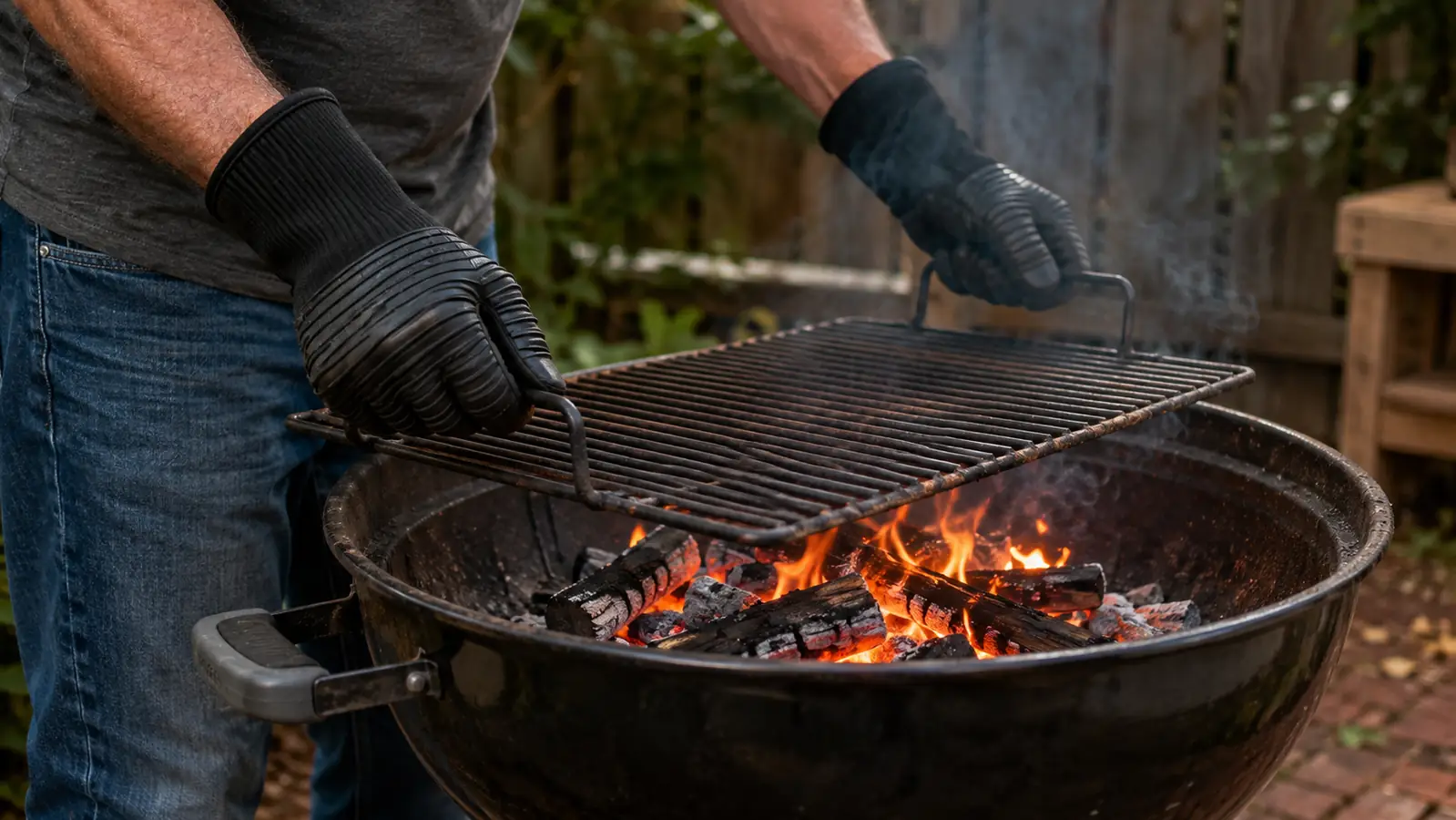
The night that settled the argument was not a brisket at all. It was late September, the fire pit was burning, and I went to move a cast iron grate across the ring while the coals beneath it were still shot through with orange. I grabbed it the way I grabbed things all season, a full palm and no plan, and the heat came through as a firm push on the silicone instead of a bite on the skin. I set the grate down and only then noticed I had not braced a single muscle while I carried it. That is what the rating does in real life, it buys you the seconds you need to do the job without thinking about your hand. Here is the honest limit of that same rating, because there is one. The gloves stop heat on contact, they do not stop it on a sustained hold. If you clamp a gloved hand on a hot grate and leave it there, the heat keeps climbing through the layers the same as it would through any fabric. So I settled on a simple rule. One lift, one move, let go. I have never held any single thing at the fire for more than the seconds a real job takes, and the gloves have never asked me to.
Where the Grill Armor Gloves Win
The first win is the one that lives on the label, which is the rated heat. The Grill Armor pair is built to a standard that runs past 900 degrees, and the worth of that number is not the number itself. It shows up when the grate has been sitting over the coals for a full hour and a single slow reach crosses the white hot band. In that moment the cotton of a mitt reads like a bare webbing and the heat banks against your skin in the same instant, while the glove takes the same approach the way a full tank takes the cold spring. I dragged the back of a glove along the edge of that waste of grate once, felt a warm push, and did not raise that hand to worry for the rest of the cook. The whole tone of the cook changes the night you stop bracing. That is the part of the rating that usually does not fit on the box, and it pays itself off every single weekend.
Then there are the fingers, and it is the five separate fingers that outscore the mitt all on their own. The mitt is a bucket shaped potholder, it binds the hand into one padded block and every fine job turns into a two hand fight. The gloves move like a live hand, and that turns out to matter in the riskiest minutes of the week. My hardest pass is moving a shoulder or a whole brisket from the smoker to the board when the meat is running near 200 degrees, my hands are slick with rendered fat, and the bark is still fragile. With the mitt that lift is a slow worried shuffle, because you cannot feel what the underside is actually holding. With the gloves, the flat of the palm carries the whole weight and a finger hooks the far edge, and I brought the roast to the board with my far arm free the whole way down. When the whole dinner hangs on one lift, that control is the entire reason to own the gloves and not the mitten.
A whole roast running 190 degrees rode from the smoker to the board on one flat palm while my other hand was free. A mitt could not have written that sentence for me.
Where the Cloth Mitts Still Win
The middle of the table deserves its own honesty, and the mitt does hold a real corner. In the kitchen it is the better tool for the work it was built to do. It goes on in a second, comes off in a second, folds flat in a drawer, and it never needs a hook or a charge. For the evening of a casserole at 350, a hot pot lid, a warm tray, the padded block of the mitt is exactly what a hand wants, and the glove is purely overbuilt for that room. I still keep mitts in the kitchen drawer for the weekday ovens and I would not trade them for the gloves in there. The mitt is not the wrong tool at all. It is simply the right tool from a different room, and the mistake was ever asking a kitchen tool to do the fire side.
The cost argument genuinely belongs to the mitt, and I will say it plainly. A cloth mitt costs near nothing at the register and most kitchens already own one, which is exactly why it keeps getting chosen in the moment. If your outdoor cooking is a handful of burger nights across the whole summer and the biggest heat you face is a gas rack, then the mitt is the honest budget answer and I would not push a glove on you. But the math flips the week the smoker becomes a habit. The cotton thins as it dries out, the fat works the weave, and sooner or later the fire finds a seam at the worst possible second. I retired three mitts that way in the seasons before this one. The single pair of Grill Armor gloves has carried every fire of the whole season and it will hang there to start the next one. The cheap tool stops being cheap the night it fails, and that is the phrase the extra cost hides.
There is also a quiet daily argument about upkeep that the mitt wins without breaking a sweat. Mine goes in the wash with the kitchen towels on Sunday afternoon and comes out like new, while the Grill Armor pair needs a rinse in the sink after the greasy cooks and a quick wipe of the silicone to keep the grip biting. On the hottest afternoons the gloves also run hotter on the inside than the breathable cotton does, and my hands came out damp more than once on a ninety degree day no matter what the forecast promised. None of that changes which tool I reach for when the fire is lit, but it is part of the honest price of the upgrade, and it is a corner of the ledger the mitt genuinely holds.
One Pair That Never Asked Me to Flinch
The Grill Armor gloves go past 900 degrees on the rating, keep five working fingers, and left the mitt in the drawer where it belongs. If your fire gets lit more than a few times a year, check today's price on Amazon and retire the potholder from the grate for good.
Amazon Check Today's Price on Amazon →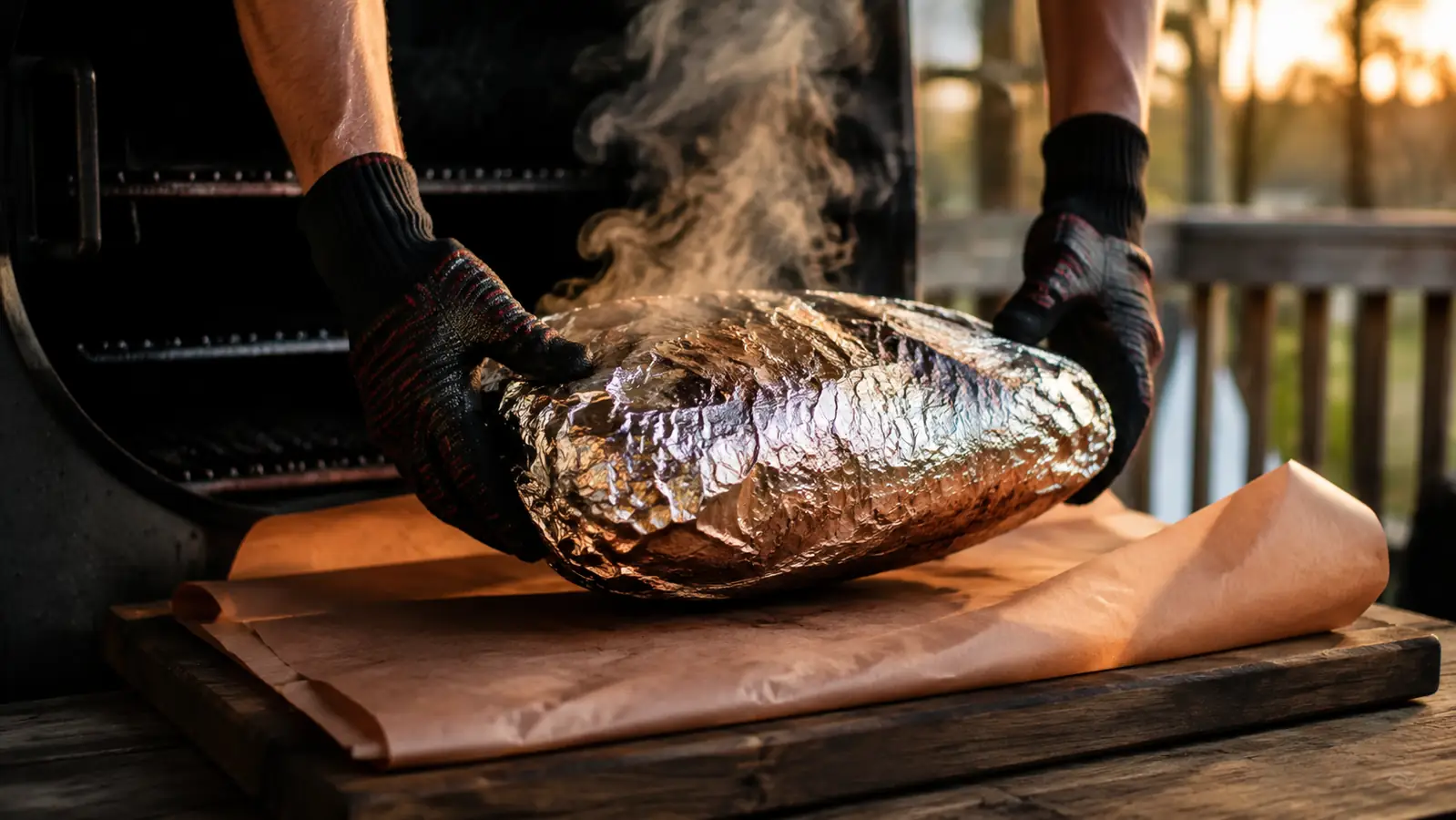
Who Should Buy Which
Stay with the cloth mitt if your fire is all on the kitchen side of the door, or if the outdoor season is a couple of grill nights a year at modest heat. In both of those worlds the mitt does the job, it costs nothing you do not already own, and you should not spend a dollar more. There is no shame in that drawer. It is the right drawer.
Reach for the gloves if you are the person who is already at the fire. If the smoker has a place in the weekend schedule, if you tend a charcoal kettle through a low and slow evening, if the fall fire pit actually gets lit, then your season is the one the cloth mitt was never built to survive. That person is not buying a glove, they are buying the permission to stop thinking about their hand. It is a bigger spend and a better trade, and by the second brisket the difference is invisible and the grip is all you feel on the way to the board.
Bottom Line
The whole season, in one line: the mitt rules the kitchen and the gloves rule the fire. They are not the same tool and they should never have been compared on paper, only out at the grate. The cotton sits calm at 350 and comes apart at the sear, while the gloves shrug at the hot metal and come back for the next cook. If you move even part of your cooking out to a live fire, that is where the season points you, and the gloves have still never failed my hand.
This Is the Pair on the Smoker Hook All Season
Every brisket, every shoulder, every fire pit night, the same pair of Grill Armor gloves kept its grip and never made me think about the heat. Keep the mitt in the drawer and check today's price on Amazon for the gloves the fire actually respects.
Amazon Check Today's Price on Amazon →