
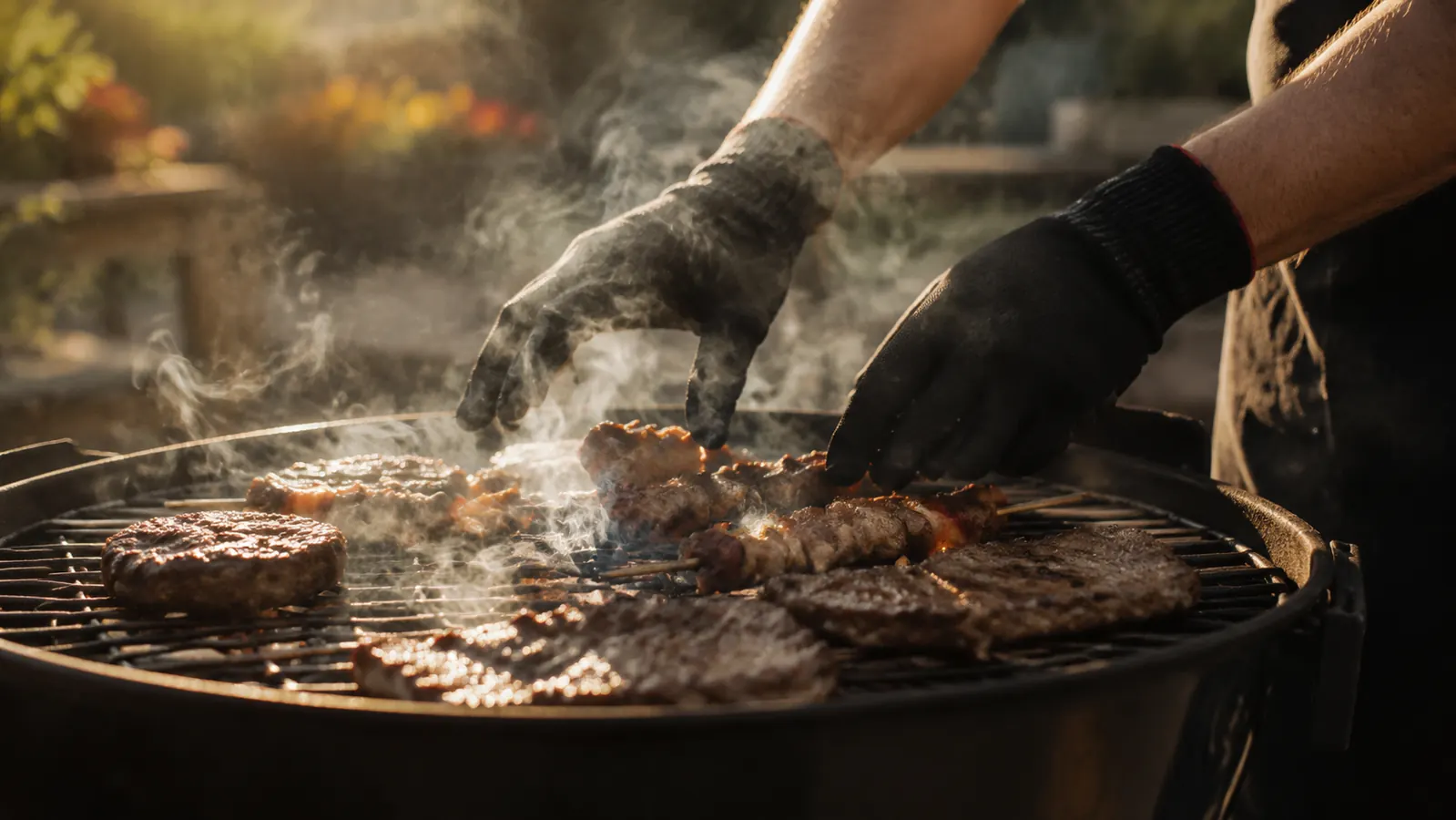
My hand was four inches from a cast-iron grate that had been running hot for twenty minutes when the quilted oven mitt finally let go. There was no hiss and no sizzle. The cotton just turned transparent at one spot and the heat came through in a straight line, and I dropped the platter of chicken wings I was carrying, two feet onto the driveway. That was the first Saturday of June. It was the last burn I did not plan for, and it was the night I ordered a pair of Grill Armor Gloves.
The mitt that failed had lived in a kitchen drawer for years. Fine for a casserole dish, useless for anything a fire does. And I knew it, because I had carried the same small burn at every single cookout, always the index finger, always because I was rushing. Somewhere along the way I made a quiet deal with myself that minor burns were just part of the job. They were not.
A guy at work who camps told me to buy leather welding gloves, so I borrowed his for one cook. Heat wise they were perfect. Everything else was wrong, because a welding glove is a fist with a thumb. You cannot flip a burger, you cannot pick up a spatula, and you absolutely cannot lift a 14-pound brisket dripping juice at 170 degrees. The hard part of grill gloves was never the heat. It was heat and fingers that still worked.
The Grill Armor Gloves arrived two days later. EN407 certified, rated for 932 degrees, a non-slip silicone grip across the palm, and a cotton lining instead of a fleece that melts in a fire. The numbers made me skeptical, because anyone can print a number. What convinced me was that competition guys and weekend cooks had been running the same pair for years, and my rule for gear is simple. I buy what survives heavy use, not what sounds good on a shelf.
The first real test was a quiet Thursday, just to see. I reached down, grabbed a grate that had been sitting over coals for forty minutes, lifted it one-handed to reseat the drip pan, and felt nothing. I stood there holding a hot grate and grinning. My wife came out the back door and asked what was wrong with me.
I grabbed a grate that had been sitting over coals for forty minutes, lifted it one-handed, and felt nothing come through.
Never flinch at a hot grate again
One season in a pair of rated grill gloves changes how you cook, because you stop flinching and start handling the fire. See today's price and the real ratings for yourself.
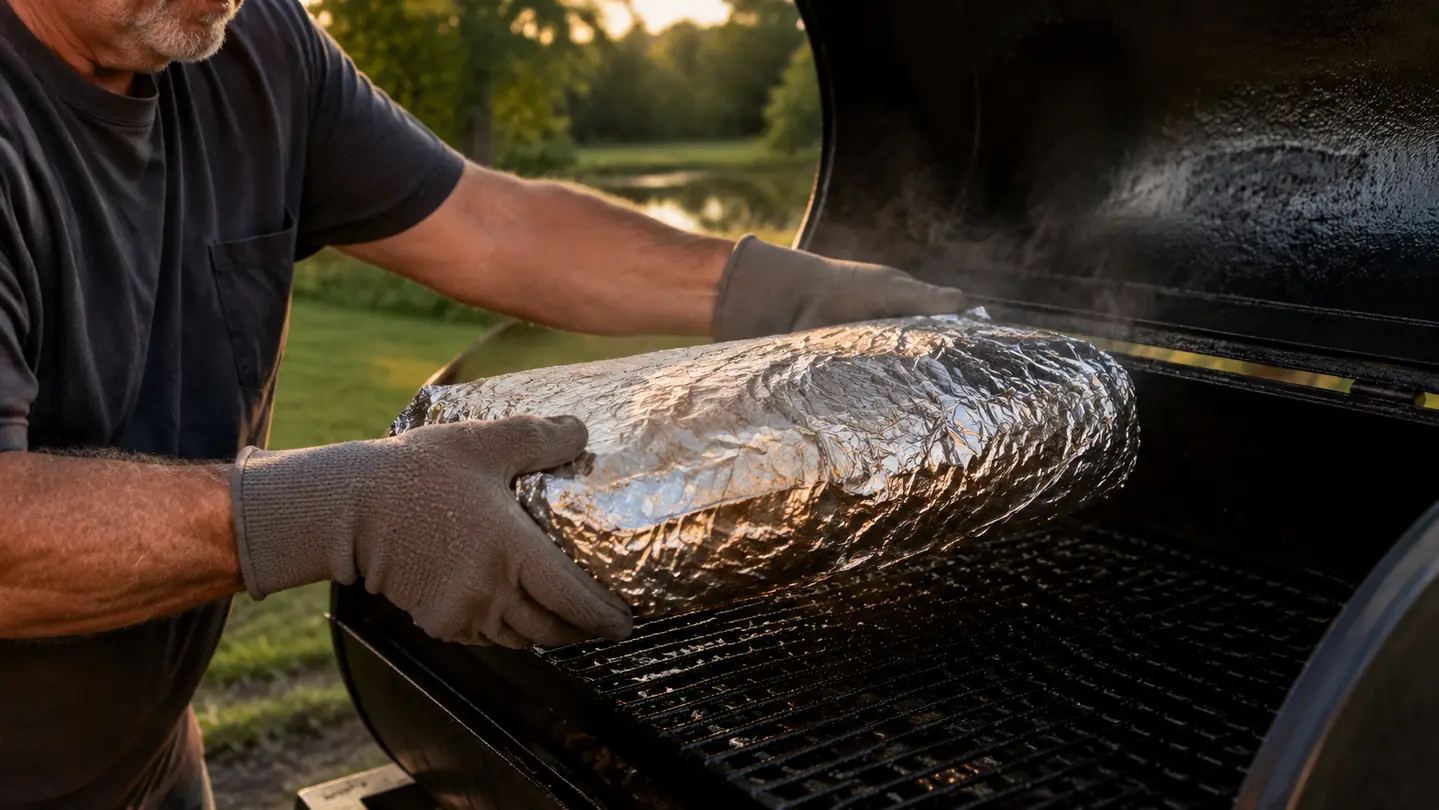
Amazon Check Today's Price on Amazon →The real test came on the Fourth of July. I had a 14-pound brisket, a full packer, and no margin for error. I ran it overnight on the pellet grill at 225, wrapped it in butcher paper when it stalled, and pulled it off at 203. After ninety minutes in the cooler came the moment I used to dread: getting it from the smoker to the cutting board without a single flinch. I slid my fingers under the brisket like a shelf and it moved like it weighed nothing. Juices ran hot across the silicone and the gloves took every degree of it.
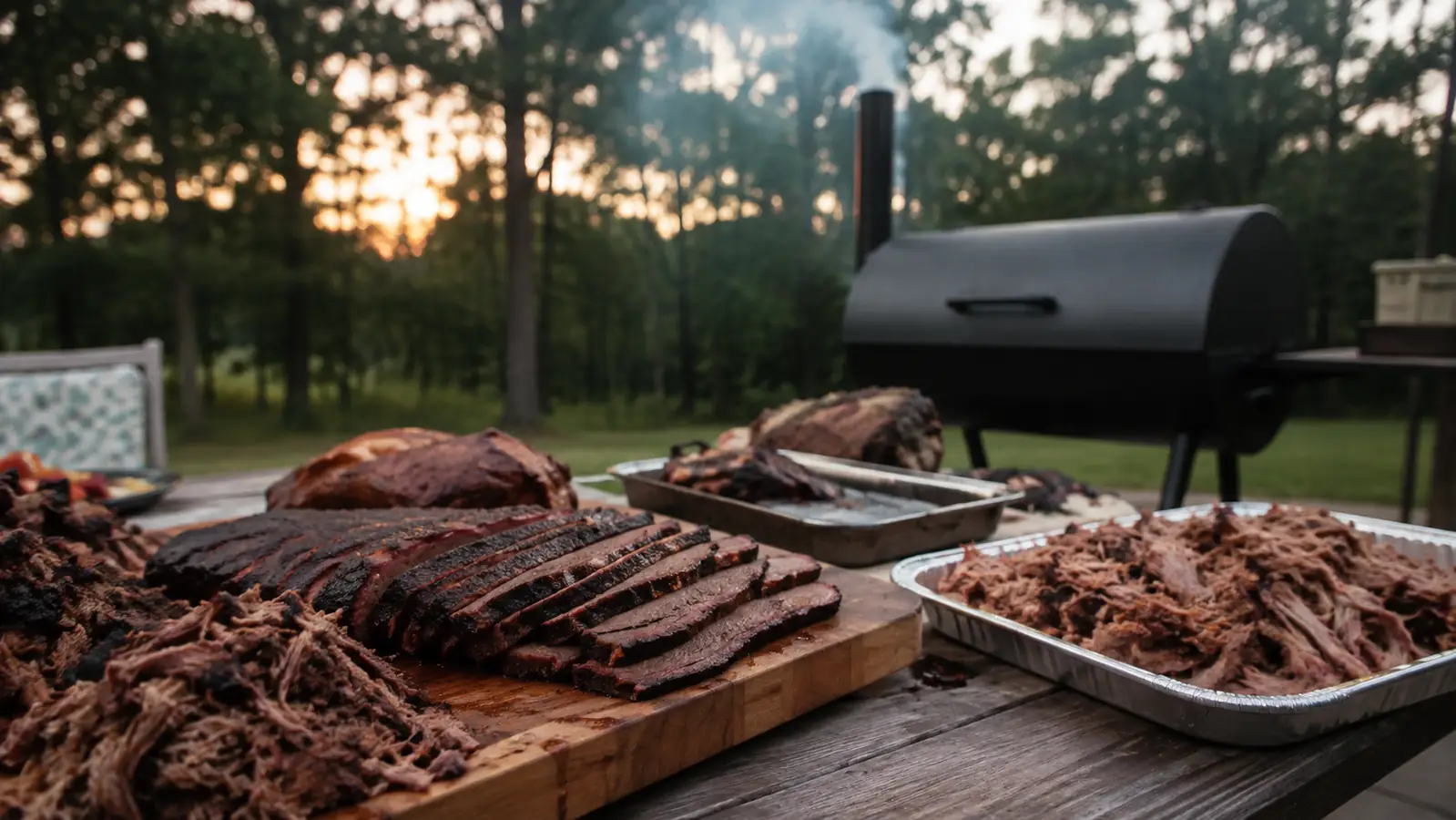
That one move changed what I was willing to attempt. All summer the Grill Armor Gloves were the second thing I packed, right after the meat itself. I lifted the chimney starter lid with a bare grip, moved a sizzling fish basket, rotated a pork shoulder mid-cook, and by August I was pulling logs off the fire pit the way I used to hope a leather glove would let me. Two hands, doing real work, and nothing coming through either of them.
I am not going to tell you they are flawless, because nothing is. They run warm, and after half an hour of moving things around a hot smoker your palms are sweaty and you want them off. Barbeque sauce on the silicone makes the grip silly until you wipe them on a wet towel, which I do between jobs. They are too clumsy for fine knife work, but that is what tongs are for. They are for the heavy, hot, risky jobs, and they have handled those every single time.
At the end of September I rinsed them once in the sink, hung them on the hook by the door, and took a long look. A full season of grate grabs, brisket lifts, shoulder turns, and fire-pit log shuffles, and there was no melt, no tear, no thin spot where the heat chewed through. The cotton lining was still intact. I have owned tools I regretted by August. These were not one of them.
What I'd Tell You If We Were Sitting at My Kitchen Table
If you walked in tonight and asked whether you need a pair, here is my honest answer. If you only ever lift a casserole dish, keep the quilting. If you cook over fire, even once a month, you need gloves that are actually rated for coal heat, and you need them before the afternoon you reach for something hot in a hurry. The mitt that failed me cost almost nothing, and it bought me a driveway covered in wings. The Grill Armor Gloves cost a little more, and they gave me back a whole summer of not flinching. That is a trade I would make again tomorrow, and I would say the same thing with you sitting right here.
Your hands do the whole cook. Protect them.
A real pair of heat-rated gloves earns its place on the hook by the door in a single cookout. Check the current price and the ratings, then see for yourself.
Amazon Check Today's Price on Amazon →