
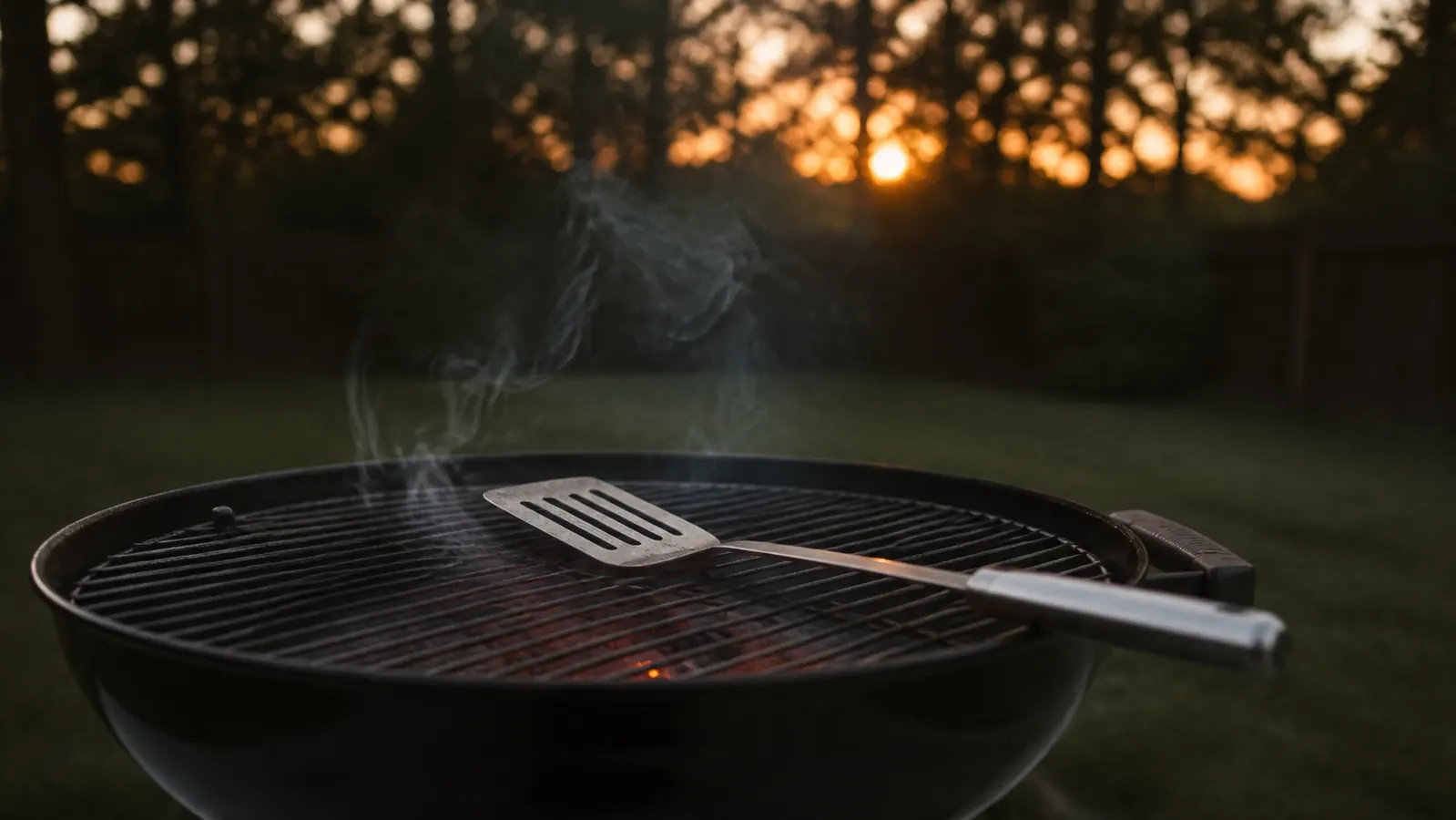
Every cookout at my house opens the same way. Someone reaches for the tongs first, because tongs are what everyone assumes is the grill workhorse, and then they spend the rest of the afternoon watching me reach past them for the spatula. It is not stubbornness, I have the burned knuckles and the dry burgers to back it up. A stiff spatula does more of the real work in a season than any other single tool on the grill, and the tongs hang around for the one or two jobs a blade physically cannot do. Most grill owners just reach for whichever tool sits closest, and that is a bad way to pick a tool.
Here is the honest short answer to the title. A good stainless spatula is the everyday workhorse of a cookout, and spring-loaded tongs are the specialist you reach for when the food gets big or awkward. They are not rivals, they are a two-tool system, and the line between them is clearer than most people think. I ran the Chef Craft 13.5-inch heavy duty turner head to head against my old 16-inch spring tongs through a full summer of cooks to find out where that line actually sits.
A word on how I used them, because the method is the whole review. I did not time anything or score anything on a clipboard, that is advertising, not cooking. I reached for whichever tool the job asked for and paid attention to which one let me down. The burgers were 70/30 chuck, pressed by hand with a thumb dimple in each patty. The fish was skin-on coho from the market down the road. The heavy test was a 13-pound pork shoulder smoked at 250 Fahrenheit until the point read 203, then rested wrapped in foil. From June through September I ran about twenty cooks on the same kettle and the same grate. The only variable was the tool in my hand.
Before the table, the drawer this argument started from. It still holds the thin slotted flipper that came free with my first gas grill, bent into a permanent smile by its second season, the wide turner that wobbles at the handle, and a pair of tongs whose hinge popped mid-cook on the worst rib day of my life. Every one of those tools pretended to be the same piece of gear. None of them were. That is the real reason this comparison exists.
| Chef Craft 13.5-inch Spatula | 16-inch Spring-Loaded Tongs | |
|---|---|---|
| Flipping burgers and smash patties | Wide stiff blade slides under a patty in one motion and doubles as a smasher | Jaws grip from the sides and tear the crust you just built |
| Delicate fish fillets | Thin beveled edge slips under a fillet and spreads the weight so it holds together | Pinched jaws concentrate pressure into two points and a fillet separates |
| Lifting a heavy shoulder or brisket | A 13-pound wrapped shoulder bows the blade and takes two hands | Long jaws clamp down and carry the whole thing with one confident grip |
| Reaching tight spots between grates | Wide head cannot slip through a half-inch gap to rescue a fallen wing | Narrow jaws reach between bars and rotate food without moving everything else |
| Scraping a hot grate mid-cook | Beveled front edge drags stuck-on carbon straight off the bars | Strong clamp and a wad of paper towel, but scraping is not what jaws do |
| Surviving seasons of abuse | One piece of stainless, no hinge, no spring, nothing to wear out | Springs lose tension and hinges loosen after a couple of seasons |
| The job each tool was built for | Turning, sliding, and serving flat things on the grate | Gripping, lifting, and moving whole irregular things |
Where the Chef Craft Spatula Wins
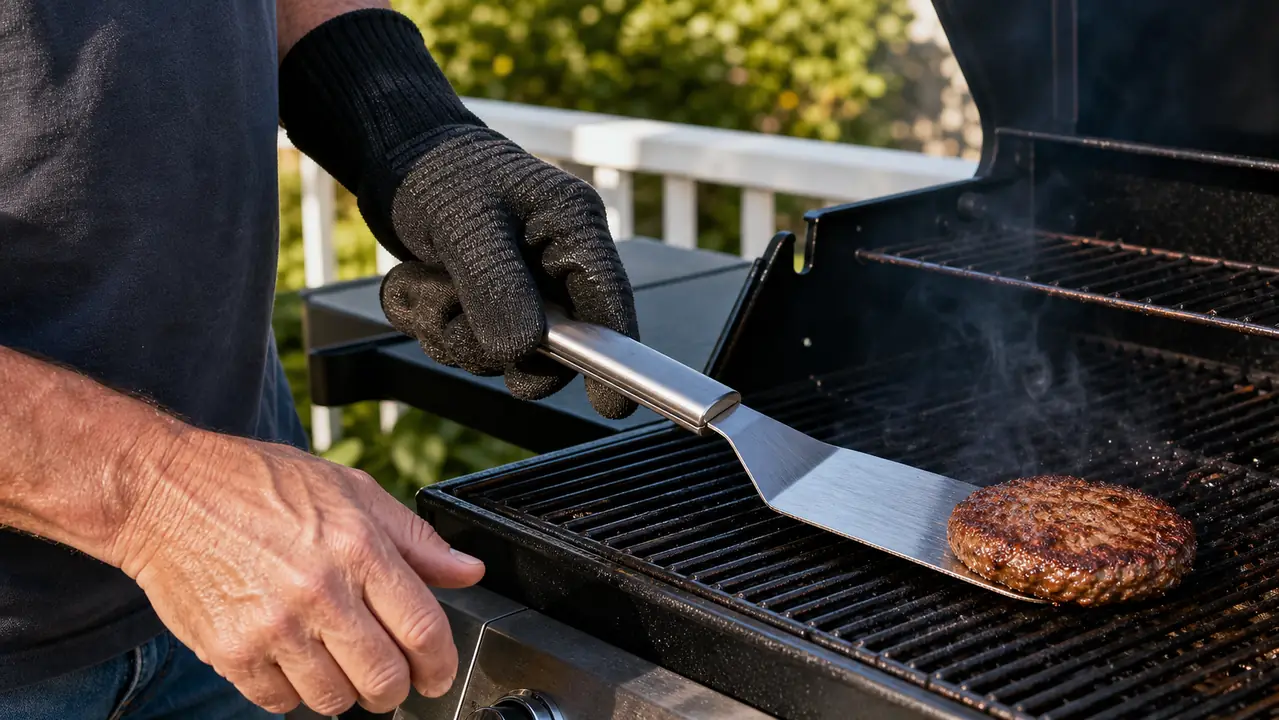
Flipping burgers is the most common job on any grill and it is not close. A wide stiff blade slides under a finished patty and turns it in one motion without digging into the meat. My old thin flipper used to flex and squash the patty before it lifted, squeezing out the juice and tearing the crust in the same move. The Chef Craft blade is one solid piece of stainless, roughly nine inches across at the business end on a 13.5-inch handle. There is no flex, no wobble, no part that can go wrong, and it treats a loose burger the way a bench scraper treats dough.
Smash burgers made the argument one-sided. A proper smashed patty is thin and locks onto the grate with a lacy browned crust, and you need a flat stiff surface to press it down without tearing it. Tongs can only pinch around the edge of exactly the crust you are trying to keep intact. The first time I pressed a ball of chuck flat with the back edge of the Chef Craft and watched a crust set in about ninety seconds, the tongs quietly became the second tool I reached for.
The same geometry rescues fish. Skin-on coho is the cook that exposes a weak tool faster than anything else. With tongs, the pinched jaws bit through the flesh before the skin let go, and I served the pieces that stayed on the grate. With the spatula, the thin beveled edge slides under the fillet, lifts the whole thing, and lets the skin release on its own schedule. That is the difference between serving a fillet and serving its remains.
The small jobs add up, too. Chicken quarters get a solid lift on a wide blade so they do not skate off the platter. Grilled sweet onions scooped onto a bun are a spatula job. Even moving a finished steak to the cutting board goes smoother on a flat blade than between two pointed jaws that squeeze out the last of the resting juices. None of these are the reason to buy a good turner, but they are exactly why it stays in your hand all night.
Where the Tongs Win
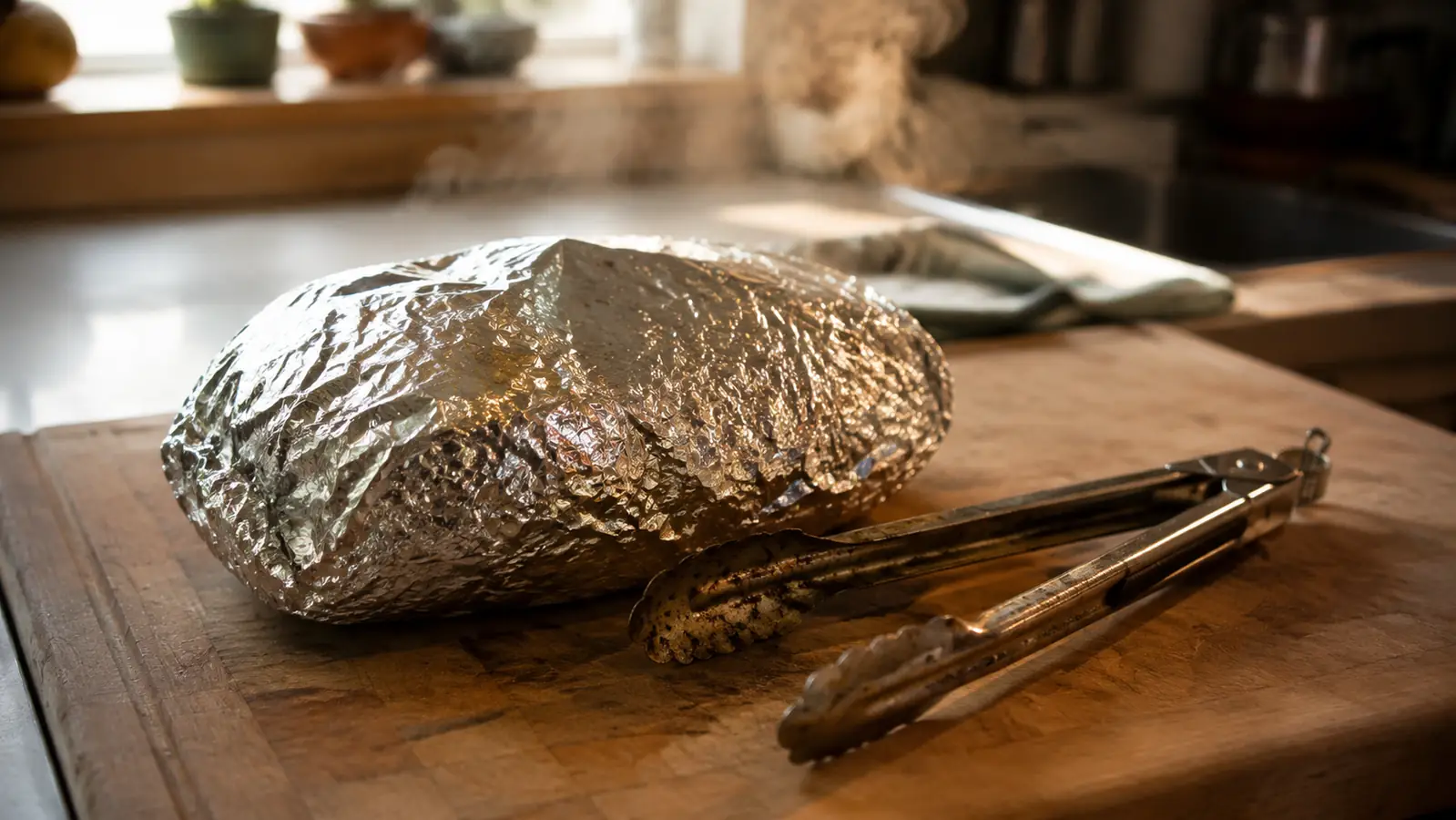
The moment the cut gets big, the spatula hands over the wheel, and I want to be plain about it because the spatula is the tool this page recommends. When that 13-pound shoulder came off the smoker wrapped in foil at 203 degrees, I did not reach for the turner. A blade that wide, under that much weight, is fighting to bow in half. Even two hands on it feels wrong over live coals. The long spring tongs get the jaws under the foil, clamp down, and carry the whole shoulder to the rest cooler with one confident grip. That job belongs to the tongs, and pretending otherwise would be dishonest.
Tongs also own every job that requires reaching into a tight spot. A chicken thigh slips off the platter and lands between the bars, or a rack of ribs needs rotating without moving the two steaks next to it. The narrow jaws slip into gaps a wide blade cannot enter, and the long handles keep your hand a comfortable distance from a grate running around 500 degrees. I learned that lesson the summer my knuckles met a cast-iron grate over a full chimney of coals. My set is sixteen inches long for exactly that reason. The spatula reaches along the grate, the tongs reach into it, and those are two different motions no single tool does well.
Vegetables are the quiet middle ground. A whole ear of corn, a halved zucchini, or a pepper needs constant rotation, and the tongs roll them without you touching anything twice. A spatula can lever a pepper across the grate, barely, but the physics get silly on anything round. So the tongs are not decorative. They earn their hook on the side of the kettle.
So let me say plainly what this article is not arguing. It is not an argument for throwing the tongs away, and it is not a lecture aimed at people who cook whole animals. It is an argument for understanding that a typical cookout has maybe six tong-jobs and forty spatula-jobs, and for buying accordingly instead of grabbing whichever tool sits nearest.
The crust you are trying to keep on a smash burger is exactly what a pinched pair of jaws tears off.
What the Table Does Not Show
Three things never make it into a comparison row. The first is handle length, the lever that decides how much control you get. A 13.5-inch handle on the turner is long enough to keep your hand off the grate and short enough to feel like part of your arm. Sixteen inches of tong handle is a reach pole for the heat, and it trades away the fine control you want for flipping anything light. You cannot lightly catch the edge of a fillet with a hinge and two long levers, you can only clamp.
The second is how the tools sound in use. Tongs click and clatter all night, a metal hinge talking over every job, and the noise tells everyone in the yard you are working. A good spatula is silent. It slides, it scrapes, it does its job without announcing it. That sounds like a trivial detail until you have spent an evening listening to a pair of cheap tongs click their way through a forty-burger cookout.
The third is cleanup. The turner is one piece of stainless, so it goes in the dishwasher with the plates and comes out looking the same. Tongs are two blades and a hinge, and that hinge collects grease and soot for a season until you disassemble it with a skewer to get the joint clean. It is a small maintenance tax, but it is a real one.
The Test That Settled It for Me
The deciding afternoon was burger night in early August. Eight guests, two kettles, one chimney of coals, and a timetable. I ran one station purely with the spatula and the other purely with the tongs, same chuck, same grate, same heat. The spatula station finished a full round ahead and every patty came off intact. The tongs station did not lose a single patty either, it just tore three of them and took twice as long. By the second round everyone at the table had a running joke about which side of the yard I was cooking on. The verdict was loud enough that I stopped pretending this was a close call.
The One-Piece Turner That Finally Does the Work
The Chef Craft 13.5-inch turner is a single slab of stainless with a beveled edge that slides under a crust instead of through it. It flips, smashes, rescues fish, scrapes the grate clean, then goes in the dishwasher with zero ceremony. Forty cooks in, mine has not bent, warped, or let a patty down.
Amazon Check Today's Price on Amazon →Who Should Buy Which
Buy the Chef Craft spatula first if burgers, fish, smash patties, or anything flat are a normal part of your season, which for most owners of a grill is all of it. It replaces the bendy flipper already in your drawer, takes over the grate-cleaning job for free, and today's price is small enough that nobody needs to budget for it. It is the higher-leverage purchase by a wide margin.
Buy the tongs first if your cooking leans toward whole animals, big shoulders, racks of ribs, or anything that finishes wrapped in foil. That is a legitimate buy order and I will not talk anyone out of it. But do not buy either tool as part of the four-piece gas station set. The whole argument here is that a stiff one-piece blade and a hinge that actually holds are worth a few real dollars, while free gift sets are exactly what fill a drawer with things you never pick up.
In my shed both tools hang within arm's reach of the kettle. The spatula gets picked up a few dozen times in a cook. The tongs get picked up maybe six. That ratio is not a knock on the tongs, it is the honest tally of which tool does the real work, and it is why this page recommends the spatula and still tells you to own both. I wrote the full long-term picture in my Chef Craft spatula review, and the grittier notes on seams and wobble in my honest review.
One last honest note. If you already own a decent pair of tongs, the upgrade that matters is the spatula, and it is cheap enough that the only strange decision left is cooking another season with a flipper that bends before the meat moves. The grate will keep scorching good food until the tool that slides under it stops flexing first.
Start With the Tool That Works Forty Times a Cook
Chef Craft has built this same 13.5-inch stainless turner for years because it holds up under people who actually grill. One piece of steel, nothing to hinge, nothing to wear out, and today's price makes the decision easy. It is the quietest upgrade you can make at the grate.
Amazon Check Today's Price on Amazon →