
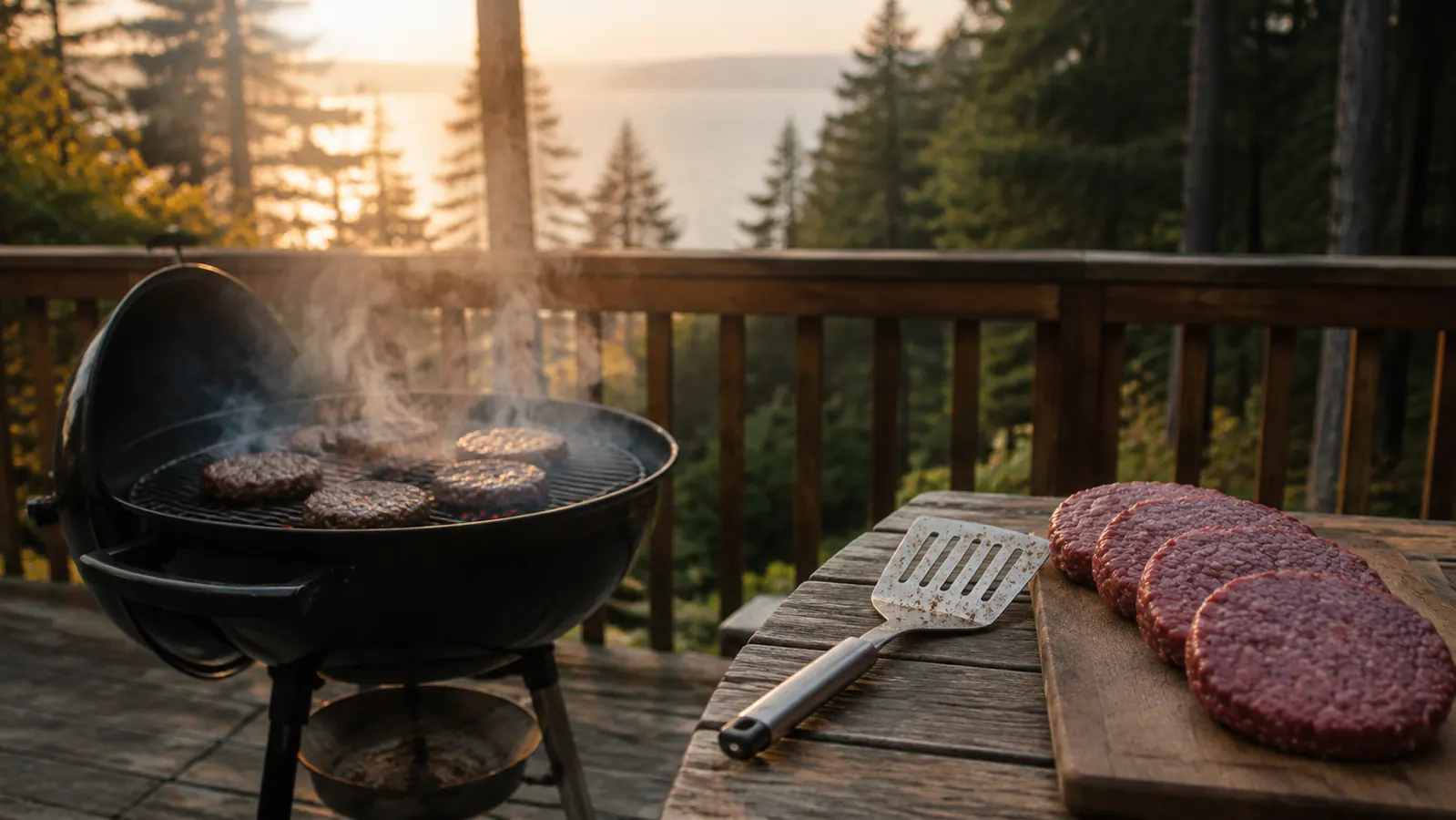
Six burgers. That is how long my last thin kitchen flipper lasted after I retired it for grilling duty. I know that cookout by heart: July 2024, forty burgers for my brother's retirement party on the back deck, coastal fog rolling in off the bay, and by the sixth flip the blade had a permanent bend in it from levering patties off the grate. The burgers came off shredded. Half of one salmon fillet stayed welded to the grill. And I spent the rest of the afternoon jabbing at hot food with a fork, which is how you treat meat when you have run out of better tools. If that sounds like your grill drawer, this review is for you.
I am not a fancy cook. I smoke a brisket maybe four times a year on a bullet smoker, run a 22-inch charcoal kettle for almost everything else, and I buy gear the way I buy yard tools: I research it, I want it to earn its place in the shed, and I would rather own one good thing than three bad ones. So when I finally bought a proper heavy-duty stainless turner, the Chef Craft 13.5-inch from the restaurant-supply aisle everyone walks past, I did what I do with every tool before I will talk about it: I used it hard for a full season. What follows is the honest long-term report.
The Quick Verdict
A full season of heavy use and the blade still has zero flex. It is the cheapest tool on my grill table and the one I reach for most, and that combination is harder to find than it should be.
Amazon Check Today's Price →One Stiff Turner Ends a Decade of Squashed Burgers
Twelve months of Wednesday smash burgers, whole fish, and grate scraping later, this is the tool I would buy again without thinking twice. It costs less than most flipper sets at today's price and it will outlast every one of them.
Amazon Check Today's Price on Amazon →How I've Used It
A quick word on my setup so the rest of this lands. I am Robert, 58, IT by day, and when I am not at a keyboard I am on a bike or standing over smoke. My main grill is a 22-inch Weber kettle that has been through two sets of grates, and a nine-year-old bullet smoker takes the long-weekend jobs. The turner has been on every one of those cooks since July 2025, not just the ones that photograph well.
Before I give you the verdict, let me tell you what it has actually been through, because the gimmick-free nature of the tool is the whole story. Every Wednesday night we do smash burgers, usually nine at a time on a cast-iron griddle insert, and the turner is the only tool on that cook. Weekends it works the kettle for chicken thighs, pork chops, and the occasional whole fish on a cedar plank. Three or four times a year it takes brisket-adjacent duty on the smoker, not lifting the meat, that is a gloves job, but clearing the grate, moving coals, and scraping everything down after the cook.
It also does the jobs nobody buys a turner for, and those are the jobs that turn a tool into a fixture. I use the long edge to scrape the grate clean while it is still hot, surviving a few small burns on the cuff of my glove. I use the point to nudge a stuck pork chop loose without destroying it. I use the flat face to press down on bacon that wants to curl away from the heat. A good turner is three tools in one.
The coastal humidity is the part I watch most closely with any steel tool. After a year of fog, salt air, and one forgetful night where I left it on the grill through a drizzle, the blade has surface marks but no rust you can feel and nothing that transfers to food. I have other tools in that drawer that have shed their paint and started pitting in half the time.
What Makes the Chef Craft Different From an Ordinary Flipper
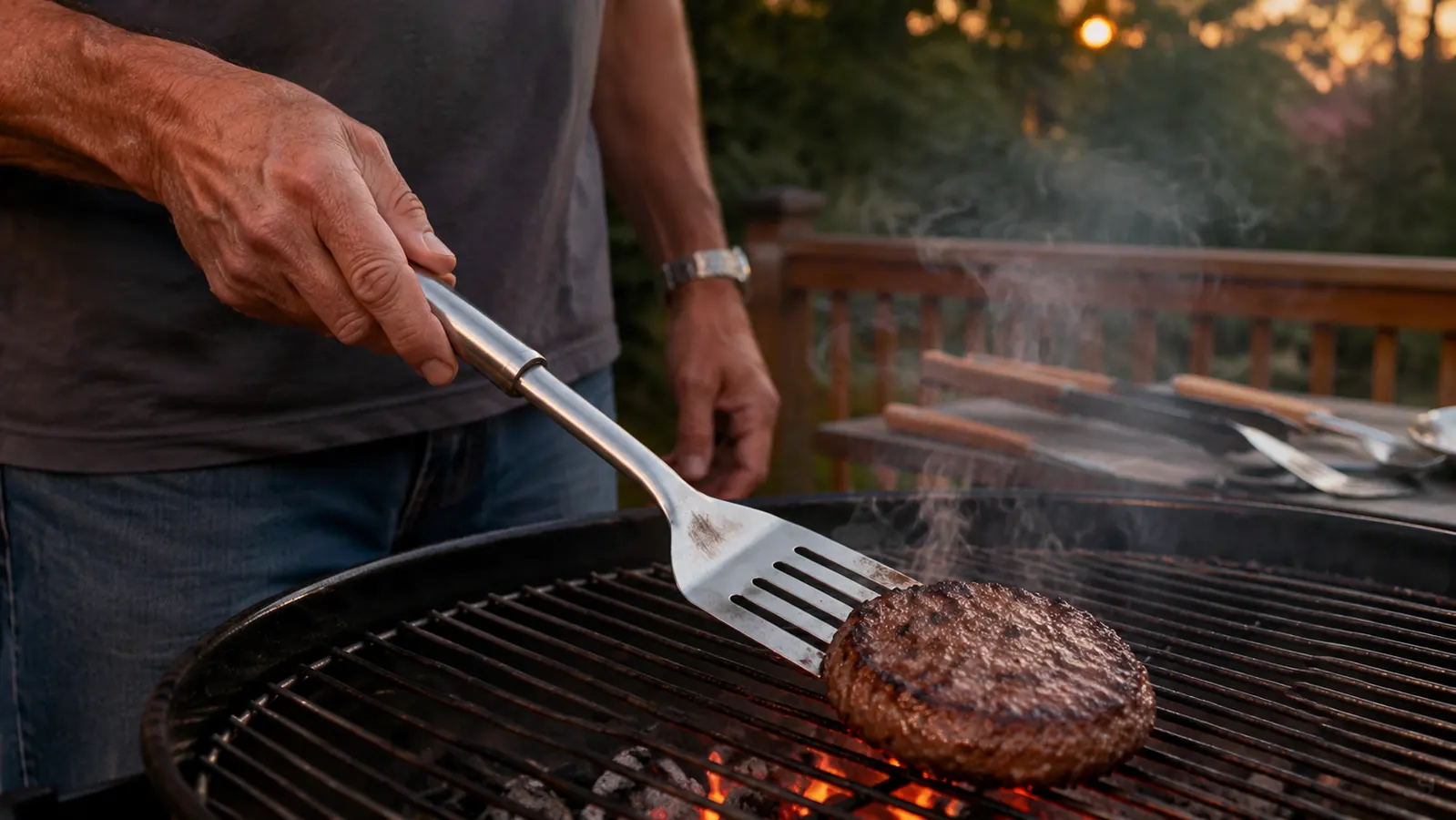
The short version, and I will not pad it: this turner is stiff, it is wide, and it is long. The blade is one continuous piece of stainless with no flex point, so when you lever a six-ounce patty off a hot grate the blade does not bow, it lifts. The full 13.5 inches of length keep my hand a comfortable distance from the fire, which matters more than people think on a kettle where the coal bed sits right under the cooking grate. In humid air, where sweat and steam make you careless, that distance is the difference between a clean flip and a flinch.
Most cheap flippers fail the same way mine did. They flex in the middle, they tear the crust when they finally get under it, and they are short enough that your knuckles hover over the grate on every flip. A heavy stainless turner is built to a different standard. The face is solid enough that a burger keeps its shape between blade and grate, and the leading edge is thin enough to slide under a sear without ripping it. Thin front, thick backbone, that is the entire job description, and it is why this tool never shows up in the impulse-buy display by the register.
Chef Craft is a name you have seen in a hundred restaurant-supply bins even if the label never registered. This is the brand line cooks buy by the dozen, the one the short-order cook burns through and orders again. It shows in the design: commodity pricing, no marketing story, just a steel blade that does the job without pretending to be a conversation piece. That is the exact profile I trust with my hands six feet from an open fire.
The Year in Specifics: What Actually Changed
The honest way to review a spatula is to talk about the failure it removes, because a good turner does not make a single burger taste different, it removes the small collapse that ruins the one you were watching. Before this tool, my burger nights followed a predictable script: the first two patties flip clean, the third sticks, the fourth tears in half, and I end up scraping crust off the grate while my food goes cold. With the Chef Craft turner the script has been the same every week for a year. A patty releases when it is ready, the blade slides under clean, and the flip lands without me spearing the patty next to it.
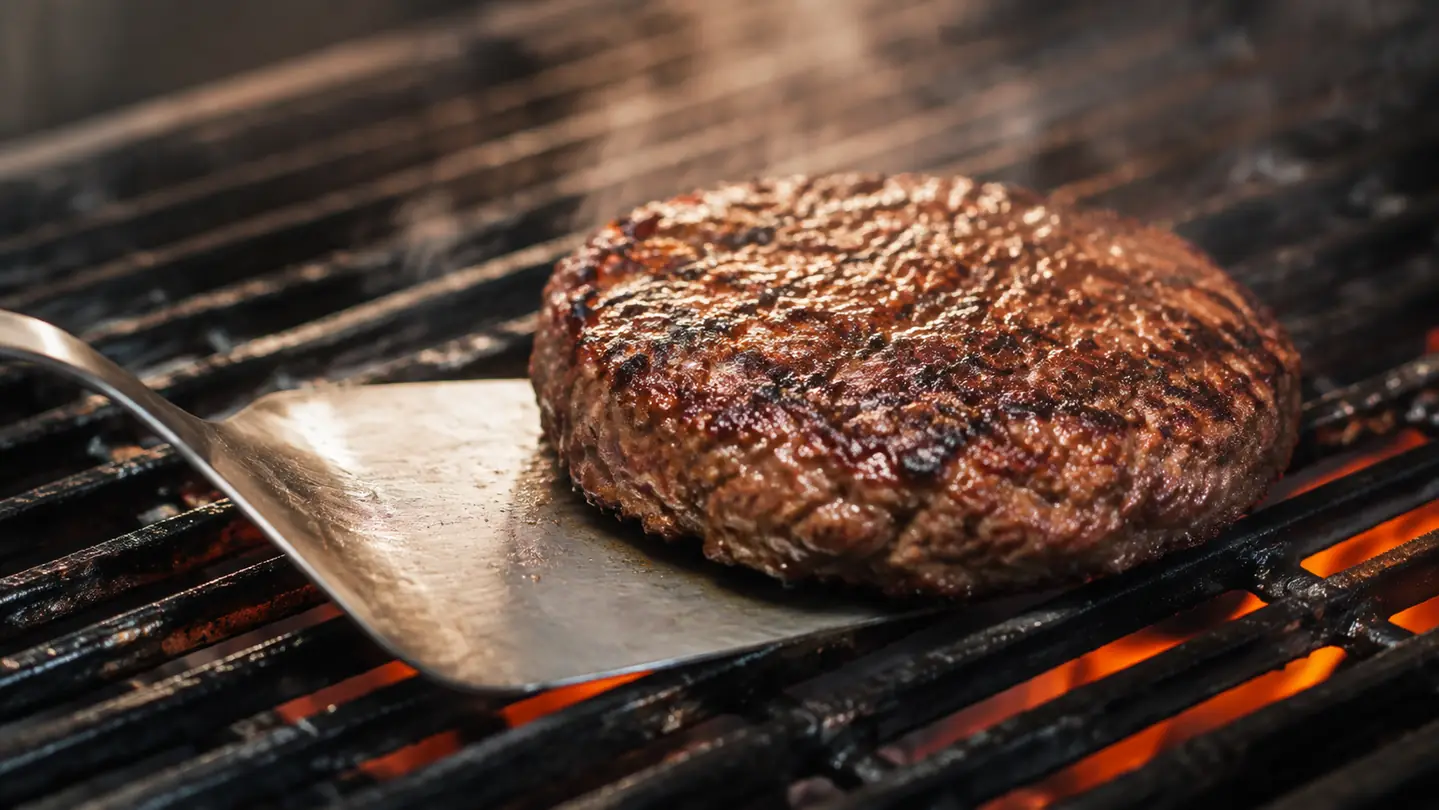
Smash burgers are where the stiffness shows up most and where this tool punished my old flipper. A proper smash means pressing a ball of ground beef flat against a screaming-hot surface and then leaving it alone, no wiggling, no checking. The wide face and the leverage do that with one hand, and because the blade does not flex, the crust does not shatter when you slide under it. My last big session was forty-eight patties for my nephew's birthday in June, and I did not shred a single one. That used to happen once a summer, not every week.
The second surprise is how well it cleans the grate. I do a hot scrape after every cook now, usually while the coals are still banked. The long rigid edge clears a fourteen-inch section in one pass, where the old flimsy scraper took five scrapes and left streaks. That one-minute habit has done more for the surface of my grates than any brush I ever bought.
There is one more thing I keep coming back to, because it is the difference between a tool and a fixture: I stopped looking for it. Every other piece on my grill table has a hook or a drawer, and I still misplace half of them. This one lives on the grate rack, and that is the highest compliment I can give a cooking tool. It earns the parking space. When I plan a cookout now, the turner goes on the mental checklist before the meat does. The full technique for flipping burgers without squashing them starts with this blade.
Forty-eight smash burgers in one sitting, a year of coastal fog, one rainy night left on the grill, and the blade still has zero flex. That is the whole review.
Where It Comes Up Short
Now the part nobody puts on the box, the honest tradeoffs. The leading edge is sharp enough to be respected. It will not slice you like a knife, but it will scrape a knuckle if you grab at it carelessly, and I have drawn a bead of blood exactly twice while wiping it down after a wet cook. There is no cushion on the handle, so after an hour of flipping with wet hands you notice the grip, and I have nearly dropped it once reaching for a stray patty. A thirteen-and-a-half-inch turner is also the wrong shape for small fish fillets. For those I still reach for a thin flexible fish spatula.
It does not replace tongs, and anyone who tells you one tool does both is selling you one tool instead of two. Sausages roll. Corn cobs need rotating. And a turner cannot grab a small item off the grate without dragging everything around it. The honest division of labor is this: tongs grab, a turner flips and scrapes, and the two are not interchangeable, which I lay out in full in my spatula versus tongs comparison. And a whole pork butt or a brisket flat is still a two-handed job with heat-resistant gloves, not a one-handed lever with a spatula.
The Alternatives I Considered
I tried three other approaches before landing on this one, and each taught me something. A cheap turner with a thin stamped blade and a scorched handle, the thing this review warns against, flexes and tears crust and eventually splits where the handle meets the steel. A fish spatula is nimble but too narrow and too flexible for patties; it leaves half a burger behind on the grate. And the wide flat wooden paddle that ships with some grills looks capable but does not slide under a sear, it pushes instead of lifting.
I also considered paying more for a branded turner with a fancy coating and a lifetime warranty story. I decided the extra money buys a warranty I will never need on a tool whose only realistic failure is bending, plus a coating that will eventually scratch off into food. The whole point of a turner is that it is a piece of steel with no moving parts and nothing to fail. Chef Craft sells exactly that, and I would rather replace honest steel every few years than babysit a fancy handle.
What I Liked
- Stiff one-piece stainless blade with zero flex after a full season of heavy use
- Long enough to keep your hand clear of the fire and wide enough to support a six-ounce patty
- Does triple duty: flips, smashes, and hot-scrapes the grate clean in one pass
- Cheap enough that it earns its place without being a careful investment
Where It Falls Short
- Leading edge is sharp enough to nick a knuckle if you grab at it carelessly
- No cushion on the handle, so a long wet cook wears on your grip
- Wrong tool for small delicate fish fillets, keep a fish spatula nearby
- Cannot lift a whole brisket or butt, that remains a two-handed gloves job
Who This Is For
If you cook any meat on a grate, you are the audience for this thing. If you have watched a burger fall apart at the flip, if your drawer holds a row of bendy flippers from a gift set you never use on purpose, if you scrape crust off the grate with a tool too flimsy to get under it, buy the stiff turner. It is a quiet purchase you will forget you made, right up until you pick up a friend's flimsy flipper at a cookout and remember how bad the other side is. For a home cook who grills most weekends, this is the easiest recommendation I can give.
Who Should Skip It
Skip it only if you grill fish almost exclusively, where a thin flexible turner does the delicate work and a heavy blade will tear a flaky fillet. Skip it if you are a tongs-and-fork cook who never flips anything bigger than a sausage, because you will not use it. And if you grill once a month in fair weather only, honestly, your current flipper is fine, and you do not need this review to justify a purchase that will sit in a drawer. This tool earns its place exactly in proportion to how often you cook. I cook most weekends, so it stays. That is the honest line, and the whole point here.
The Tool That Earned a Permanent Spot by the Grate
I bought one stiff stainless turner to stop squashing burgers and kept reaching for it all year for the flips, the smashes, and the grate cleaning. It is the cheapest tool on my grill table and the one I would replace first if it ever went missing. Check today's price on Amazon and see if it earns the same spot next to your grill.
Amazon Check Today's Price on Amazon →